Malvaceae
Flowering Maple - Abutilon hybridum
Abutilon hybridum
Medium difficulty plant. Needs bright indirect light, regular watering every 3-4 days keeping soil moist but not waterlogged, and moderate humidity with frequent misting. Tolerates temperatures between 50-75°F (10-24°C) and blooms nearly year-round with proper care.
Every 4 days
Bright indirect
10° - 24°C
40% - 60%
Categories
What is Flowering Maple?
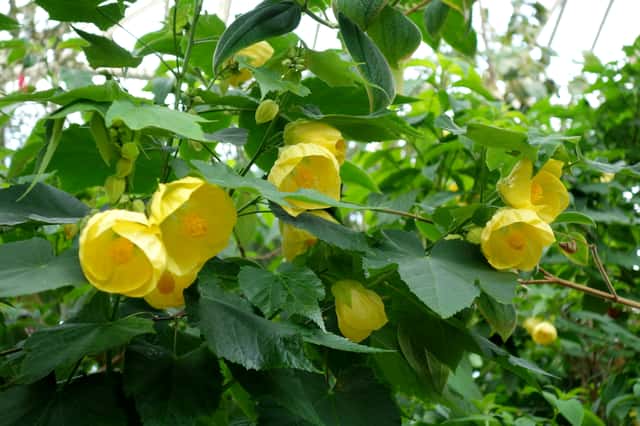
Flowering Maple (Abutilon hybridum) is a medium-care plant from the Malvaceae family. Abutilon hybridum, commonly known as flowering maple, is an ornamental shrub from the Malvaceae family, native to South America. Its pendulous bell-shaped flowers in shades of red, yellow, orange, and pink resemble small lanterns, making it a highly decorative plant for both indoor and outdoor setti...
Flowering Maple grows up to 3.0m, with spread of 150cm, watering every 4 days, 10°C – 24°C, 40–60% humidity. It is suitable for indoor environments and safe for pets.
Unlike many popular species, Flowering Maple is safe to keep around pets. Without adequate drainage, root rot can develop within 8 days.
How to Care for Flowering Maple?
TLDR: Flowering Maple needs Bright indirect, watering every 4 days, and temperatures between 10-24°C with 40-60% humidity.
How Often Should You Water Flowering Maple?
Water every 3-4 days when the top inch of soil feels dry. Reduce watering in winter but never let the soil dry out completely. Avoid waterlogging which can cause root rot.
How Much Light Does Flowering Maple Need?
Place in bright indirect light or morning direct sun. Avoid harsh afternoon sun in summer to prevent leaf scorch. Indoors, an east or west-facing window is ideal.
What Is the Best Soil for Flowering Maple?
Use well-draining, rich potting mix. A blend of potting soil with perlite and organic compost works well. Ideal pH ranges from 6.0 to 7.5.
What Pot Should You Use for Flowering Maple?
Ceramic or terracotta pots with good drainage are ideal. Choose a pot slightly larger than the root ball, as slightly root-bound conditions encourage flowering.
Care Schedule
Fertilize
Every 14 days
Misting
Every 3 days
Rotate
Every 14 days
Repot
Every 365 days
What Is Flowering Maple and Where Does It Come From?
Abutilon hybridum, commonly known as flowering maple, is an ornamental shrub from the Malvaceae family, native to South America. Its pendulous bell-shaped flowers in shades of red, yellow, orange, and pink resemble small lanterns, making it a highly decorative plant for both indoor and outdoor settings.
How to Propagate Flowering Maple?
Stem cutting
Bottom heat accelerates rooting. Use clean, sharp tools to prevent infection.
- 1 Cut a healthy stem tip 3-4 inches long
- 2 Remove lower leaves, keeping 2-3 at the top
- 3 Apply rooting hormone to the cut end
- 4 Plant in moist perlite and peat mix
- 5 Keep in a warm, humid spot with indirect light
Materials needed:
How Big Does Flowering Maple Grow?
TLDR: Flowering Maple can reach up to 3.0m tall with Medium growth rate.
Max height
3.0m
Spread
1.5m
Growth rate
Medium
Foliage
Evergreen
Warning: Toxic Plant
This plant can be toxic if ingested. Keep out of reach of:
Plant Uses
Ornamental
Great for decoration
Is your plant showing symptoms?
Click on the symptom to discover possible causes:
What Diseases Commonly Affect Flowering Maple?
TLDR: Flowering Maple is susceptible to 11 known diseases. Monitor regularly for early detection.
Root Rot
Root rot is a serious fungal disease that affects the root system of plants, causing them to decay and die. It is primarily caused by overwatering, poor drainage, or soil-borne fungi such as Pythium, Phytophthora, Rhizoctonia, and Fusarium. The disease thrives in waterlogged conditions where roots are deprived of oxygen, making them susceptible to fungal infection.
Rust
Rust is a common fungal disease caused by fungi in the order Pucciniales that affects a wide variety of plants. The disease gets its name from the characteristic orange, yellow, or reddish-brown pustules that appear on leaves, resembling metal rust. This obligate fungal parasite requires living plants to survive and can cause significant economic losses in agricultural crops.
Alternaria Leaf Spot
Alternaria leaf spot is a common fungal disease caused by Alternaria solani and Alternaria alternata that affects a wide range of plants including tomatoes, potatoes, brassicas, and ornamentals. The disease thrives in warm, humid conditions and can cause significant crop damage if left untreated. Spores overwinter on plant debris and can attach to seeds, making complete elimination difficult.
Cercospora Leaf Spot
Cercospora leaf spot is a common fungal disease caused by Cercospora species that affects many plant types, particularly beets, roses, and leafy vegetables. The disease thrives in warm, humid conditions and can cause significant defoliation, reducing plant vigor and yield. It spreads rapidly through water splash, wind, and contaminated tools.
Meaning & Symbolism
Represents delicacy and beauty; in Victorian flower language it symbolizes meditation and contemplation
Fun Facts
The bell-shaped flowers can bloom year-round under ideal conditions
Despite its common name flowering maple, it is not related to true maples (Acer)
It belongs to the same family as hibiscus and cotton (Malvaceae)
It is a cultivated hybrid that does not exist in the wild
Frequently asked questions
How often should I water flowering maple?
Is flowering maple toxic?
How do I get my flowering maple to bloom more?
Can I grow flowering maple indoors?
Compare with similar plants
| Attribute | Difficulty | Light | Watering | Pet Safe |
|---|---|---|---|---|
| Flamingo Flower | Medium | Partial shade | 5d | ⚠️ |
| Prayer Plant | Medium | Partial shade | 3d | ✓ |
| Boston Fern | Medium | Partial shade | 3d | ✓ |
| Weeping Fig | Medium | Partial shade | 10d | ⚠️ |