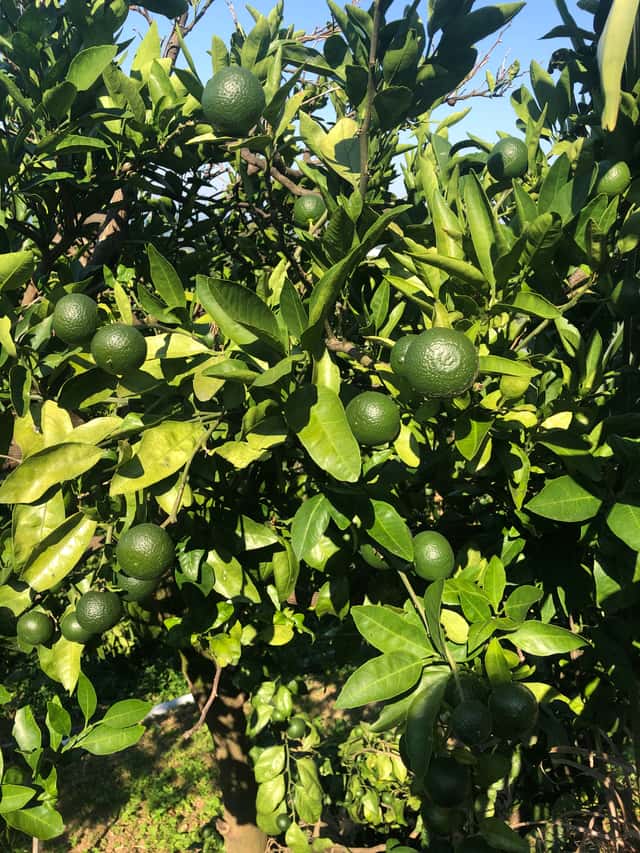
Rutaceae
Key Lime (Citrus aurantiifolia): Complete Care & Growing Guide
Citrus aurantiifolia
A hardy citrus that thrives in full sun and warm climates. Water every 10 days, use well-draining soil, and fertilize monthly during the growing season for best fruit production. Drought tolerant once established but frost-sensitive.
Every 10 days
Direct sun
10° - 38°C
50% - 80%
Categories
What is Key Lime?
Key Lime (Citrus aurantiifolia) is a medium-care plant from the Rutaceae family. Key Lime (Citrus aurantiifolia) is a small, thorny citrus tree native to the Malesian region of Southeast Asia. It produces small, round, intensely aromatic and acidic fruits widely prized in culinary traditions from the Americas to Southeast Asia. The tree features glossy evergreen foliage and frag...
Key Lime grows up to 4.0m, spread of 460cm, watering every 10 days, 10°C – 38°C, 50–80% humidity. It is not suitable for indoor environments and not safe for pets.
Without precautions, ingestion can cause irritation in pets. Keep out of reach of cats and dogs.
How to Care for Key Lime?
TLDR: Key Lime needs Direct sun, watering every 10 days, and temperatures between 10-38°C with 50-80% humidity.
How Often Should You Water Key Lime?
Water every 7-14 days, allowing the topsoil to dry slightly between waterings. Avoid waterlogging — consistently wet roots promote root rot. Apply mulch around the base to retain moisture during dry spells.
How Much Light Does Key Lime Need?
Requires full sun, at least 6-8 hours of direct sunlight daily. Insufficient light significantly reduces fruit production. The tree is shade-intolerant.
What Is the Best Soil for Key Lime?
Prefers well-draining, light to medium-textured soil. pH between 5.5-7.0. Avoid heavy clay or compacted soils that retain excess moisture.
What Pot Should You Use for Key Lime?
Large terracotta or ceramic pot with drainage holes, minimum 20 inches in diameter. In the garden, plant in the ground with 10-15 feet spacing.
Care Schedule
Fertilize
Every 30 days
What Is Key Lime and Where Does It Come From?
Key Lime (Citrus aurantiifolia) is a small, thorny citrus tree native to the Malesian region of Southeast Asia. It produces small, round, intensely aromatic and acidic fruits widely prized in culinary traditions from the Americas to Southeast Asia. The tree features glossy evergreen foliage and fragrant white flowers that bloom year-round in warm climates.
How to Propagate Key Lime?
Seed Propagation
Fresh seeds have the highest germination rates. Use sterilized mix to prevent damping off.
- 1 Extract seeds from ripe fruits and rinse thoroughly
- 2 Sow in moist, well-draining potting mix
- 3 Keep in a warm, bright location
- 4 Transplant when seedlings reach 6-8 inches tall
Materials needed:
Grafting
Grafting produces earlier-bearing trees with uniform fruit. Best done in spring with moderate temperatures.
- 1 Select a healthy, vigorous rootstock
- 2 Perform bud or cleft grafting
- 3 Wrap the graft with grafting tape
- 4 Keep in partial shade for 2 weeks after grafting
Materials needed:
How Big Does Key Lime Grow?
TLDR: Key Lime can reach up to 4.0m tall with Medium growth rate.
Max height
4.0m
Spread
4.6m
Growth rate
Medium
Foliage
Evergreen
Warning: Toxic Plant
This plant can be toxic if ingested. Keep out of reach of:
Plant Uses
Edible
Can be consumed
Ornamental
Great for decoration
Medicinal
Medicinal properties
Medicinal Uses
- Rich in vitamin C and flavonoids with antioxidant properties
- Essential oil from the peel used in aromatherapy and cosmetics
- Traditional use for colds, digestive issues, and skin care
Culinary Uses
- Key lime pie — the iconic Florida dessert
- Cocktails and tropical drinks (margaritas, mojitos)
- Marinades for fish, chicken, and seafood
- Dressings, sauces, and vinaigrettes
- Desserts, tarts, and confections
Is your plant showing symptoms?
Click on the symptom to discover possible causes:
What Diseases Commonly Affect Key Lime?
TLDR: Key Lime is susceptible to 8 known diseases. Monitor regularly for early detection.
Anthracnose
Anthracnose is a fungal disease caused by fungi in the genus Colletotrichum that affects many plants, including vegetables, fruits, and trees. The disease thrives in cool, wet conditions, causing dark, sunken lesions on leaves, stems, flowers, and fruits.
Bacterial Canker
Serious bacterial disease affecting stone fruits and tomatoes caused by Pseudomonas syringae or Clavibacter michiganensis. Creates sunken lesions that ooze sap.
Root Rot
Root rot is a serious fungal disease that affects the root system of plants, causing them to decay and die. It is primarily caused by overwatering, poor drainage, or soil-borne fungi such as Pythium, Phytophthora, Rhizoctonia, and Fusarium. The disease thrives in waterlogged conditions where roots are deprived of oxygen, making them susceptible to fungal infection.
Aphids
Aphids are small, soft-bodied, pear-shaped insects (1/16 to 1/8 inch long) that feed by sucking nutrient-rich sap from plants. They reproduce rapidly and can quickly weaken plants, causing distorted growth and transmitting plant viruses. Aphids come in various colors including green, black, red, yellow, brown, and gray. They secrete honeydew, a sticky substance that attracts ants and encourages sooty mold growth.
Meaning & Symbolism
Symbolizes freshness, zest, and tropical abundance. Iconic in Caribbean and Mexican culinary culture.
Fun Facts
Key Lime originated in Southeast Asia and reached the Americas via Portuguese and Spanish traders in the 16th century
The fruit's juice is more acidic than that of Persian lime, with a stronger, more complex aroma
Key Lime pie became Florida's official state pie in 2006
A single Key Lime tree can produce hundreds of fruits per year in optimal tropical conditions
Frequently asked questions
How often should I water a Key Lime tree?
How much sun does a Key Lime tree need?
Is Key Lime toxic to pets?
When will my Key Lime tree start producing fruit?
Why are my Key Lime leaves turning yellow?
Compare with similar plants
| Attribute | Difficulty | Light | Watering | Pet Safe |
|---|---|---|---|---|
| Dark Fieldcap | Medium | Low light | 2d | ⚠️ |
| Azalea | Medium | Partial shade | 3d | ⚠️ |
| Bougainvillea | Medium | Direct sun | 7d | ⚠️ |
| Wild Lettuce | Medium | Direct sun | 7d | ⚠️ |



