Gesneriaceae
Lipstick Plant (Aeschynanthus radicans)
Aeschynanthus radicans
Provide bright indirect light, keep humidity between 60-80%, water when the top inch of soil dries out (every 5-7 days), and feed every 2-3 weeks during the growing season. Avoid direct sun and cold drafts.
Every 6 days
Partial shade
10° - 27°C
60% - 80%
Categories
What is Lipstick Plant?
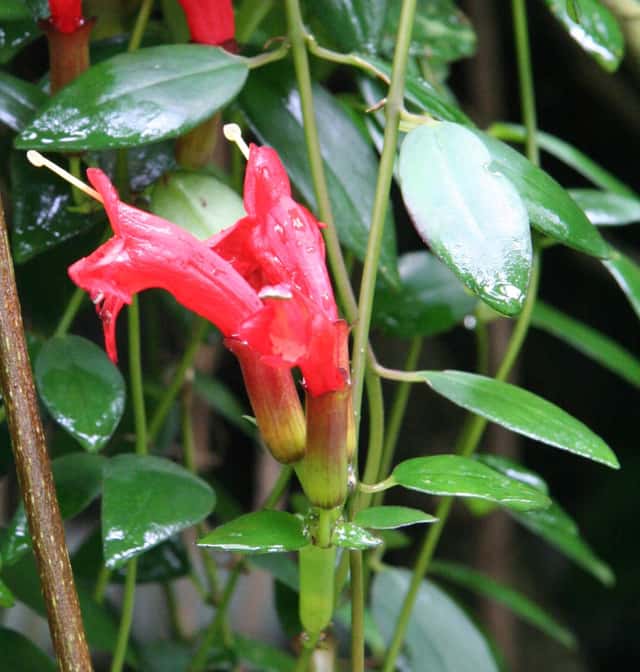
Lipstick Plant (Aeschynanthus radicans) is a medium-care plant from the Gesneriaceae family. The Lipstick Plant (Aeschynanthus radicans) is a stunning tropical epiphyte native to the humid rainforests of Southeast Asia. Known for its cascading vines adorned with glossy, waxy leaves and striking tubular red flowers that emerge from dark burgundy calyxes resembling a lipstick tube, this plant...
Lipstick Plant grows up to 90cm, spread of 90cm, watering every 6 days, 10°C – 27°C, 60–80% humidity. It is suitable for indoor environments and safe for pets.
Unlike many popular species, Lipstick Plant is safe to keep around pets. Without adequate drainage, root rot can develop within 12 days.
How to Care for Lipstick Plant?
TLDR: Lipstick Plant needs Partial shade, watering every 6 days, and temperatures between 10-27°C with 60-80% humidity.
How Often Should You Water Lipstick Plant?
Water when the top inch of soil feels dry, typically every 5-7 days. Reduce watering in winter. Ensure excellent drainage to prevent root rot — the plant prefers consistent moisture but never soggy soil.
How Much Light Does Lipstick Plant Need?
Place in bright indirect light near an east or west-facing window. Avoid direct sunlight which can scorch the leaves. Insufficient light will reduce flowering. Can adapt to artificial grow lights (12-14 hours daily).
What Is the Best Soil for Lipstick Plant?
Use a well-draining mix of equal parts peat moss, perlite, and orchid bark. Maintain a slightly acidic to neutral pH (6.0-7.0). Excellent drainage is essential to prevent root rot.
What Pot Should You Use for Lipstick Plant?
Use a hanging basket or pot with drainage holes. Terracotta or plastic hanging pots work well. The trailing habit makes it ideal for elevated planters or macrame hangers.
Care Schedule
Fertilize
Every 21 days
Misting
Every 3 days
Repot
Every 730 days
What Is Lipstick Plant and Where Does It Come From?
The Lipstick Plant (Aeschynanthus radicans) is a stunning tropical epiphyte native to the humid rainforests of Southeast Asia. Known for its cascading vines adorned with glossy, waxy leaves and striking tubular red flowers that emerge from dark burgundy calyxes resembling a lipstick tube, this plant is a favorite among indoor gardeners. It thrives in hanging baskets where its trailing stems can gracefully drape, creating a lush, eye-catching display.
How to Propagate Lipstick Plant?
Stem Cutting
Use clean, sharp scissors. Take cuttings from non-flowering stems for best results. Change water weekly if rooting in water.
- 1 Cut a 4-6 inch healthy stem with 3-4 leaf nodes
- 2 Remove the lower leaves
- 3 Dip the cut end in rooting hormone
- 4 Place in moist perlite and vermiculite mix
- 5 Keep warm (18-24°C) and humid with a plastic bag or dome
- 6 Roots develop in 3-4 weeks
Materials needed:
Air Layering
This method works well for larger plants where you want to propagate without removing stems initially.
- 1 Select a healthy stem and make a small wound below a node
- 2 Wrap the wound with damp sphagnum moss
- 3 Cover with plastic wrap and secure both ends
- 4 Keep the moss moist by misting through a small opening
- 5 Cut below the roots once they develop (4-6 weeks)
Materials needed:
How Big Does Lipstick Plant Grow?
TLDR: Lipstick Plant can reach up to 90cm tall with Medium growth rate.
Max height
90cm
Spread
90cm
Growth rate
Medium
Foliage
Evergreen
Plant Uses
Ornamental
Great for decoration
Is your plant showing symptoms?
Click on the symptom to discover possible causes:
What Diseases Commonly Affect Lipstick Plant?
TLDR: Lipstick Plant is susceptible to 7 known diseases. Monitor regularly for early detection.
Gray Mold (Botrytis Blight)
Gray mold, caused by the fungus Botrytis cinerea, is one of the most common fungal diseases in plants. It affects over 200 plant species, including ornamentals, vegetables, fruits, and houseplants. The disease thrives in cool, humid conditions with poor air circulation, causing grayish spots and soft rot on infected tissues.
Leaf Spot
Leaf spot is a common fungal disease caused by various pathogens including Alternaria, Ascochyta, Colletotrichum, Septoria, and Venturia. It primarily affects leaves, causing discolored spots that can lead to premature leaf drop if left untreated.
Root Rot
Root rot is a serious fungal disease that affects the root system of plants, causing them to decay and die. It is primarily caused by overwatering, poor drainage, or soil-borne fungi such as Pythium, Phytophthora, Rhizoctonia, and Fusarium. The disease thrives in waterlogged conditions where roots are deprived of oxygen, making them susceptible to fungal infection.
Spider Mites
Spider mites are tiny arachnids (less than 1/20 inch long) related to spiders and ticks that feed on plant sap. They thrive in hot, dry conditions and can cause significant damage to ornamental and vegetable plants. During severe infestations, crop losses can reach 14% or higher as these pests disrupt vital plant processes including photosynthesis, carbon dioxide absorption, and transpiration.
Meaning & Symbolism
Symbolizes love and passion due to its vivid red tubular flowers that resemble a lipstick emerging from its case.
Fun Facts
The flower buds emerge from dark calyxes that look like miniature lipstick tubes, giving the plant its common name
In its native Southeast Asian habitat, the Lipstick Plant grows as an epiphyte on tree branches in humid tropical forests
The plant can produce flowers almost year-round when given proper care, with peak blooming in spring and summer
Frequently asked questions
How often should I water my Lipstick Plant?
Why is my Lipstick Plant not flowering?
Is the Lipstick Plant toxic to pets?
How do I propagate a Lipstick Plant?
Compare with similar plants
| Attribute | Difficulty | Light | Watering | Pet Safe |
|---|---|---|---|---|
| Dark Fieldcap | Medium | Low light | 2d | ⚠️ |
| Azalea | Medium | Partial shade | 3d | ⚠️ |
| Muriel's Bamboo | Medium | Partial shade | 3d | ✓ |
| Bougainvillea | Medium | Direct sun | 7d | ⚠️ |




