Alstroemeriaceae
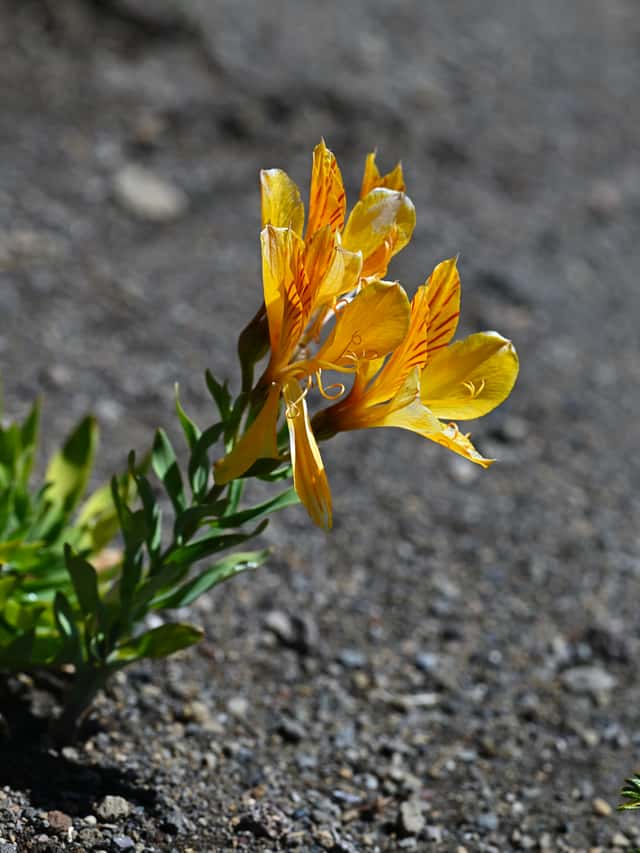
Golden Inca Lily (Alstroemeria aurea)
Alstroemeria aurea
Plant in full sun with well-draining soil and a pH of 6–7. Water every 4 days keeping the soil evenly moist. Fertilize monthly during the growing season. Remove spent stems to encourage new blooms. Caution: sap can cause skin irritation — wear gloves when handling.
Every 4 days
Bright indirect
-5° - 30°C
40% - 70%
Categories
What is Golden Inca Lily?
Golden Inca Lily (Alstroemeria aurea) is a medium-care plant from the Alstroemeriaceae family. Alstroemeria aurea, commonly known as the Golden Inca Lily or Peruvian Lily, is a hardy perennial native to the slopes of Chile and Argentina (Patagonia). It produces striking flowers in shades of yellow, orange, and gold — often streaked or spotted — from spring through fall. It is prized as both a...
Golden Inca Lily grows up to 90cm, spread of 60cm, watering every 4 days, -5°C – 30°C, 40–70% humidity. It is not suitable for indoor environments and not safe for pets.
Without precautions, ingestion can cause irritation in pets. Keep out of reach of cats and dogs.
How to Care for Golden Inca Lily?
TLDR: Golden Inca Lily needs Bright indirect, watering every 4 days, and temperatures between -5-30°C with 40-70% humidity.
How Often Should You Water Golden Inca Lily?
Water every 4 days, keeping the soil evenly moist but never waterlogged. Reduce frequency in winter. Avoid standing water at the base, as the fleshy roots are prone to rot.
How Much Light Does Golden Inca Lily Need?
Prefers full sun (6+ hours of direct sunlight daily). In very hot climates, light afternoon shade helps prolong blooms and reduces plant stress.
What Is the Best Soil for Golden Inca Lily?
Use well-draining soil rich in organic matter. Add coarse sand or perlite to ensure good drainage. Ideal soil pH is 6.0–7.0.
What Pot Should You Use for Golden Inca Lily?
Deep terracotta or ceramic pot with drainage holes. Terracotta helps regulate root moisture and prevents waterlogging.
Care Schedule
Fertilize
Every 30 days
Repot
Every 730 days
What Is Golden Inca Lily and Where Does It Come From?
Alstroemeria aurea, commonly known as the Golden Inca Lily or Peruvian Lily, is a hardy perennial native to the slopes of Chile and Argentina (Patagonia). It produces striking flowers in shades of yellow, orange, and gold — often streaked or spotted — from spring through fall. It is prized as both a garden ornamental and a long-lasting cut flower.
How to Propagate Golden Inca Lily?
Rhizome Division
Handle roots carefully as they are brittle. Avoid dividing during periods of intense heat.
- 1 Divide clumps in early spring using a sharp spade or knife
- 2 Ensure each division has healthy roots and shoots
- 3 Replant immediately in prepared well-draining soil
- 4 Water thoroughly after planting and keep moist until established
Materials needed:
Seed Sowing
Germination can be erratic. Cold stratification significantly improves germination rates.
- 1 Cold-stratify seeds for 4–6 weeks before sowing
- 2 Sow shallowly in moist, well-draining seed compost
- 3 Keep in a cool location (15–18°C) with indirect light
- 4 Transplant seedlings when they reach 10 cm tall
Materials needed:
How Big Does Golden Inca Lily Grow?
TLDR: Golden Inca Lily can reach up to 90cm tall with Medium growth rate.
Max height
90cm
Spread
60cm
Growth rate
Medium
Foliage
Deciduous
Warning: Toxic Plant
This plant can be toxic if ingested. Keep out of reach of:
Plant Uses
Ornamental
Great for decoration
Is your plant showing symptoms?
Click on the symptom to discover possible causes:
What Diseases Commonly Affect Golden Inca Lily?
TLDR: Golden Inca Lily is susceptible to 8 known diseases. Monitor regularly for early detection.
Root Rot
Root rot is a serious fungal disease that affects the root system of plants, causing them to decay and die. It is primarily caused by overwatering, poor drainage, or soil-borne fungi such as Pythium, Phytophthora, Rhizoctonia, and Fusarium. The disease thrives in waterlogged conditions where roots are deprived of oxygen, making them susceptible to fungal infection.
Gray Mold (Botrytis Blight)
Gray mold, caused by the fungus Botrytis cinerea, is one of the most common fungal diseases in plants. It affects over 200 plant species, including ornamentals, vegetables, fruits, and houseplants. The disease thrives in cool, humid conditions with poor air circulation, causing grayish spots and soft rot on infected tissues.
Aphids
Aphids are small, soft-bodied, pear-shaped insects (1/16 to 1/8 inch long) that feed by sucking nutrient-rich sap from plants. They reproduce rapidly and can quickly weaken plants, causing distorted growth and transmitting plant viruses. Aphids come in various colors including green, black, red, yellow, brown, and gray. They secrete honeydew, a sticky substance that attracts ants and encourages sooty mold growth.
Spider Mites
Spider mites are tiny arachnids (less than 1/20 inch long) related to spiders and ticks that feed on plant sap. They thrive in hot, dry conditions and can cause significant damage to ornamental and vegetable plants. During severe infestations, crop losses can reach 14% or higher as these pests disrupt vital plant processes including photosynthesis, carbon dioxide absorption, and transpiration.
Meaning & Symbolism
Symbol of friendship, devotion, and prosperity. Widely used in bouquets to express lasting affection and gratitude.
Fun Facts
Native to the Andean slopes of Chile and Argentina, where it grows in rocky, well-draining soils.
Its flowers feature distinctive streaks and spots, a unique pattern that sets it apart from other ornamental flowers.
The sap contains tulipalin A, the same compound found in tulips, responsible for its skin-irritating properties.
As a cut flower, it is one of the longest-lasting varieties, remaining fresh for up to 2 weeks in a vase.
Frequently asked questions
How often should I water Golden Inca Lily?
Is Golden Inca Lily toxic to pets?
When is the best time to divide Golden Inca Lily?
Can I grow Golden Inca Lily in a pot?
When does Golden Inca Lily bloom?
Compare with similar plants
| Attribute | Difficulty | Light | Watering | Pet Safe |
|---|---|---|---|---|
| Dark Fieldcap | Medium | Low light | 2d | ⚠️ |
| Azalea | Medium | Partial shade | 3d | ⚠️ |
| Bougainvillea | Medium | Direct sun | 7d | ⚠️ |
| Wild Lettuce | Medium | Direct sun | 7d | ⚠️ |



