Rosaceae
Apple Tree (Malus) — Complete Care Guide
Malus
Apple trees need full sun (6-8 hours daily), deep weekly watering, well-drained slightly acidic soil, and annual dormant-season pruning. Watch for fire blight, apple scab, and codling moth — the three most common problems.
Every 7 days
Direct sun
-30° - 35°C
40% - 70%
Categories
What is Apple Tree?
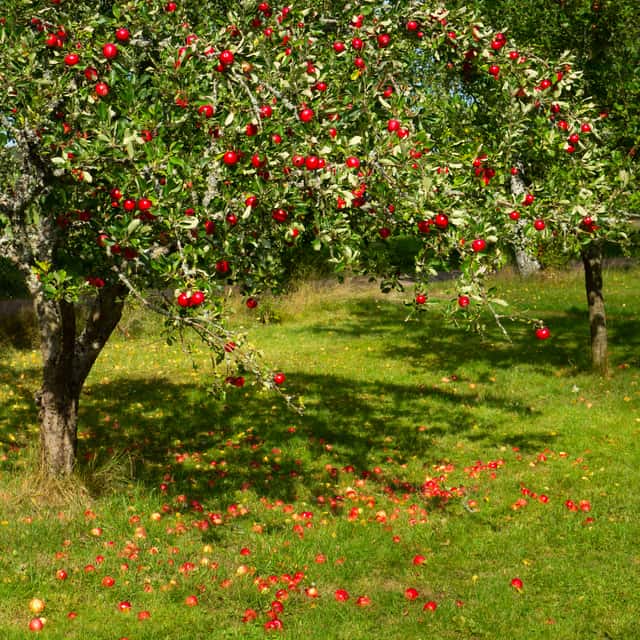
Apple Tree (Malus) is a medium-care plant from the Rosaceae family. Malus is a genus of small to medium deciduous trees and shrubs in the Rosaceae family, native to temperate regions of the Northern Hemisphere. It encompasses cultivated apple trees grown for their edible fruit as well as ornamental crabapples prized for their spring blossoms and colorful fall fruit.
Apple Tree grows up to 9.0m, spread of 900cm, watering every 7 days, -30°C – 35°C, 40–70% humidity. It is not suitable for indoor environments and not safe for pets.
Without precautions, ingestion can cause irritation in pets. Keep out of reach of cats and dogs.
How to Care for Apple Tree?
TLDR: Apple Tree needs Direct sun, watering every 7 days, and temperatures between -30-35°C with 40-70% humidity.
How Often Should You Water Apple Tree?
Water deeply once a week during the growing season, allowing the top few inches of soil to dry between waterings. During dormancy in winter, reduce watering significantly. Avoid waterlogged soil, which promotes root rot.
How Much Light Does Apple Tree Need?
Plant in full sun with at least 6-8 hours of direct sunlight daily. More sun means better fruit production and reduced disease pressure. Avoid shaded locations or areas with poor air circulation.
What Is the Best Soil for Apple Tree?
Use fertile, well-drained loamy soil with a pH of 6.0-7.0. Amend with compost at planting time. Avoid heavy clay or overly sandy soils. Mulch around the base to retain moisture and suppress weeds.
What Pot Should You Use for Apple Tree?
For container growing, use large pots of at least 60-80 liters with good drainage. Choose dwarf varieties grafted onto M9 or M27 dwarfing rootstocks for best results in containers.
Care Schedule
Fertilize
Every 90 days
What Is Apple Tree and Where Does It Come From?
Malus is a genus of small to medium deciduous trees and shrubs in the Rosaceae family, native to temperate regions of the Northern Hemisphere. It encompasses cultivated apple trees grown for their edible fruit as well as ornamental crabapples prized for their spring blossoms and colorful fall fruit.
How to Propagate Apple Tree?
Grafting
Grafting is the preferred method to reliably reproduce specific varieties. Always sterilize tools to prevent disease transmission.
- 1 Select a healthy rootstock compatible with your desired variety
- 2 Make clean cuts on both the rootstock and scion
- 3 Join the pieces ensuring cambium alignment on at least one side
- 4 Wrap firmly with grafting tape and seal cut surfaces
- 5 Keep in a cool, humid environment until buds break
Materials needed:
Seed Sowing
Seedlings rarely reproduce true to the parent variety. Use this method for rootstock production or experimental breeding only.
- 1 Collect seeds from ripe apples and rinse thoroughly
- 2 Cold-stratify seeds in moist sand in the refrigerator for 60-90 days
- 3 Sow in well-draining seedling mix at 1 cm depth
- 4 Keep in a cool, moist location until germination
Materials needed:
How Big Does Apple Tree Grow?
TLDR: Apple Tree can reach up to 9.0m tall with Medium growth rate.
Max height
9.0m
Spread
9.0m
Growth rate
Medium
Foliage
Deciduous
Warning: Toxic Plant
This plant can be toxic if ingested. Keep out of reach of:
Plant Uses
Ornamental
Great for decoration
Edible
Can be consumed
Medicinal Uses
- Bark extracts with astringent properties used in folk medicine
- Apple cider vinegar is a traditional remedy for various ailments
Culinary Uses
- Fresh eating, juice, cider, applesauce, pies, and preserves
- Edible flowers used as garnish and in teas
- Crabapple jelly and preserves
Is your plant showing symptoms?
Click on the symptom to discover possible causes:
What Diseases Commonly Affect Apple Tree?
TLDR: Apple Tree is susceptible to 6 known diseases. Monitor regularly for early detection.
Fire Blight
Fire blight is a highly destructive and contagious bacterial disease caused by Erwinia amylovora. It primarily affects plants in the Rosaceae family, including apple, pear, quince trees, and various ornamental plants. The disease can destroy an entire orchard in a single growing season under ideal conditions, with the bacterium moving approximately 11 inches per week in new growth.
Leaf Spot
Leaf spot is a common fungal disease caused by various pathogens including Alternaria, Ascochyta, Colletotrichum, Septoria, and Venturia. It primarily affects leaves, causing discolored spots that can lead to premature leaf drop if left untreated.
Powdery Mildew
Powdery mildew is a common fungal disease caused by various fungi species including Erysiphe, Podosphaera, Oïdium, and Leveillula. It affects over 10,000 plant species worldwide. The disease thrives in warm, dry climates with high humidity and appears as a distinctive white powdery coating on plant surfaces.
Rust
Rust is a common fungal disease caused by fungi in the order Pucciniales that affects a wide variety of plants. The disease gets its name from the characteristic orange, yellow, or reddish-brown pustules that appear on leaves, resembling metal rust. This obligate fungal parasite requires living plants to survive and can cause significant economic losses in agricultural crops.
Meaning & Symbolism
Symbol of knowledge, temptation, love, and abundance — one of the most iconic plants in Western mythology, folklore, and culture worldwide.
Fun Facts
The Malus genus includes over 30 wild species, but the domestic apple (Malus domestica) was developed over thousands of years from its ancestor Malus sieversii, native to Kazakhstan.
A well-maintained apple tree can bear fruit for over 100 years.
Apple blossoms are a critical early-spring nectar source for bees, making apple orchards vital ecosystems for pollinators.
The world produces over 80 million metric tons of apples annually, making it one of the most widely cultivated tree fruits on Earth.
Frequently asked questions
How often should I water an apple tree?
Are apple trees toxic to pets?
When should I prune my apple tree?
Why is my apple tree not producing fruit?
What is fire blight and how do I treat it?
Compare with similar plants
| Attribute | Difficulty | Light | Watering | Pet Safe |
|---|---|---|---|---|
| Dark Fieldcap | Medium | Low light | 2d | ⚠️ |
| Azalea | Medium | Partial shade | 3d | ⚠️ |
| Bougainvillea | Medium | Direct sun | 7d | ⚠️ |
| Wild Lettuce | Medium | Direct sun | 7d | ⚠️ |



