Acanthaceae
Brazilian Red Cloak (Megaskepasma erythrochlamys): Complete Care Guide
Megaskepasma erythrochlamys
A fast-growing tropical shrub that thrives in full sun to partial shade. Keep soil consistently moist with watering every 3-4 days, avoiding waterlogging. It appreciates high humidity and warm temperatures between 18-29°C. Fertilize every 6 weeks during the growing season and prune lightly after flowering to encourage new growth and more blooms.
Every 4 days
Bright indirect
18° - 29°C
50% - 80%
Categories
What is Brazilian Red Cloak?
Brazilian Red Cloak (Megaskepasma erythrochlamys) is a medium-care plant from the Acanthaceae family. Brazilian Red Cloak (Megaskepasma erythrochlamys) is a stunning tropical shrub native to Venezuela and Suriname, belonging to the Acanthaceae family. It is celebrated for its spectacular inflorescences composed of large crimson bracts surrounding small two-lipped white flowers, creating a breathtaki...
Brazilian Red Cloak grows up to 3.0m, with spread of 180cm, watering every 4 days, 18°C – 29°C, 50–80% humidity. It is not suitable for indoor environments and safe for pets.
Unlike many popular species, Brazilian Red Cloak is safe to keep around pets.
How to Care for Brazilian Red Cloak?
TLDR: Brazilian Red Cloak needs Bright indirect, watering every 4 days, and temperatures between 18-29°C with 50-80% humidity.
How Often Should You Water Brazilian Red Cloak?
Water Brazilian Red Cloak every 3 to 4 days, keeping the soil consistently moist but well-drained. Avoid waterlogging, which can cause root rot. In hot, dry periods, increase watering frequency. Reduce slightly in winter when growth slows down.
How Much Light Does Brazilian Red Cloak Need?
Brazilian Red Cloak thrives in full sun to partial shade, requiring at least 5-6 hours of direct sunlight daily. Protect it from the intense afternoon sun in very hot climates to prevent leaf scorch. It can bloom even in shade, but performs best with ample light.
What Is the Best Soil for Brazilian Red Cloak?
Use well-draining, organically rich soil. A mix of potting soil, worm castings, and coarse sand in a 2:1:1 ratio is ideal. Maintain soil pH between 6.0 and 7.5. Avoid compacted or poorly drained soils, as the plant is sensitive to waterlogging.
What Pot Should You Use for Brazilian Red Cloak?
Large ceramic or terracotta pots are ideal as they allow good soil aeration. Use containers at least 40-50 cm in diameter with adequate drainage holes, as Brazilian Red Cloak grows quickly into a large, voluminous shrub.
Care Schedule
Fertilize
Every 42 days
Misting
Every 3 days
Repot
Every 730 days
What Is Brazilian Red Cloak and Where Does It Come From?
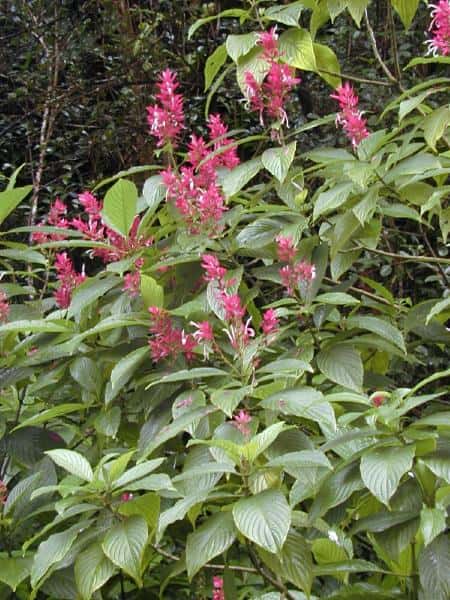
Brazilian Red Cloak (Megaskepasma erythrochlamys) is a stunning tropical shrub native to Venezuela and Suriname, belonging to the Acanthaceae family. It is celebrated for its spectacular inflorescences composed of large crimson bracts surrounding small two-lipped white flowers, creating a breathtaking display in tropical and subtropical gardens. The plant can reach 2 to 3 meters in height, with large, glossy dark green oval leaves up to 50 cm long.
How to Propagate Brazilian Red Cloak?
Stem Cutting
Use clean, sterilized cutting tools. Maintain high humidity around the cutting by covering with a clear plastic bag. Change water every 2-3 days if propagating in water.
- 1 Cut a healthy stem 15-20 cm long with 2-3 pairs of leaves
- 2 Remove lower leaves leaving only 2-3 leaves at the top
- 3 Apply rooting hormone powder or gel to the cut base
- 4 Plant in moist, well-draining medium or place in clean water
- 5 Keep in a warm, humid location with indirect light
- 6 Transplant when roots reach 3-5 cm in length
Materials needed:
How Big Does Brazilian Red Cloak Grow?
TLDR: Brazilian Red Cloak can reach up to 3.0m tall with Fast growth rate.
Max height
3.0m
Spread
1.8m
Growth rate
Fast
Foliage
Evergreen
Plant Uses
Ornamental
Great for decoration
Is your plant showing symptoms?
Click on the symptom to discover possible causes:
What Diseases Commonly Affect Brazilian Red Cloak?
TLDR: Brazilian Red Cloak is susceptible to 7 known diseases. Monitor regularly for early detection.
Aphids
Aphids are small, soft-bodied, pear-shaped insects (1/16 to 1/8 inch long) that feed by sucking nutrient-rich sap from plants. They reproduce rapidly and can quickly weaken plants, causing distorted growth and transmitting plant viruses. Aphids come in various colors including green, black, red, yellow, brown, and gray. They secrete honeydew, a sticky substance that attracts ants and encourages sooty mold growth.
Mealybugs
Mealybugs are small, soft-bodied insects covered with a white, waxy, cottony material. They are common pests of houseplants and outdoor plants in mild climates. These sap-sucking insects feed on plant tissue, causing damage, stunted growth, and can lead to plant death if left untreated. They produce sticky honeydew which attracts sooty mold.
Spider Mites
Spider mites are tiny arachnids (less than 1/20 inch long) related to spiders and ticks that feed on plant sap. They thrive in hot, dry conditions and can cause significant damage to ornamental and vegetable plants. During severe infestations, crop losses can reach 14% or higher as these pests disrupt vital plant processes including photosynthesis, carbon dioxide absorption, and transpiration.
Powdery Mildew
Powdery mildew is a common fungal disease caused by various fungi species including Erysiphe, Podosphaera, Oïdium, and Leveillula. It affects over 10,000 plant species worldwide. The disease thrives in warm, dry climates with high humidity and appears as a distinctive white powdery coating on plant surfaces.
Meaning & Symbolism
The Brazilian Red Cloak symbolizes tropical exuberance, passion, and vitality. Its crimson bracts represent energy, enthusiasm, and the abundant beauty of tropical nature. As a native of Venezuela, it embodies the richness of South American biodiversity.
Fun Facts
The genus Megaskepasma is monotypic, meaning it contains only one species — M. erythrochlamys — making it unique in the plant kingdom
Despite its common name "Brazilian Red Cloak," the plant is actually native to Venezuela and Suriname, not Brazil
The true flowers are small and white but are completely hidden by the long, showy crimson bracts that attract pollinators such as hummingbirds
In ideal tropical conditions, Brazilian Red Cloak can reach up to 4.5 meters in height, making it more of a small tree than a shrub
Frequently asked questions
How often should I water Brazilian Red Cloak?
Can Brazilian Red Cloak be grown in a pot?
Why is my Brazilian Red Cloak not flowering?
Is Brazilian Red Cloak toxic to pets?
When does Brazilian Red Cloak bloom?
Compare with similar plants
| Attribute | Difficulty | Light | Watering | Pet Safe |
|---|---|---|---|---|
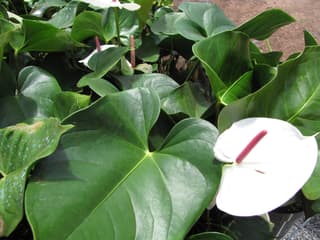
| Flamingo Flower | Medium | Partial shade | 5d | ⚠️ |
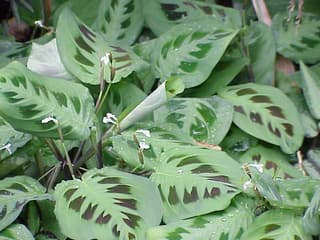
| Prayer Plant | Medium | Partial shade | 3d | ✓ |
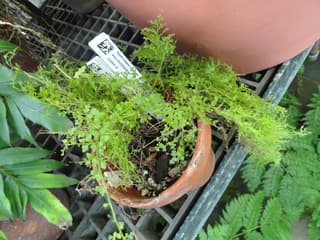
| Boston Fern | Medium | Partial shade | 3d | ✓ |
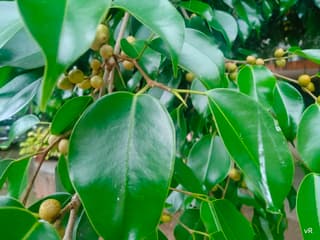
| Weeping Fig | Medium | Partial shade | 10d | ⚠️ |