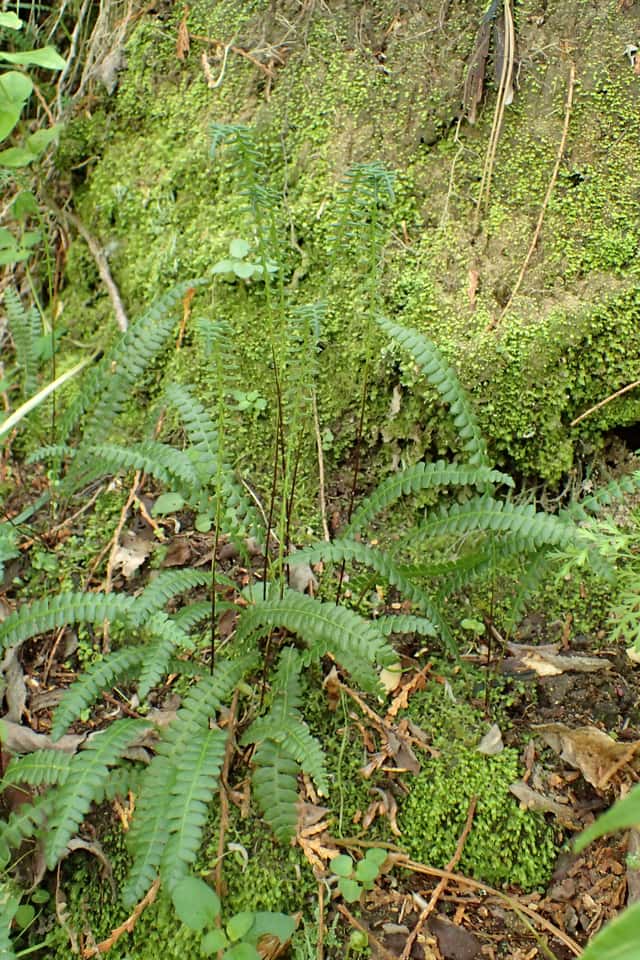
Blechnaceae
Membranous Hard Fern (Blechnum membranaceum)
Blechnum membranaceum
Requires high humidity (60–85%), slightly acidic peaty soil, and moderate indirect light. Water every 5 days keeping substrate consistently moist. Mist fronds every 3 days in dry conditions. Fertilize monthly in spring and summer with diluted fern fertilizer.
Every 5 days
Partial shade
12° - 26°C
60% - 85%
Categories
What is Membranous Hard Fern?
Membranous Hard Fern (Blechnum membranaceum) is a medium-care plant from the Blechnaceae family. Blechnum membranaceum, commonly known as the Membranous Hard Fern, is a small Neotropical fern in the family Blechnaceae. Native to Central and South America, it produces delicate, thin fronds with a distinctive membranous texture, thriving in humid, shaded forest understories. Now reclassified as A...
Membranous Hard Fern grows up to 40cm, spread of 45cm, watering every 5 days, 12°C – 26°C, 60–85% humidity. It is suitable for indoor environments and safe for pets.
Unlike many popular species, Membranous Hard Fern is safe to keep around pets. Without adequate drainage, root rot can develop within 10 days.
How to Care for Membranous Hard Fern?
TLDR: Membranous Hard Fern needs Partial shade, watering every 5 days, and temperatures between 12-26°C with 60-85% humidity.
How Often Should You Water Membranous Hard Fern?
Water every 5 days, keeping the substrate evenly moist. Never allow the soil to dry out completely — ferns are highly sensitive to dehydration. Avoid waterlogging; ensure the pot has good drainage.
How Much Light Does Membranous Hard Fern Need?
Prefers bright indirect light (800–2500 lux). Avoid direct sunlight, which scorches the delicate fronds. Indoors, place near an east- or north-facing window with dappled shade.
What Is the Best Soil for Membranous Hard Fern?
Use acidic, peaty, well-draining soil. A mix of 60% peat, 20% perlite, and 20% fine pine bark works well. Target pH between 4.5 and 6.0.
What Pot Should You Use for Membranous Hard Fern?
Ceramic or terracotta pot with a shallow pebble tray filled with water to boost humidity around the plant. Avoid plastic pots without drainage.
Care Schedule
Fertilize
Every 30 days
Misting
Every 3 days
Repot
Every 1095 days
What Is Membranous Hard Fern and Where Does It Come From?
Blechnum membranaceum, commonly known as the Membranous Hard Fern, is a small Neotropical fern in the family Blechnaceae. Native to Central and South America, it produces delicate, thin fronds with a distinctive membranous texture, thriving in humid, shaded forest understories. Now reclassified as Austroblechnum membranaceum, it retains its historic trade name in horticulture.
How to Propagate Membranous Hard Fern?
Clump Division
Divide when the plant is vigorous in early spring. Maintain high humidity after planting to reduce transplant stress.
- 1 Carefully remove the plant from its pot in spring
- 2 Separate rhizome sections each with healthy roots and fronds using a clean knife
- 3 Plant each section in moist peaty substrate
- 4 Keep in a shaded, humid location until established
Materials needed:
Spore Propagation
Use sterile substrate to prevent fungal contamination. Cover with clear plastic to retain humidity.
- 1 Collect fertile fronds with mature (brown, dry) spores
- 2 Scatter spores over sterile, moist substrate in a covered container
- 3 Maintain temperature 18–22°C and high humidity
- 4 Wait for prothallus formation, then first fronds
- 5 Transplant seedlings when they have 3–4 fronds
Materials needed:
How Big Does Membranous Hard Fern Grow?
TLDR: Membranous Hard Fern can reach up to 40cm tall with Slow growth rate.
Max height
40cm
Spread
45cm
Growth rate
Slow
Foliage
Evergreen
Plant Uses
Ornamental
Great for decoration
Is your plant showing symptoms?
Click on the symptom to discover possible causes:
What Diseases Commonly Affect Membranous Hard Fern?
TLDR: Membranous Hard Fern is susceptible to 12 known diseases. Monitor regularly for early detection.
Root Rot
Root rot is a serious fungal disease that affects the root system of plants, causing them to decay and die. It is primarily caused by overwatering, poor drainage, or soil-borne fungi such as Pythium, Phytophthora, Rhizoctonia, and Fusarium. The disease thrives in waterlogged conditions where roots are deprived of oxygen, making them susceptible to fungal infection.
Overwatering
Overwatering occurs when plants receive too much water, depriving roots of oxygen and causing root rot. This environmental stress is one of the most common causes of houseplant death, as waterlogged soil prevents roots from breathing and functioning properly.
Low Humidity Stress
Low humidity stress occurs when indoor air becomes too dry, causing plants to lose moisture faster than they can absorb it through their roots. This is especially common during winter heating periods, near radiators and heating vents, or in air-conditioned spaces. Tropical plants are particularly susceptible to low humidity damage.
Leaf Spot
Leaf spot is a common fungal disease caused by various pathogens including Alternaria, Ascochyta, Colletotrichum, Septoria, and Venturia. It primarily affects leaves, causing discolored spots that can lead to premature leaf drop if left untreated.
Meaning & Symbolism
Resilience and quiet beauty; symbol of adaptation to shadowed, humid environments.
Fun Facts
Now reclassified as Austroblechnum membranaceum, this fern's name reflects its unusually thin, membrane-like fronds — rare in the Blechnum genus.
Like all ferns, it reproduces via spores — an evolutionary strategy over 360 million years old.
In its native Central and South American habitat, it grows on the forest floor in humid, nutrient-rich soils beneath a dense canopy.
The membranous texture of its fronds makes it especially sensitive to low humidity, distinguishing it from tougher relatives like Blechnum spicant.
Frequently asked questions
How often should I water the Membranous Hard Fern?
Is Blechnum membranaceum toxic to pets?
What humidity does the Membranous Hard Fern need?
Can I grow this fern indoors?
How often should I fertilize?
Compare with similar plants
| Attribute | Difficulty | Light | Watering | Pet Safe |
|---|---|---|---|---|
| Dark Fieldcap | Medium | Low light | 2d | ⚠️ |
| Azalea | Medium | Partial shade | 3d | ⚠️ |
| Bougainvillea | Medium | Direct sun | 7d | ⚠️ |
| Wild Lettuce | Medium | Direct sun | 7d | ⚠️ |



