Cibotiaceae
Mexican Tree Fern: Pet-Safe Plant
Cibotium schiedei
Advanced care plant: requires constant high humidity (70–95%), filtered light, and soil rich in organic matter that is always moist. The critical point is the fibrous trunk—if it dries out for 48–72 hours, the growth crown may die. Sensitive to frost; protect below 54°F (12°C).
Every 4 days
Partial shade
12° - 28°C
70% - 95%
Categories
What is Mexican Tree Fern?
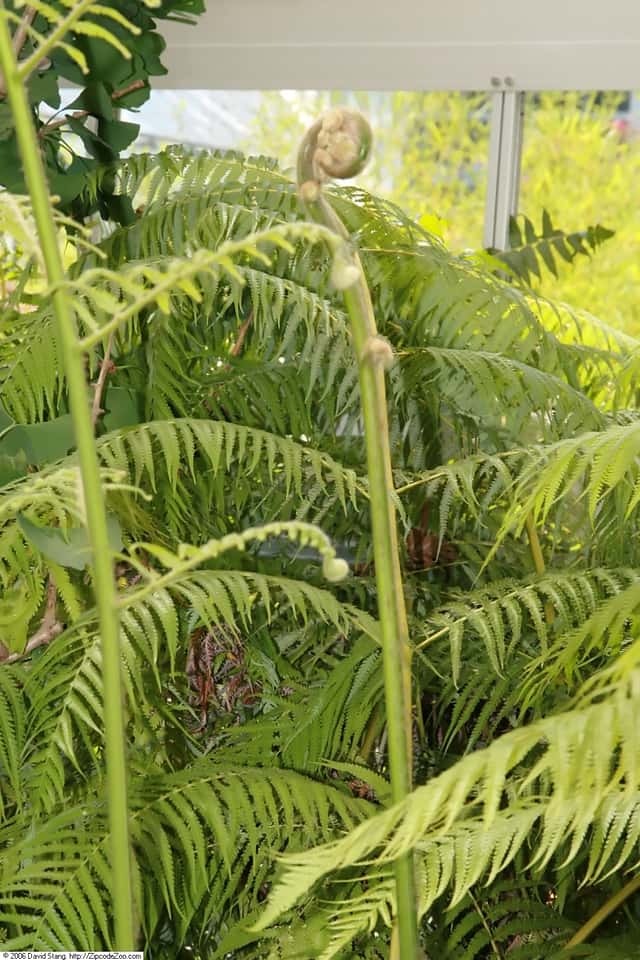
Mexican Tree Fern (Cibotium schiedei) is a hard-care plant from the Cibotiaceae family. Cibotium schiedei, commonly known as the Mexican Tree Fern, is an extremely slow-growing tree fern native to the cloud forests of Mexico. Its fibrous trunk, covered in soft reddish-gold hairs, supports silky light-green fronds that can reach 8–11 feet in length, forming an arched and sculptural cano...
Mexican Tree Fern grows up to 5.0m, spread of 400cm, watering every 4 days, 12°C – 28°C, 70–95% humidity. It is suitable for indoor environments and safe for pets.
Unlike easy-care plants, Mexican Tree Fern demands constant attention to humidity and light. Not recommended for beginners. Unlike many popular species, Mexican Tree Fern is safe to keep around pets. Without adequate drainage, root rot can develop within 8 days.
How to Care for Mexican Tree Fern?
TLDR: Mexican Tree Fern needs Partial shade, watering every 4 days, and temperatures between 12-28°C with 70-95% humidity.
How Often Should You Water Mexican Tree Fern?
Water the substrate every 3–5 days in summer (weekly in winter) and also wet the fibrous trunk regularly—it acts as a moisture reservoir and must never dry out completely. Avoid pouring water directly into the crown on cold days to prevent rot.
How Much Light Does Mexican Tree Fern Need?
Prefers filtered light or partial shade, replicating a cloud forest understory—less than 30% full sun. Direct sunlight burns and bleaches the delicate fronds.
What Is the Best Soil for Mexican Tree Fern?
Use a rich, well-draining substrate: organic compost or leaf mold, coconut fiber or peat moss, perlite or pumice, and orchid bark, with a slightly acidic pH (5.5–6.5). The pot needs generous drainage—large pots should have multiple openings and be elevated off the ground.
What Pot Should You Use for Mexican Tree Fern?
Ceramic or terracotta pots with good drainage (multiple holes in large pots) and, if possible, elevated on pot feet to drain excess water and aerate the roots.
Care Schedule
Fertilize
Every 60 days
Misting
Every 1 days
Repot
Every 1095 days
What Is Mexican Tree Fern and Where Does It Come From?
Cibotium schiedei, commonly known as the Mexican Tree Fern, is an extremely slow-growing tree fern native to the cloud forests of Mexico. Its fibrous trunk, covered in soft reddish-gold hairs, supports silky light-green fronds that can reach 8–11 feet in length, forming an arched and sculptural canopy. Evergreen and without a dormancy period, it is a highly valued species in tropical gardens and as an indoor architectural plant, though it requires patience: it takes several years just to form a visible trunk.
How to Propagate Mexican Tree Fern?
Spore Propagation
- Substrate sterilization is crucial to avoid fungal contamination
- Young seedlings (gametophytes) take months before forming the first true frond
- 1 Collection
Collect mature spores from the underside of the fronds when they are dark brown.
- 2 Sowing
Spread the spores over moist, sterilized peat moss; germination takes 4 to 8 weeks.
- 3 Incubation
Cover with transparent plastic to maintain humidity near 100%, in a bright spot without direct sun and a constant temperature around 72°F (22°C).
Materials needed:
Rhizome Division
- Faster method than spores, but only works on multi-crown adult plants
- 1 Selection
Only applicable to mature specimens with multiple growth crowns.
- 2 Separation
Separate a lateral crown with part of the rhizome and roots intact.
- 3 Planting
Plant immediately in moist substrate and maintain high humidity until established.
Materials needed:
How Big Does Mexican Tree Fern Grow?
TLDR: Mexican Tree Fern can reach up to 5.0m tall with Slow growth rate.
Max height
5.0m
Spread
4.0m
Growth rate
Slow
Foliage
Evergreen
Plant Uses
Ornamental
Great for decoration
Air Purifying
Improves air quality
Is your plant showing symptoms?
Click on the symptom to discover possible causes:
What Diseases Commonly Affect Mexican Tree Fern?
TLDR: Mexican Tree Fern is susceptible to 8 known diseases. Monitor regularly for early detection.
Crown Rot
Crown rot is a serious fungal disease that attacks the crown (base) of the plant where the stem meets the soil. It is caused by various fungal pathogens including Phytophthora, Fusarium, and Rhizoctonia. The disease thrives in waterlogged conditions and can quickly spread to kill the entire plant if not addressed promptly.
Root Rot
Root rot is a serious fungal disease that affects the root system of plants, causing them to decay and die. It is primarily caused by overwatering, poor drainage, or soil-borne fungi such as Pythium, Phytophthora, Rhizoctonia, and Fusarium. The disease thrives in waterlogged conditions where roots are deprived of oxygen, making them susceptible to fungal infection.
Gray Mold (Botrytis Blight)
Gray mold, caused by the fungus Botrytis cinerea, is a widespread necrotrophic pathogen affecting over 1,400 plant species. It thrives in cool, humid conditions and attacks weakened or aging plant tissues, causing soft rot and characteristic gray fuzzy growth.
Scale Insects
Scale insects are small sap-sucking pests that appear as brown, shell-like bumps on plant stems and leaves. There are over 25 species, divided into armored (hard) and unarmored (soft) scales. They feed by piercing plant tissue and extracting sap, which weakens the plant and can lead to yellowing, stunted growth, and even death if left untreated. They also excrete honeydew, which attracts ants and promotes sooty mold growth.
Meaning & Symbolism
Represents resilience and patience: its extremely slow growth—only a few inches of trunk per year—evokes the permanence of ancient tropical forests and the beauty built over decades.
Compare with similar plants
| Attribute | Difficulty | Light | Watering | Pet Safe |
|---|---|---|---|---|
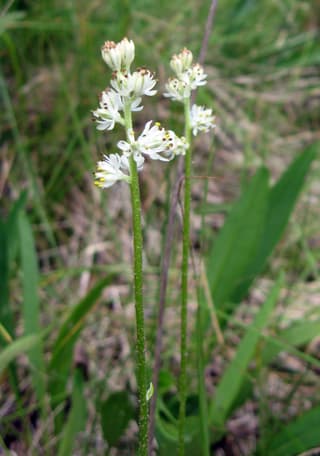
| Sticky false asphodel | Hard | Bright indirect | 1d | ✓ |
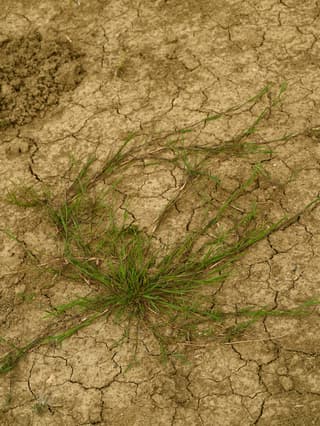
| Creeping bentgrass | Hard | Direct sun | 3d | ✓ |
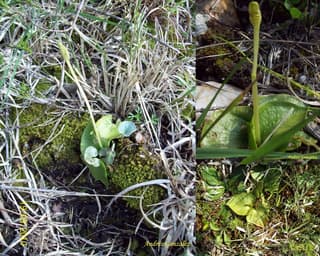
| Bulbous Adder's-tongue | Hard | Partial shade | 4d | ✓ |
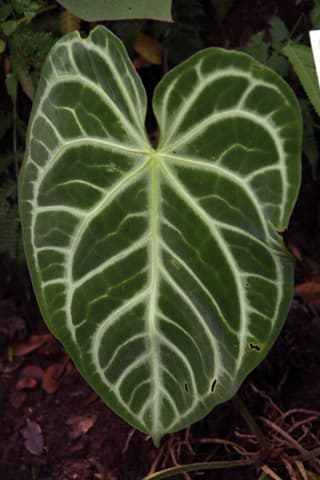
| Crystal Anthurium | Hard | Partial shade | 7d | ⚠️ |