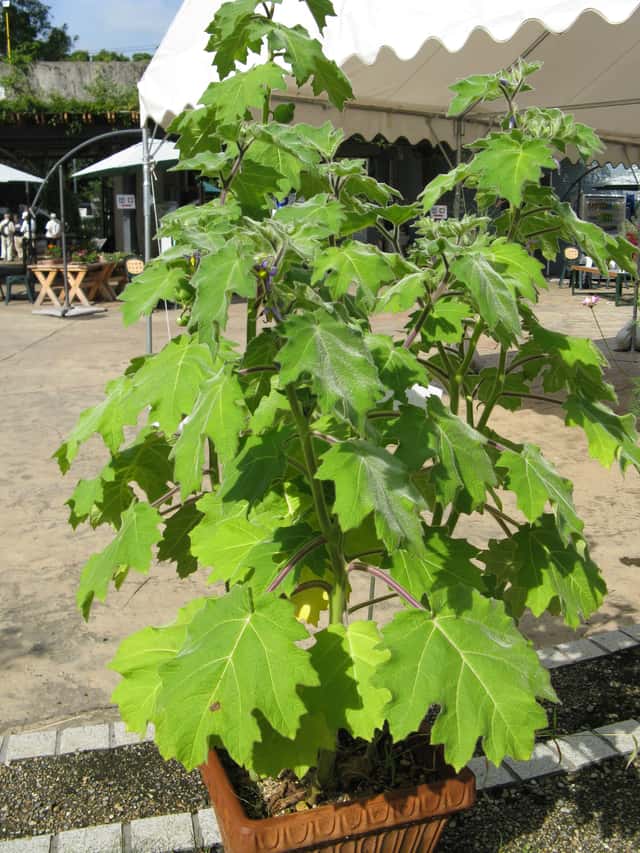
Solanaceae
Nipplefruit (Solanum mammosum)
Solanum mammosum
An outdoor tropical plant requiring full sun, moderate watering every 7-10 days, and well-draining soil. Avoid waterlogging to prevent root rot. Light pruning in spring helps maintain a compact shape.
Every 10 days
Direct sun
18° - 38°C
50% - 80%
Categories
What is Nipplefruit?
Nipplefruit (Solanum mammosum) is a medium-care plant from the Solanaceae family. Solanum mammosum, commonly known as Nipplefruit or Cow's Udder Plant, is a tropical shrub native to South and Central America. It is widely grown as an ornamental plant for its strikingly shaped fruits, which resemble animal udders or nipples. Belonging to the Solanaceae family, it grows up to 1.5 m...
Nipplefruit grows up to 1.5m, spread of 90cm, watering every 10 days, 18°C – 38°C, 50–80% humidity. It is not suitable for indoor environments and not safe for pets.
Without precautions, ingestion can cause irritation in pets. Keep out of reach of cats and dogs.
How to Care for Nipplefruit?
TLDR: Nipplefruit needs Direct sun, watering every 10 days, and temperatures between 18-38°C with 50-80% humidity.
How Often Should You Water Nipplefruit?
Water every 7-10 days, allowing the top layer of soil to dry slightly between waterings. Avoid waterlogging — excess moisture is the main cause of root rot. Water at the base of the plant, preferably in the morning.
How Much Light Does Nipplefruit Need?
Requires full sun: at least 6-8 hours of direct sunlight per day. Best grown outdoors in tropical or subtropical climates. If kept near a window indoors, ensure maximum light exposure, though outdoor cultivation is strongly preferred.
What Is the Best Soil for Nipplefruit?
Use well-draining soil with a slightly acidic to neutral pH (6.0-7.0). Mix garden soil with coarse sand or perlite to improve drainage. Ensure pots or garden beds have adequate drainage holes.
What Pot Should You Use for Nipplefruit?
Terracotta or ceramic pot with drainage holes. For garden planting, raised beds with well-worked soil are ideal.
Care Schedule
Fertilize
Every 30 days
Repot
Every 365 days
What Is Nipplefruit and Where Does It Come From?
Solanum mammosum, commonly known as Nipplefruit or Cow's Udder Plant, is a tropical shrub native to South and Central America. It is widely grown as an ornamental plant for its strikingly shaped fruits, which resemble animal udders or nipples. Belonging to the Solanaceae family, it grows up to 1.5 meters tall, with dense green foliage and white to purple flowers. Despite its ornamental appeal, all parts of the plant are toxic and should be kept away from children and pets.
How to Propagate Nipplefruit?
Seed Sowing
Seeds germinate best in warm temperatures. Keep substrate moist but not soggy during germination.
- 1 Sow seeds in trays filled with moist, well-draining seed mix
- 2 Cover lightly with a thin layer of substrate
- 3 Keep in a warm, bright location at 22-28°C
- 4 Transplant seedlings when they reach 10-15 cm tall
Materials needed:
Stem Cutting
Use clean, sharp tools to prevent disease. Cuttings root quickly in warm conditions.
- 1 Take a healthy semi-hardwood stem cutting of 10-15 cm
- 2 Remove leaves from the lower third
- 3 Apply rooting hormone to the cut end
- 4 Plant in moist, well-draining substrate and keep in a warm location
Materials needed:
How Big Does Nipplefruit Grow?
TLDR: Nipplefruit can reach up to 1.5m tall with Medium growth rate.
Max height
1.5m
Spread
90cm
Growth rate
Medium
Foliage
Evergreen
Warning: Toxic Plant
This plant can be toxic if ingested. Keep out of reach of:
Plant Uses
Ornamental
Great for decoration
Medicinal
Medicinal properties
Medicinal Uses
- Traditionally used in folk medicine to treat coughs, appetite loss, and high blood pressure; fruit extracts have studied antioxidant properties
- Used as a natural insecticide and cockroach repellent in traditional practice
Is your plant showing symptoms?
Click on the symptom to discover possible causes:
What Diseases Commonly Affect Nipplefruit?
TLDR: Nipplefruit is susceptible to 10 known diseases. Monitor regularly for early detection.
Root Rot
Root rot is a serious fungal disease that affects the root system of plants, causing them to decay and die. It is primarily caused by overwatering, poor drainage, or soil-borne fungi such as Pythium, Phytophthora, Rhizoctonia, and Fusarium. The disease thrives in waterlogged conditions where roots are deprived of oxygen, making them susceptible to fungal infection.
Powdery Mildew
Powdery mildew is a common fungal disease caused by various fungi species including Erysiphe, Podosphaera, Oïdium, and Leveillula. It affects over 10,000 plant species worldwide. The disease thrives in warm, dry climates with high humidity and appears as a distinctive white powdery coating on plant surfaces.
Bacterial Wilt
Bacterial wilt is a fatal vascular disease caused by bacteria (Erwinia tracheiphila, Ralstonia solanacearum, Xanthomonas spp.) that infects the water-conducting tissue of plants. The bacteria multiply and block the flow of water and nutrients, causing rapid wilting and plant death within 1-2 weeks.
Spider Mites
Spider mites are tiny arachnids (less than 1/20 inch long) related to spiders and ticks that feed on plant sap. They thrive in hot, dry conditions and can cause significant damage to ornamental and vegetable plants. During severe infestations, crop losses can reach 14% or higher as these pests disrupt vital plant processes including photosynthesis, carbon dioxide absorption, and transpiration.
Meaning & Symbolism
Associated with abundance, fertility, and curiosity in folk cultures of South America and East Asia, where the unusual fruits are used in decorative arrangements and as good luck symbols.
Fun Facts
In China, Taiwan, and other parts of East Asia, the uniquely shaped fruits are popular Christmas and New Year decorations
Despite its toxicity, the plant has demonstrated antioxidant and insecticidal properties in scientific studies
The species name "mammosum" is Latin for "provided with breasts", directly describing the fruit's unusual shape
It is considered an invasive species in several Pacific and Indian Ocean islands due to its rapid spread
Frequently asked questions
How often should I water Nipplefruit?
Can Nipplefruit be grown indoors?
Is Nipplefruit toxic?
What soil does Nipplefruit need?
How do I propagate Nipplefruit?
Compare with similar plants
| Attribute | Difficulty | Light | Watering | Pet Safe |
|---|---|---|---|---|
| Dark Fieldcap | Medium | Low light | 2d | ⚠️ |
| Azalea | Medium | Partial shade | 3d | ⚠️ |
| Muriel's Bamboo | Medium | Partial shade | 3d | ✓ |
| Bougainvillea | Medium | Direct sun | 7d | ⚠️ |




