Liliaceae
Orange Lily (Lilium bulbiferum): Complete Care Guide
Lilium bulbiferum
A hardy outdoor plant, ideal for borders and garden beds. Prefers full sun, well-drained soil, and regular watering without waterlogging. Highly toxic to cats — keep away from felines at all times.
Every 4 days
Bright indirect
-20° - 30°C
40% - 70%
Categories
What is Orange Lily?
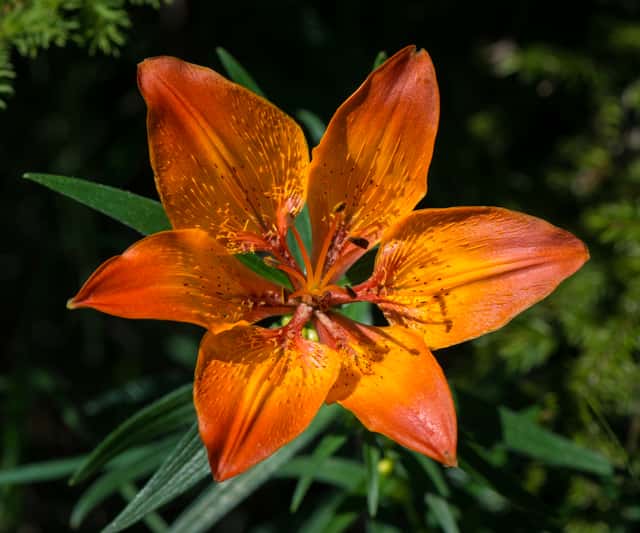
Orange Lily (Lilium bulbiferum) is a medium-care plant from the Liliaceae family. Lilium bulbiferum, commonly known as the Orange Lily or Fire Lily, is a hardy bulbous perennial native to south-central Europe. It produces large, upward-facing, vibrant orange flowers with dark spots, blooming from late spring to early summer. Known for its resilience in cold climates, it is a popu...
Orange Lily grows up to 1.5m, spread of 40cm, watering every 4 days, -20°C – 30°C, 40–70% humidity. It is not suitable for indoor environments and not safe for pets.
Without precautions, ingestion can cause irritation in pets. Keep out of reach of cats and dogs.
How to Care for Orange Lily?
TLDR: Orange Lily needs Bright indirect, watering every 4 days, and temperatures between -20-30°C with 40-70% humidity.
How Often Should You Water Orange Lily?
Water every 3-5 days during active growth, keeping soil moist but never soggy. Reduce watering after flowering as the plant enters dormancy. Avoid wetting foliage to prevent fungal diseases.
How Much Light Does Orange Lily Need?
Plant in full sun with at least 6 hours of direct light daily. Tolerates partial shade but flowering will be reduced. Best positioned with roots shaded and flower heads in sunlight.
What Is the Best Soil for Orange Lily?
Use well-drained, loamy soil rich in organic matter. Incorporate coarse sand or grit to improve drainage. Avoid heavy clay soils that retain excess moisture around the bulbs.
What Pot Should You Use for Orange Lily?
Terracotta or ceramic pot with drainage holes; best grown directly in garden beds for optimal bulb development.
Care Schedule
Fertilize
Every 30 days
What Is Orange Lily and Where Does It Come From?
Lilium bulbiferum, commonly known as the Orange Lily or Fire Lily, is a hardy bulbous perennial native to south-central Europe. It produces large, upward-facing, vibrant orange flowers with dark spots, blooming from late spring to early summer. Known for its resilience in cold climates, it is a popular ornamental choice for borders, cottage gardens, and cutting gardens.
How to Propagate Orange Lily?
Bulbil Division
Harvest bulbils when they are firm and easily detached from the parent plant. Use a light, sandy mix for fastest rooting.
- 1 After flowering, collect bulbils that form in leaf axils along the stem
- 2 Plant bulbils 5 cm deep in light, well-drained soil
- 3 Keep soil lightly moist until first foliage emerges
- 4 Transplant to permanent position the following spring
Materials needed:
Seed Propagation
Germination can be irregular. Cold stratification for 4-6 weeks significantly improves germination rates.
- 1 Harvest ripe seeds in autumn and store in a cool, dry place
- 2 Sow in moist, well-drained seed compost in spring
- 3 Cover lightly with fine compost and maintain 18-22°C
- 4 Transplant seedlings when 5-8 cm tall
Materials needed:
How Big Does Orange Lily Grow?
TLDR: Orange Lily can reach up to 1.5m tall with Medium growth rate.
Max height
1.5m
Spread
40cm
Growth rate
Medium
Foliage
Deciduous
Warning: Toxic Plant
This plant can be toxic if ingested. Keep out of reach of:
Plant Uses
Ornamental
Great for decoration
Is your plant showing symptoms?
Click on the symptom to discover possible causes:
What Diseases Commonly Affect Orange Lily?
TLDR: Orange Lily is susceptible to 5 known diseases. Monitor regularly for early detection.
Gray Mold (Botrytis Blight)
Gray mold, caused by the fungus Botrytis cinerea, is one of the most common fungal diseases in plants. It affects over 200 plant species, including ornamentals, vegetables, fruits, and houseplants. The disease thrives in cool, humid conditions with poor air circulation, causing grayish spots and soft rot on infected tissues.
Root Rot
Root rot is a serious fungal disease that affects the root system of plants, causing them to decay and die. It is primarily caused by overwatering, poor drainage, or soil-borne fungi such as Pythium, Phytophthora, Rhizoctonia, and Fusarium. The disease thrives in waterlogged conditions where roots are deprived of oxygen, making them susceptible to fungal infection.
Aphids
Aphids are small, soft-bodied, pear-shaped insects (1/16 to 1/8 inch long) that feed by sucking nutrient-rich sap from plants. They reproduce rapidly and can quickly weaken plants, causing distorted growth and transmitting plant viruses. Aphids come in various colors including green, black, red, yellow, brown, and gray. They secrete honeydew, a sticky substance that attracts ants and encourages sooty mold growth.
Slugs and Snails
Slugs and snails are mollusks that feed on plant tissue, causing irregular holes in leaves and damage to young seedlings. They are most active at night and in moist conditions, leaving characteristic silvery slime trails. These pests can quickly devastate gardens, especially during wet seasons.
Meaning & Symbolism
In European traditions, the orange lily symbolizes passion, pride, and prosperity. It is also associated with confidence and vitality.
Fun Facts
The Orange Lily produces bulbils in its leaf axils — a unique vegetative adaptation that makes it one of the easiest lilies to propagate naturally.
It is exceptionally frost-hardy, surviving temperatures as low as -20°C, making it ideal for northern European and mountain gardens.
A single mature bulb can simultaneously produce 6-7 upward-facing flowers, each with distinctive dark spots that act as nectar guides for pollinators.
Despite the nickname "Fire Lily," the name refers to the intense flame-like color of its petals, not any heat tolerance.
Frequently asked questions
How often should I water the Orange Lily?
Is the Orange Lily toxic to cats?
Can Orange Lily be grown in containers?
When does the Orange Lily bloom?
How do I propagate Orange Lily?
Compare with similar plants
| Attribute | Difficulty | Light | Watering | Pet Safe |
|---|---|---|---|---|
| Dark Fieldcap | Medium | Low light | 2d | ⚠️ |
| Azalea | Medium | Partial shade | 3d | ⚠️ |
| Bougainvillea | Medium | Direct sun | 7d | ⚠️ |
| Wild Lettuce | Medium | Direct sun | 7d | ⚠️ |



