Orchidaceae
Cymbidium orchid: Medicinal Uses & Care Tips
Cymbidium
Requires bright light and cooler night temperatures in the fall to bloom. The substrate should be kept moist but never waterlogged.
Every 4 days
Bright indirect
10° - 27°C
40% - 60%
Categories
What is Cymbidium orchid?
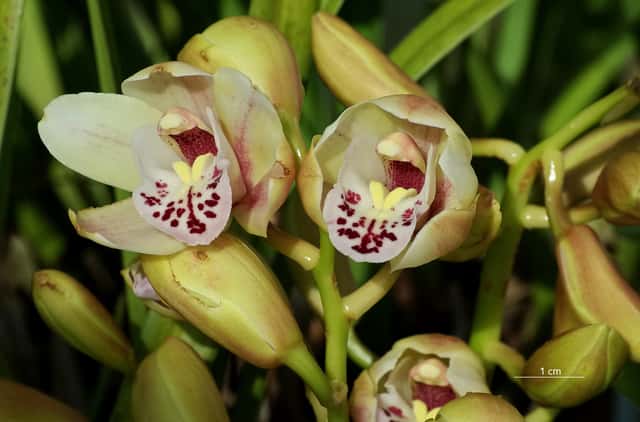
Cymbidium orchid (Cymbidium) is a medium-care plant from the Orchidaceae family. The Cymbidium genus comprises orchids highly valued for their lush flowers and flower spikes that can last up to ten weeks. Unlike many tropical orchids, Cymbidiums prefer cooler climates and are known as cool-climate orchids. They feature oval pseudobulbs and long, strap-shaped leaves that remain g...
Cymbidium orchid grows up to 1.2m, with spread of 60cm, watering every 4 days, 10°C – 27°C, 40–60% humidity. It is suitable for indoor environments and safe for pets.
Unlike many popular species, Cymbidium orchid is safe to keep around pets. Without adequate drainage, root rot can develop within 8 days.
How to Care for Cymbidium orchid?
TLDR: Cymbidium orchid needs Bright indirect, watering every 4 days, and temperatures between 10-27°C with 40-60% humidity.
How Often Should You Water Cymbidium orchid?
Water generously during the growing season (spring and summer), reducing frequency in winter, but without letting the substrate dry out completely.
How Much Light Does Cymbidium orchid Need?
Place in a spot with very bright indirect sunlight. If the leaves are too dark, the plant will not bloom; the ideal color is a lime-green shade.
What Is the Best Soil for Cymbidium orchid?
Use a porous mix composed of pine bark, coconut fiber, and a bit of organic matter.
What Pot Should You Use for Cymbidium orchid?
Deep plastic or ceramic pots that allow for the development of vigorous roots and ensure rapid drainage.
Care Schedule
Fertilize
Every 14 days
Misting
Every 3 days
Rotate
Every 15 days
Repot
Every 730 days
What Is Cymbidium orchid and Where Does It Come From?
The Cymbidium genus comprises orchids highly valued for their lush flowers and flower spikes that can last up to ten weeks. Unlike many tropical orchids, Cymbidiums prefer cooler climates and are known as cool-climate orchids. They feature oval pseudobulbs and long, strap-shaped leaves that remain green year-round.
How to Propagate Cymbidium orchid?
Clump Division
- Avoid overwatering immediately after division to prevent rot in the cut wounds.
- Apply cinnamon powder to the cuts to help with healing.
- 1 Removal and Cleaning
Carefully remove the plant from the pot and remove excess old substrate from the roots.
- 2 Identifying Groups
Identify groups of pseudobulbs. Each division should have at least 3 healthy pseudobulbs with leaves.
- 3 Cutting the Rhizome
Use a sterilized knife or shears to cut the rhizome that joins the groups of pseudobulbs.
- 4 Repotting
Plant each new division in an individual pot with fresh orchid substrate, keeping the pseudobulb at the surface.
Materials needed:
How Big Does Cymbidium orchid Grow?
TLDR: Cymbidium orchid can reach up to 1.2m tall with Slow growth rate.
Max height
1.2m
Spread
60cm
Growth rate
Slow
Foliage
Evergreen
Plant Uses
Ornamental
Great for decoration
Medicinal
Medicinal properties
Is your plant showing symptoms?
Click on the symptom to discover possible causes:
What Diseases Commonly Affect Cymbidium orchid?
TLDR: Cymbidium orchid is susceptible to 19 known diseases. Monitor regularly for early detection.
Root Rot
Root rot is a serious fungal disease that affects the root system of plants, causing them to decay and die. It is primarily caused by overwatering, poor drainage, or soil-borne fungi such as Pythium, Phytophthora, Rhizoctonia, and Fusarium. The disease thrives in waterlogged conditions where roots are deprived of oxygen, making them susceptible to fungal infection.
Mosaic Virus
Mosaic virus is a group of plant viruses that cause mottled, patchy patterns on leaves and can affect a wide variety of plants. The virus creates characteristic yellow, white, and green mosaic patterns, often accompanied by stunted growth and deformed plant parts. This highly contagious disease spreads rapidly through insect vectors and contaminated tools.
Ringspot Virus
Ringspot virus is a viral disease affecting various plant species, causing distinctive circular or ring-shaped chlorotic patterns on leaves and fruits. Transmitted primarily by aphids, nematodes, or through contaminated tools, this virus cannot be cured and infected plants must be managed carefully to prevent spread. The virus weakens plants, reduces yield, and can spread rapidly in gardens if not properly contained.
Spider Mites
Spider mites are tiny arachnids (less than 1/20 inch long) related to spiders and ticks that feed on plant sap. They thrive in hot, dry conditions and can cause significant damage to ornamental and vegetable plants. During severe infestations, crop losses can reach 14% or higher as these pests disrupt vital plant processes including photosynthesis, carbon dioxide absorption, and transpiration.
Meaning & Symbolism
In Asian culture, it symbolizes nobility, friendship, and purity of feelings.
Compare with similar plants
| Attribute | Difficulty | Light | Watering | Pet Safe |
|---|---|---|---|---|
| Flamingo Flower | Medium | Partial shade | 5d | ⚠️ |
| Prayer Plant | Medium | Partial shade | 3d | ✓ |
| Moon Orchid | Easy | Partial shade | 7d | ✓ |
| Boston Fern | Medium | Partial shade | 3d | ✓ |