Arecaceae
Betel Nut Palm: Edible Plant
Areca catechu
Thrives in warm, humid tropical climates. Water regularly to keep soil evenly moist but well-drained. Requires full sun for healthy growth. Fertilize monthly during the growing season with a balanced palm fertilizer.
Every 4 days
Bright indirect
12° - 38°C
70% - 90%
Categories
What is Betel Nut Palm?
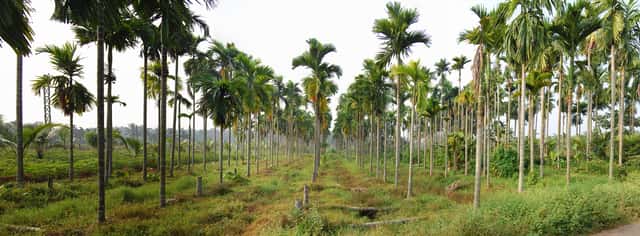
Betel Nut Palm (Areca catechu) is a medium-care plant from the Arecaceae family. The Betel Nut Palm (Areca catechu) is a slender tropical palm native to Southeast Asia, widely cultivated for its fruit, the areca nut. It can reach up to 20 meters tall with a graceful trunk and arching deep-green fronds. It is one of the most widely cultivated palms in the world, holding immense c...
Betel Nut Palm grows up to 20.0m, spread of 300cm, watering every 4 days, 12°C – 38°C, 70–90% humidity. It is suitable for indoor environments and not safe for pets.
Without precautions, ingestion can cause irritation in pets. Keep out of reach of cats and dogs. Without adequate drainage, root rot can develop within 8 days.
How to Care for Betel Nut Palm?
TLDR: Betel Nut Palm needs Bright indirect, watering every 4 days, and temperatures between 12-38°C with 70-90% humidity.
How Often Should You Water Betel Nut Palm?
Water 2–3 times per week, ensuring the soil never fully dries out. Avoid waterlogging, as roots are susceptible to rot in poorly drained conditions.
How Much Light Does Betel Nut Palm Need?
Requires full sun exposure, at least 6 hours of direct sunlight per day. Indoors, place near a south- or west-facing window with maximum light.
What Is the Best Soil for Betel Nut Palm?
Use sandy, well-draining soil with a slightly acidic pH (6.0–7.0). A mix of loam, coarse sand, and perlite works well to ensure proper drainage.
What Pot Should You Use for Betel Nut Palm?
In containers, use large clay or ceramic pots with adequate drainage holes. The pot should be at least 50 cm deep to accommodate the root system.
Care Schedule
Fertilize
Every 60 days
Misting
Every 2 days
Repot
Every 730 days
What Is Betel Nut Palm and Where Does It Come From?
The Betel Nut Palm (Areca catechu) is a slender tropical palm native to Southeast Asia, widely cultivated for its fruit, the areca nut. It can reach up to 20 meters tall with a graceful trunk and arching deep-green fronds. It is one of the most widely cultivated palms in the world, holding immense cultural and economic significance across tropical Asia.
How Big Does Betel Nut Palm Grow?
TLDR: Betel Nut Palm can reach up to 20.0m tall with Medium growth rate.
Max height
20.0m
Spread
3.0m
Growth rate
Medium
Foliage
Evergreen
Warning: Toxic Plant
This plant can be toxic if ingested. Keep out of reach of:
Plant Uses
Edible
Can be consumed
Medicinal
Medicinal properties
Ornamental
Great for decoration
Medicinal Uses
- Used for centuries as a mild stimulant in traditional Asian medicine
- Contains arecoline alkaloid, used to aid digestion and as a vermifuge in folk medicine
Culinary Uses
- Areca nuts chewed with betel leaf and slaked lime throughout Asia
- Young palm hearts are edible and used in regional cuisines
Is your plant showing symptoms?
Click on the symptom to discover possible causes:
What Diseases Commonly Affect Betel Nut Palm?
TLDR: Betel Nut Palm is susceptible to 9 known diseases. Monitor regularly for early detection.
Root Rot
Root rot is a serious fungal disease that affects the root system of plants, causing them to decay and die. It is primarily caused by overwatering, poor drainage, or soil-borne fungi such as Pythium, Phytophthora, Rhizoctonia, and Fusarium. The disease thrives in waterlogged conditions where roots are deprived of oxygen, making them susceptible to fungal infection.
Leaf Spot
Leaf spot is a common fungal disease caused by various pathogens including Alternaria, Ascochyta, Colletotrichum, Septoria, and Venturia. It primarily affects leaves, causing discolored spots that can lead to premature leaf drop if left untreated.
Fusarium Wilt
Fusarium wilt is a serious fungal disease caused by the soil-borne fungus Fusarium oxysporum. The fungus invades roots and blocks the water-conducting vessels (xylem) of the plant, causing progressive wilting and eventual death. Host-specific forms of the pathogen exist that attack different plant species.
Phytophthora Blight
Devastating fungal disease caused by Phytophthora species (primarily P. capsici and P. infestans), famously responsible for the Irish Potato Famine in the 1840s. Affects all plant parts including roots, stems, leaves, and fruits in warm, wet conditions. The pathogen is technically an oomycete (water mold) that thrives in saturated soils and can survive in soil for 5+ years.
Meaning & Symbolism
In Asian cultures, the areca nut symbolizes hospitality, fertility, and good fortune. It is offered at weddings and religious ceremonies as a token of respect and prosperity.
Compare with similar plants
| Attribute | Difficulty | Light | Watering | Pet Safe |
|---|---|---|---|---|
| Dark Fieldcap | Medium | Low light | 2d | ⚠️ |
| Azalea | Medium | Partial shade | 3d | ⚠️ |
| Bougainvillea | Medium | Direct sun | 7d | ⚠️ |
| Wild Lettuce | Medium | Direct sun | 7d | ⚠️ |



