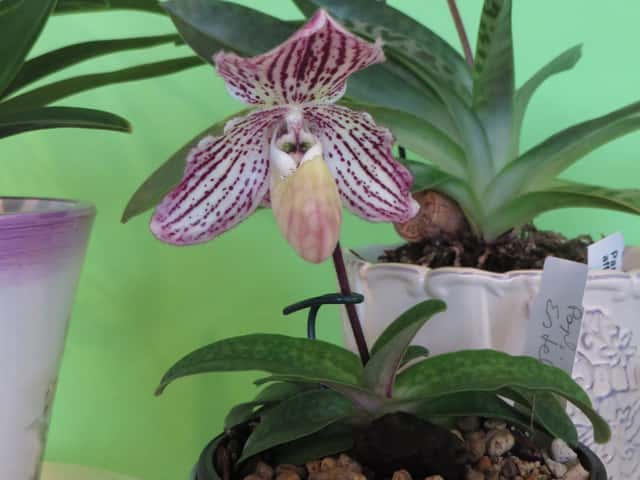
Orchidaceae
Lady Slipper Orchid (Paphiopedilum): Complete Care Guide
Paphiopedilum sp
Lady Slipper Orchids thrive in low to medium indirect light, consistently moist well-draining media, moderate humidity, and temperatures between 13°C and 29°C. Water every 5 days, mist every 3 days, and fertilize monthly. Repot every 2 years as the medium breaks down.
Every 5 days
Low light
13° - 29°C
40% - 70%
Categories
What is Lady Slipper Orchid?
Lady Slipper Orchid (Paphiopedilum sp) is a medium-care plant from the Orchidaceae family. Paphiopedilum, commonly known as the Lady Slipper Orchid, is a genus of terrestrial orchids native to the humid forests of Southeast Asia. Distinguished by their unique pouch-shaped lip (the "slipper"), these orchids produce long-lasting, exotic blooms in a wide range of colors. Unlike most orchids,...
Lady Slipper Orchid grows up to 45cm, spread of 40cm, watering every 5 days, 13°C – 29°C, 40–70% humidity. It is suitable for indoor environments and safe for pets.
Unlike many popular species, Lady Slipper Orchid is safe to keep around pets. Without adequate drainage, root rot can develop within 10 days.
How to Care for Lady Slipper Orchid?
TLDR: Lady Slipper Orchid needs Low light, watering every 5 days, and temperatures between 13-29°C with 40-70% humidity.
How Often Should You Water Lady Slipper Orchid?
Water every 5 days, keeping the growing medium consistently moist but never soggy. Paphiopedilums lack pseudobulbs for water storage, so never allow them to dry out completely. Use tepid, low-mineral water if possible, and avoid getting water in the crown.
How Much Light Does Lady Slipper Orchid Need?
Provide low to medium indirect light (1,000–2,000 lux). East or north-facing windows are ideal. Avoid direct sunlight, which will scorch the leaves. Under artificial lighting, place the light source 30–50 cm above the plant.
What Is the Best Soil for Lady Slipper Orchid?
Use a fine to medium-grade orchid bark mix with added perlite and sphagnum moss for good drainage and moisture retention. Avoid heavy potting soil. For limestone-loving species, add small pieces of calcite or oyster shell to the medium.
What Pot Should You Use for Lady Slipper Orchid?
Use a transparent plastic pot with drainage holes to monitor root health, or a classic terracotta orchid pot. Avoid large pots as Paphiopedilums prefer snug conditions.
Care Schedule
Fertilize
Every 30 days
Misting
Every 3 days
Repot
Every 730 days
What Is Lady Slipper Orchid and Where Does It Come From?
Paphiopedilum, commonly known as the Lady Slipper Orchid, is a genus of terrestrial orchids native to the humid forests of Southeast Asia. Distinguished by their unique pouch-shaped lip (the "slipper"), these orchids produce long-lasting, exotic blooms in a wide range of colors. Unlike most orchids, they are true ground-dwellers, growing in leaf litter and mossy forest floors.
How to Propagate Lady Slipper Orchid?
Division
Divide only mature plants with multiple growths. Single-fan divisions grow slowly and may not flower for 1-2 years.
- 1 Wait until the plant has at least 3-5 fan-like growth sections
- 2 Remove the plant from its pot and gently separate clumps
- 3 Ensure each division has healthy roots and at least 2-3 fans
- 4 Pot each division in fresh orchid bark medium
- 5 Place in a humid, shaded location until established
Materials needed:
How Big Does Lady Slipper Orchid Grow?
TLDR: Lady Slipper Orchid can reach up to 45cm tall with Slow growth rate.
Max height
45cm
Spread
40cm
Growth rate
Slow
Foliage
Evergreen
Plant Uses
Ornamental
Great for decoration
Is your plant showing symptoms?
Click on the symptom to discover possible causes:
What Diseases Commonly Affect Lady Slipper Orchid?
TLDR: Lady Slipper Orchid is susceptible to 11 known diseases. Monitor regularly for early detection.
Root Rot
Root rot is a serious fungal disease that affects the root system of plants, causing them to decay and die. It is primarily caused by overwatering, poor drainage, or soil-borne fungi such as Pythium, Phytophthora, Rhizoctonia, and Fusarium. The disease thrives in waterlogged conditions where roots are deprived of oxygen, making them susceptible to fungal infection.
Bacterial Soft Rot
Bacterial soft rot is a destructive plant disease caused primarily by bacteria from the genera Pectobacterium (formerly Erwinia) and Dickeya. These bacteria produce enzymes that break down plant cell walls, causing rapid and foul-smelling tissue decomposition. It mainly affects succulent tissues such as tubers, fruits, stems, and bulbs, being especially problematic in warm and humid conditions.
Bacterial Leaf Spot
Bacterial leaf spot is a plant disease caused by bacteria in the Xanthomonas and Pseudomonas genera that affects various ornamental and edible plants. The bacteria infect leaves through wounds or natural openings, causing characteristic lesions that can lead to premature leaf drop and plant weakening.
Fusarium Wilt
Fusarium wilt is a serious fungal disease caused by the soil-borne fungus Fusarium oxysporum. The fungus invades roots and blocks the water-conducting vessels (xylem) of the plant, causing progressive wilting and eventual death. Host-specific forms of the pathogen exist that attack different plant species.
Meaning & Symbolism
Lady Slipper Orchids symbolize love, luxury, and rare beauty. Their exotic, intricate blooms have long been associated with elegance and charm in Asian cultures.
Fun Facts
Despite being called "slipper" orchids, no one actually wears them — the name comes from the pouch-shaped lip that traps insects to aid pollination.
Paphiopedilum is one of the few terrestrial orchid genera, growing in leaf litter and forest floors rather than on trees like most orchids.
Some Paphiopedilum species can bloom for up to 3 months on a single spike, making them among the longest-lasting orchid flowers.
Many wild Paphiopedilum species are critically endangered due to habitat loss and illegal collection — always buy from reputable nurseries.
Frequently asked questions
How often should I water my Lady Slipper Orchid?
Does Lady Slipper Orchid need a lot of light?
Is Lady Slipper Orchid toxic to pets?
How do I get my Lady Slipper Orchid to rebloom?
When should I repot my Lady Slipper Orchid?
Compare with similar plants
| Attribute | Difficulty | Light | Watering | Pet Safe |
|---|---|---|---|---|
| Dark Fieldcap | Medium | Low light | 2d | ⚠️ |
| Azalea | Medium | Partial shade | 3d | ⚠️ |
| Muriel's Bamboo | Medium | Partial shade | 3d | ✓ |
| Bougainvillea | Medium | Direct sun | 7d | ⚠️ |




