Calceolariaceae
Pocketbook Plant (Calceolaria x herbeohybrida): Complete Care Guide
Calceolaria x herbeohybrida
Keep soil consistently moist but never waterlogged. Provide bright indirect light and cool temperatures (45-65°F / 7-18°C). Fertilize every 14 days during bloom. Never wet the flowers directly. This short-lived plant puts on a spectacular show!
Every 3 days
Partial shade
7° - 18°C
50% - 70%
Categories
What is Pocketbook Plant?
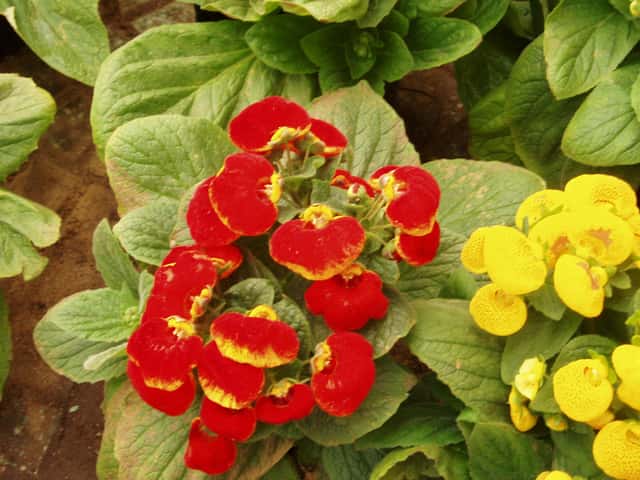
Pocketbook Plant (Calceolaria x herbeohybrida) is a medium-care plant from the Calceolariaceae family. The Pocketbook Plant (Calceolaria x herbeohybrida) is a hybrid ornamental native to the Andean regions of South America. It captivates with its extraordinary blooms — pouch-shaped flowers in shades of yellow, orange, red, pink, and bicolor. Grown as a houseplant or cool-season annual, it thrives ind...
Pocketbook Plant grows up to 35cm, spread of 30cm, watering every 3 days, 7°C – 18°C, 50–70% humidity. It is suitable for indoor environments and not safe for pets.
Without precautions, ingestion can cause irritation in pets. Keep out of reach of cats and dogs. Without adequate drainage, root rot can develop within 7 days.
How to Care for Pocketbook Plant?
TLDR: Pocketbook Plant needs Partial shade, watering every 3 days, and temperatures between 7-18°C with 50-70% humidity.
How Often Should You Water Pocketbook Plant?
Water every 2-3 days, keeping the potting mix evenly moist. Never allow the soil to dry out completely or become soggy. Always water at the base to avoid wetting flowers and leaves, which can promote fungal diseases.
How Much Light Does Pocketbook Plant Need?
Place in bright indirect light — near an east- or west-facing window. Avoid intense direct sun which can scorch the delicate flowers. Keep away from cold drafts in winter.
What Is the Best Soil for Pocketbook Plant?
Use a well-draining, slightly acidic potting mix (pH 5.5-6.5) rich in organic matter. A blend of peat-based mix with perlite works well. Good drainage is essential to prevent root and crown rot.
What Pot Should You Use for Pocketbook Plant?
Medium ceramic or terracotta pots (6-8 inches diameter) with drainage holes are ideal. Avoid oversized pots which retain excess moisture.
Care Schedule
Fertilize
Every 14 days
Rotate
Every 30 days
Repot
Every 365 days
What Is Pocketbook Plant and Where Does It Come From?
The Pocketbook Plant (Calceolaria x herbeohybrida) is a hybrid ornamental native to the Andean regions of South America. It captivates with its extraordinary blooms — pouch-shaped flowers in shades of yellow, orange, red, pink, and bicolor. Grown as a houseplant or cool-season annual, it thrives indoors in bright indirect light and cool temperatures.
How to Propagate Pocketbook Plant?
Seed Propagation
Use fresh seeds for best germination rates. Keep the mix evenly moist without waterlogging. Do not cover seeds with soil — they need light to germinate. Thin seedlings to prevent overcrowding.
- 1 Sow seeds on moist seed-starting mix in a protected location
- 2 Maintain temperature between 60-65°F (15-18°C) for optimal germination
- 3 Cover with plastic wrap or a propagator lid to retain humidity
- 4 Transplant seedlings when they develop 2-3 true leaves
Materials needed:
How Big Does Pocketbook Plant Grow?
TLDR: Pocketbook Plant can reach up to 35cm tall with Slow growth rate.
Max height
35cm
Spread
30cm
Growth rate
Slow
Foliage
Evergreen
Warning: Toxic Plant
This plant can be toxic if ingested. Keep out of reach of:
Plant Uses
Ornamental
Great for decoration
Is your plant showing symptoms?
Click on the symptom to discover possible causes:
What Diseases Commonly Affect Pocketbook Plant?
TLDR: Pocketbook Plant is susceptible to 13 known diseases. Monitor regularly for early detection.
Aphids
Aphids are small, soft-bodied, pear-shaped insects (1/16 to 1/8 inch long) that feed by sucking nutrient-rich sap from plants. They reproduce rapidly and can quickly weaken plants, causing distorted growth and transmitting plant viruses. Aphids come in various colors including green, black, red, yellow, brown, and gray. They secrete honeydew, a sticky substance that attracts ants and encourages sooty mold growth.
Root Rot
Root rot is a serious fungal disease that affects the root system of plants, causing them to decay and die. It is primarily caused by overwatering, poor drainage, or soil-borne fungi such as Pythium, Phytophthora, Rhizoctonia, and Fusarium. The disease thrives in waterlogged conditions where roots are deprived of oxygen, making them susceptible to fungal infection.
Crown Rot
Crown rot is a serious fungal disease that attacks the crown (base) of the plant where the stem meets the soil. It is caused by various fungal pathogens including Phytophthora, Fusarium, and Rhizoctonia. The disease thrives in waterlogged conditions and can quickly spread to kill the entire plant if not addressed promptly.
Gray Mold (Botrytis Blight)
Gray mold, caused by the fungus Botrytis cinerea, is a widespread necrotrophic pathogen affecting over 1,400 plant species. It thrives in cool, humid conditions and attacks weakened or aging plant tissues, causing soft rot and characteristic gray fuzzy growth.
Meaning & Symbolism
In the language of flowers, the Pocketbook Plant symbolizes joy, pleasant surprises, and a warm welcome. Its unique pouch-shaped blooms represent creativity and cheerfulness.
Fun Facts
Its pouch-shaped flowers evolved to attract specific bee pollinators that must vibrate their flight muscles to release pollen — a process called buzz pollination
The name Calceolaria comes from the Latin calceus meaning shoe — a nod to the unique slipper-like flower shape
This plant is a garden hybrid bred from several wild Andean species including C. crenatiflora and C. corymbosa
It loves cool mountain-like conditions because its wild ancestors grow at high altitudes in the Andes of South America
Frequently asked questions
How often should I water my Pocketbook Plant?
Does the Pocketbook Plant need direct sunlight?
What temperature does the Pocketbook Plant prefer?
Is the Pocketbook Plant toxic to pets?
How long does the Pocketbook Plant bloom?
Compare with similar plants
| Attribute | Difficulty | Light | Watering | Pet Safe |
|---|---|---|---|---|
| Dark Fieldcap | Medium | Low light | 2d | ⚠️ |
| Azalea | Medium | Partial shade | 3d | ⚠️ |
| Muriel's Bamboo | Medium | Partial shade | 3d | ✓ |
| Bougainvillea | Medium | Direct sun | 7d | ⚠️ |




