Myrtaceae
Pohutukawa: Full Sun Plant
Metrosideros excelsa
Requires full sun and well-drained soil. It is highly resistant to coastal salinity and, once established, tolerates periods of drought.
Every 7 days
Direct sun
-5° - 30°C
30% - 50%
Categories
What is Pohutukawa?
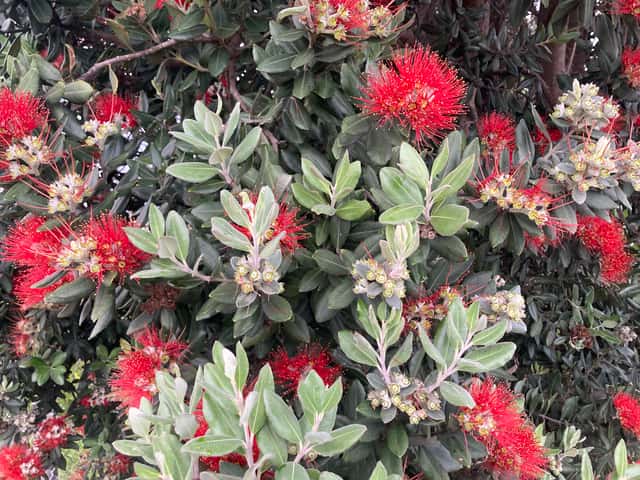
Pohutukawa (Metrosideros excelsa) is a medium-care plant from the Myrtaceae family. Metrosideros excelsa, widely known as the Pohutukawa or New Zealand Christmas Tree, is a majestic coastal tree. It is famous for its explosion of bright red flowers composed of long stamens that appear at the height of summer. Its leaves are leathery, deep dark green on the upper surface and covered...
Pohutukawa grows up to 15.0m, with spread of 1500cm, watering every 7 days, -5°C – 30°C, 30–50% humidity. It is not suitable for indoor environments and safe for pets.
Unlike many popular species, Pohutukawa is safe to keep around pets.
How to Care for Pohutukawa?
TLDR: Pohutukawa needs Direct sun, watering every 7 days, and temperatures between -5-30°C with 30-50% humidity.
How Often Should You Water Pohutukawa?
Water young plants regularly to establish the root system. Mature trees are drought-tolerant but appreciate watering during very dry summers.
How Much Light Does Pohutukawa Need?
This plant requires direct sunlight to bloom. In shaded locations, growth will be stunted and flowering will be sparse or non-existent.
What Is the Best Soil for Pohutukawa?
Prefers slightly acidic to neutral soils with excellent drainage. It tolerates poor, sandy soils typical of coastal regions.
What Pot Should You Use for Pohutukawa?
If grown in a pot when young, use large containers with ample drainage holes and a sandy substrate.
Care Schedule
Fertilize
Every 30 days
What Is Pohutukawa and Where Does It Come From?
Metrosideros excelsa, widely known as the Pohutukawa or New Zealand Christmas Tree, is a majestic coastal tree. It is famous for its explosion of bright red flowers composed of long stamens that appear at the height of summer. Its leaves are leathery, deep dark green on the upper surface and covered with dense white hairs on the lower surface, giving it a silvery appearance. It is an extremely resilient species, capable of growing on rocky cliffs and withstanding strong salt winds.
How to Propagate Pohutukawa?
Summer Stem Cuttings
- Keep humidity high using a plastic cover
- Avoid intense direct sunlight on cuttings until they take root
- 1 Cutting Selection
Cut a 10-15 cm segment of semi-mature wood from the current year's growth.
- 2 Preparation
Remove leaves from the lower half and dip the base in rooting hormone.
- 3 Planting
Insert into a light substrate of sand and peat, keeping it in a humid and warm environment.
Materials needed:
Seed Propagation
- Seeds lose viability quickly; plant immediately after harvest
- Germination requires constant light and heat
- 1 Collection
Harvest seed capsules when they are dry and brown.
- 2 Sowing
Scatter the fine seeds over the surface of a fine compost without covering them completely.
- 3 Watering
Moisten with a spray bottle to avoid displacing the seeds.
Materials needed:
How Big Does Pohutukawa Grow?
TLDR: Pohutukawa can reach up to 15.0m tall with Medium growth rate.
Max height
15.0m
Spread
15.0m
Growth rate
Medium
Foliage
Evergreen
Plant Uses
Ornamental
Great for decoration
Medicinal Uses
- The bark was traditionally used in Māori medicine to treat dysentery and sore throats due to its astringent properties.
Is your plant showing symptoms?
Click on the symptom to discover possible causes:
What Diseases Commonly Affect Pohutukawa?
TLDR: Pohutukawa is susceptible to 13 known diseases. Monitor regularly for early detection.
Root Rot
Root rot is a serious fungal disease that affects the root system of plants, causing them to decay and die. It is primarily caused by overwatering, poor drainage, or soil-borne fungi such as Pythium, Phytophthora, Rhizoctonia, and Fusarium. The disease thrives in waterlogged conditions where roots are deprived of oxygen, making them susceptible to fungal infection.
Phytophthora Root Rot
Disease caused by fungus-like organisms (oomycetes) that live in soil and can survive for years. It affects roots, stem, and crown of plants, being especially severe in waterlogged or poorly drained soils. It is the second most common cause of root rot in trees and shrubs.
Pythium Root Rot
Pythium root rot is a serious fungal disease caused by various Pythium species including P. aphanidermatum, P. ultimum, and P. irregulare. These water molds are present in practically all cultivated soils and attack plant roots under wet conditions, causing rapid wet rot that can extend into the stem. The disease is favored by poor drainage, overwatering, and specific temperatures depending on the species.
Scale Insects
Scale insects are small sap-sucking pests that appear as brown, shell-like bumps on plant stems and leaves. There are over 25 species, divided into armored (hard) and unarmored (soft) scales. They feed by piercing plant tissue and extracting sap, which weakens the plant and can lead to yellowing, stunted growth, and even death if left untreated. They also excrete honeydew, which attracts ants and promotes sooty mold growth.
Meaning & Symbolism
For the Māori people, the Pohutukawa represents strength, resilience, and the connection between the living and the dead, serving as the guardian of the entrance to the underworld in their legends.
Compare with similar plants
| Attribute | Difficulty | Light | Watering | Pet Safe |
|---|---|---|---|---|
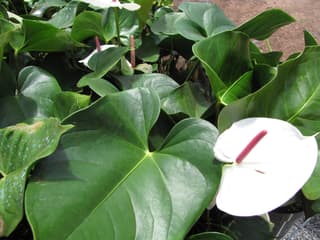
| Flamingo Flower | Medium | Partial shade | 5d | ⚠️ |
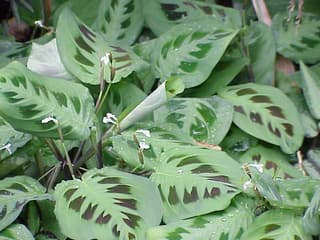
| Prayer Plant | Medium | Partial shade | 3d | ✓ |
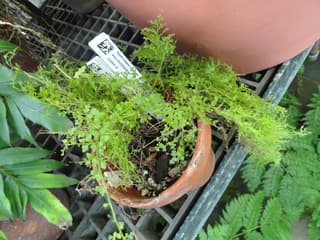
| Boston Fern | Medium | Partial shade | 3d | ✓ |
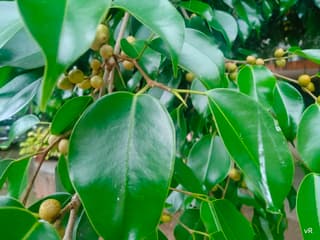
| Weeping Fig | Medium | Partial shade | 10d | ⚠️ |