Rosaceae
Persian Yellow Rose: Complete Care Guide
Rosa foetida
Plant in full sun with excellent air circulation. Water deeply but infrequently, allowing soil to dry slightly between waterings. Light annual pruning after flowering. Highly susceptible to black spot — keep foliage dry and apply preventive fungicide. Fertilize every 30 days during the growing season.
Every 7 days
Direct sun
-28° - 35°C
30% - 60%
Categories
What is Persian Yellow Rose?
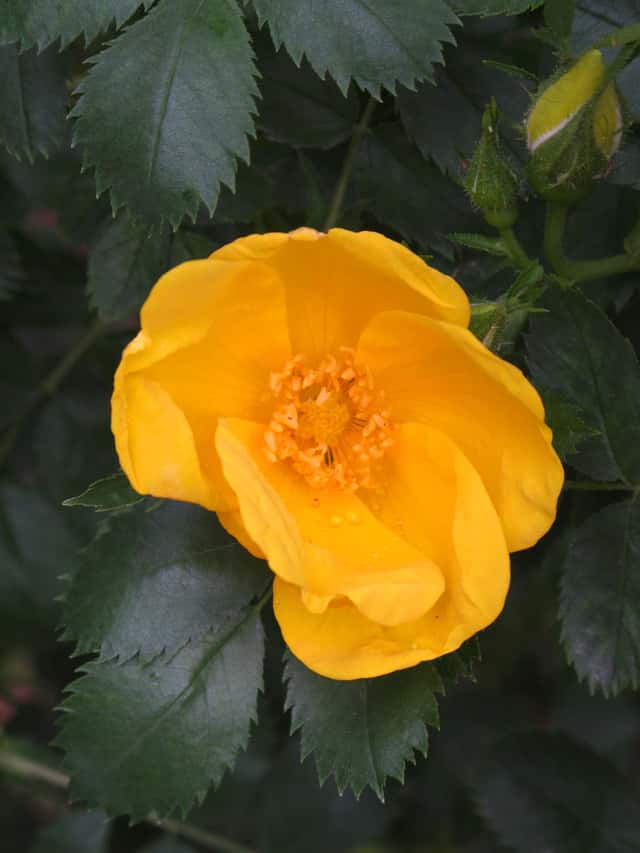
Persian Yellow Rose (Rosa foetida) is a medium-care plant from the Rosaceae family. Rosa foetida, commonly known as the Persian Yellow Rose or Austrian Briar, is a thorny deciduous shrub native to Southwest Asia. It produces intensely golden-yellow single flowers in late spring to early summer, with a distinctive musky scent that inspired its Latin name "foetida." It is historicall...
Persian Yellow Rose grows up to 3.0m, with spread of 150cm, watering every 7 days, -28°C – 35°C, 30–60% humidity. It is not suitable for indoor environments and safe for pets.
Unlike many popular species, Persian Yellow Rose is safe to keep around pets.
How to Care for Persian Yellow Rose?
TLDR: Persian Yellow Rose needs Direct sun, watering every 7 days, and temperatures between -28-35°C with 30-60% humidity.
How Often Should You Water Persian Yellow Rose?
Water deeply every 7 days during establishment. Mature plants are moderately drought-tolerant but should not be left bone dry. Always water at the base — avoid wetting foliage to prevent fungal diseases. Water in the morning for best results.
How Much Light Does Persian Yellow Rose Need?
Requires full sun — minimum 6 hours of direct sunlight daily. Adequate sun promotes abundant flowering and reduces fungal disease risk. Avoid shady spots; insufficient light weakens the plant and increases disease susceptibility.
What Is the Best Soil for Persian Yellow Rose?
Prefers well-draining loamy soil with good fertility and a pH of 6.0–7.0. Amend with organic compost at planting time. Excellent drainage is essential — Rosa foetida does not tolerate waterlogged conditions.
What Pot Should You Use for Persian Yellow Rose?
Clay or terracotta pot with large drainage holes. For container growing, use a pot at least 50 cm in diameter. In-ground planting is strongly preferred for best performance.
Care Schedule
Fertilize
Every 30 days
What Is Persian Yellow Rose and Where Does It Come From?
Rosa foetida, commonly known as the Persian Yellow Rose or Austrian Briar, is a thorny deciduous shrub native to Southwest Asia. It produces intensely golden-yellow single flowers in late spring to early summer, with a distinctive musky scent that inspired its Latin name "foetida." It is historically significant as the ancestor of all modern yellow roses.
How to Propagate Persian Yellow Rose?
Hardwood Cutting
Use sterilized pruning tools. Hardwood cuttings work better than softwood for species roses.
- 1 Cut 20-25 cm sections from mature stems in autumn
- 2 Remove lower leaves, leaving only 2-3 at the tip
- 3 Apply rooting hormone to the cut end
- 4 Plant in well-draining sandy mix and keep lightly moist
- 5 Protect from hard frost until rooted
Materials needed:
Budding / Grafting
Preferred method for commercial production. Results in more vigorous plants with greater longevity.
- 1 Select a vigorous rootstock
- 2 Perform T-budding or chip budding
- 3 Secure with grafting tape
- 4 Keep in partial shade until union establishes
Materials needed:
How Big Does Persian Yellow Rose Grow?
TLDR: Persian Yellow Rose can reach up to 3.0m tall with Medium growth rate.
Max height
3.0m
Spread
1.5m
Growth rate
Medium
Foliage
Deciduous
Warning: Toxic Plant
This plant can be toxic if ingested. Keep out of reach of:
Plant Uses
Ornamental
Great for decoration
Is your plant showing symptoms?
Click on the symptom to discover possible causes:
What Diseases Commonly Affect Persian Yellow Rose?
TLDR: Persian Yellow Rose is susceptible to 10 known diseases. Monitor regularly for early detection.
Black Spot
Black spot is the most serious fungal disease affecting roses, caused by the fungus Diplocarpon rosae. It is characterized by dark circular spots on leaves that progress to yellowing and premature leaf drop. The disease thrives in humid and cool conditions, especially early in the growing season.
Powdery Mildew
Powdery mildew is a common fungal disease caused by various fungi species including Erysiphe, Podosphaera, Oïdium, and Leveillula. It affects over 10,000 plant species worldwide. The disease thrives in warm, dry climates with high humidity and appears as a distinctive white powdery coating on plant surfaces.
Rust
Rust is a common fungal disease caused by fungi in the order Pucciniales that affects a wide variety of plants. The disease gets its name from the characteristic orange, yellow, or reddish-brown pustules that appear on leaves, resembling metal rust. This obligate fungal parasite requires living plants to survive and can cause significant economic losses in agricultural crops.
Aphids
Aphids are small, soft-bodied, pear-shaped insects (1/16 to 1/8 inch long) that feed by sucking nutrient-rich sap from plants. They reproduce rapidly and can quickly weaken plants, causing distorted growth and transmitting plant viruses. Aphids come in various colors including green, black, red, yellow, brown, and gray. They secrete honeydew, a sticky substance that attracts ants and encourages sooty mold growth.
Meaning & Symbolism
The Persian Yellow Rose symbolizes joy, friendship, and warm admiration. Its golden blooms have historically represented exuberant beauty and sincere appreciation, carrying deep significance in both Persian and European floral traditions.
Fun Facts
Rosa foetida is the direct ancestor of all modern yellow roses — without it, yellow garden roses would not exist
The name "foetida" means fetid in Latin, but most people find the flowers' unusual musky scent more interesting than unpleasant
With proper care, Rosa foetida can live up to 20 years, eventually forming a large, impressive shrub
It is one of the hardiest species roses, capable of surviving temperatures as low as -28°C (-18°F)
Frequently asked questions
How often should I water Rosa foetida?
Is the Persian Yellow Rose toxic to pets?
Why are my rose leaves getting black spots?
When and how should I prune Rosa foetida?
Can Rosa foetida be grown in a container?
Compare with similar plants
| Attribute | Difficulty | Light | Watering | Pet Safe |
|---|---|---|---|---|
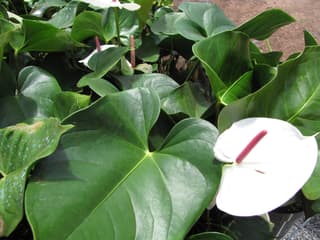
| Flamingo Flower | Medium | Partial shade | 5d | ⚠️ |
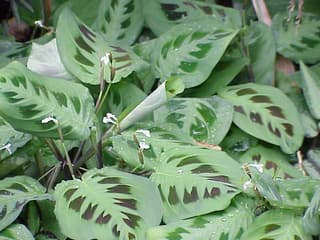
| Prayer Plant | Medium | Partial shade | 3d | ✓ |
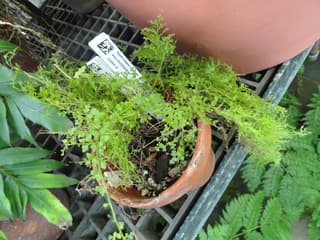
| Boston Fern | Medium | Partial shade | 3d | ✓ |
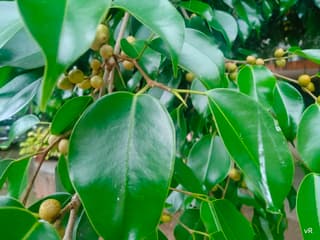
| Weeping Fig | Medium | Partial shade | 10d | ⚠️ |