Gunneraceae
Giant Rhubarb: The Plant with the World's Most Spectacular Leaves
Gunnera manicata
An imposing plant requiring consistently moist soil and ample space. Prefers partial shade in warm climates with regular feeding during the growing season. Ideal for water gardens, pond margins, and boggy areas.
Every 3 days
Partial shade
-12° - 30°C
60% - 85%
Categories
What is Giant Rhubarb?
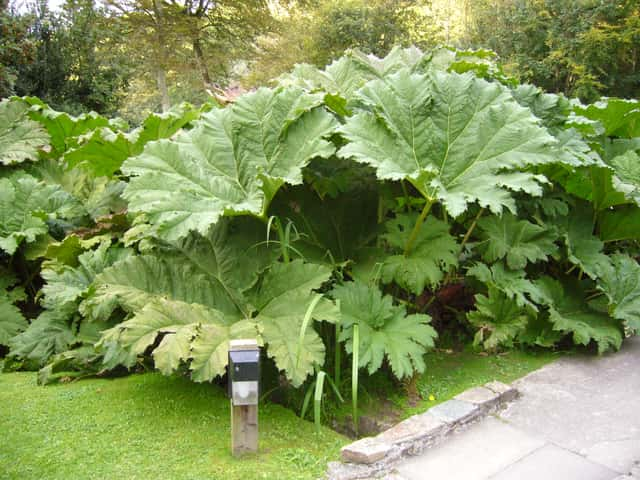
Giant Rhubarb (Gunnera manicata) is a medium-care plant from the Gunneraceae family. Gunnera manicata is a monumental clump-forming herbaceous perennial native to the Serra do Mar coastal mountains of southern Brazil. Commonly known as Giant Rhubarb or Dinosaur Food, it is celebrated for its colossal leaves that can exceed 2 meters in diameter. Despite its common name, it is not rel...
Giant Rhubarb grows up to 2.5m, with spread of 400cm, watering every 3 days, -12°C – 30°C, 60–85% humidity. It is not suitable for indoor environments and safe for pets.
Unlike many popular species, Giant Rhubarb is safe to keep around pets.
How to Care for Giant Rhubarb?
TLDR: Giant Rhubarb needs Partial shade, watering every 3 days, and temperatures between -12-30°C with 60-85% humidity.
How Often Should You Water Giant Rhubarb?
Keep the soil consistently moist — never let it dry out completely. In hot summer days, daily watering or even running a sprinkler for an hour is normal. In winter, reduce to once a week or less. Good drainage is still essential to prevent crown and root rot despite the high water needs.
How Much Light Does Giant Rhubarb Need?
Prefers partial shade, especially in warm climates. Tolerates full sun in cooler, high-humidity regions. Leaves often become stressed in full sun locations. Morning sun with afternoon shade is ideal for most garden settings.
What Is the Best Soil for Giant Rhubarb?
Use fertile, humus-rich soil with excellent moisture retention — loamy with high organic matter content. Amend with compost and peat. Ideal pH range is 6.1 to 6.5. Naturally boggy or wetland conditions are perfect.
What Pot Should You Use for Giant Rhubarb?
Large terracotta or fiberglass container with generous drainage holes if growing in a pot. For garden cultivation, direct planting in the ground is strongly preferred. Giant Rhubarb is rarely grown in containers due to its enormous size.
Care Schedule
Fertilize
Every 30 days
What Is Giant Rhubarb and Where Does It Come From?
Gunnera manicata is a monumental clump-forming herbaceous perennial native to the Serra do Mar coastal mountains of southern Brazil. Commonly known as Giant Rhubarb or Dinosaur Food, it is celebrated for its colossal leaves that can exceed 2 meters in diameter. Despite its common name, it is not related to culinary rhubarb. It belongs to the family Gunneraceae and has a fascinating symbiotic relationship with nitrogen-fixing cyanobacteria.
How to Propagate Giant Rhubarb?
Crown Division
Division is more practical than cuttings given the plant size. Wear gloves and protective clothing as the stems are covered in prickles.
- 1 In April or May, cut a wedge-shaped section from the crown of the parent plant
- 2 Ensure the division includes at least one visible growing point
- 3 Replant in a prepared site with rich, moist soil
- 4 Keep soil very moist and protect from direct sun for 2-3 weeks
- 5 Space at least 3 meters from the parent plant
Materials needed:
Seed Propagation
Seeds lose viability quickly. Sow fresh for best germination rates.
- 1 Harvest ripe seeds from the red berries in autumn
- 2 Sow immediately or cold-stratify for 4-6 weeks
- 3 Use moist peat-based compost in shallow trays
- 4 Maintain temperature between 15-20°C with high humidity
- 5 Transplant seedlings after 2-3 pairs of true leaves develop
Materials needed:
How Big Does Giant Rhubarb Grow?
TLDR: Giant Rhubarb can reach up to 2.5m tall with Fast growth rate.
Max height
2.5m
Spread
4.0m
Growth rate
Fast
Foliage
Deciduous
Plant Uses
Ornamental
Great for decoration
Medicinal Uses
- Historically used in Brazil for treating sexually transmitted diseases
Is your plant showing symptoms?
Click on the symptom to discover possible causes:
What Diseases Commonly Affect Giant Rhubarb?
TLDR: Giant Rhubarb is susceptible to 7 known diseases. Monitor regularly for early detection.
Slugs and Snails
Slugs and snails are mollusks that feed on plant tissue, causing irregular holes in leaves and damage to young seedlings. They are most active at night and in moist conditions, leaving characteristic silvery slime trails. These pests can quickly devastate gardens, especially during wet seasons.
Scale Insects
Scale insects are small sap-sucking pests that appear as brown, shell-like bumps on plant stems and leaves. There are over 25 species, divided into armored (hard) and unarmored (soft) scales. They feed by piercing plant tissue and extracting sap, which weakens the plant and can lead to yellowing, stunted growth, and even death if left untreated. They also excrete honeydew, which attracts ants and promotes sooty mold growth.
Aphids
Aphids are small, soft-bodied, pear-shaped insects (1/16 to 1/8 inch long) that feed by sucking nutrient-rich sap from plants. They reproduce rapidly and can quickly weaken plants, causing distorted growth and transmitting plant viruses. Aphids come in various colors including green, black, red, yellow, brown, and gray. They secrete honeydew, a sticky substance that attracts ants and encourages sooty mold growth.
Root Rot
Root rot is a serious fungal disease that affects the root system of plants, causing them to decay and die. It is primarily caused by overwatering, poor drainage, or soil-borne fungi such as Pythium, Phytophthora, Rhizoctonia, and Fusarium. The disease thrives in waterlogged conditions where roots are deprived of oxygen, making them susceptible to fungal infection.
Meaning & Symbolism
Grandeur and primordial power of nature. Its monumental leaves symbolize protection, abundance, and the raw force of the tropical wilderness.
Fun Facts
Gunnera manicata leaves can reach up to 3.4 meters in diameter — among the largest leaves of any plant on Earth
It has a unique symbiotic relationship with nitrogen-fixing cyanobacteria living inside its stem glands
Despite being called Giant Rhubarb, it is not related to culinary rhubarb at all — they belong to completely different plant families
Native to the Serra do Mar mountains of southern Brazil, it grows in misty, humid highlands along the Atlantic coast
Frequently asked questions
How often should I water Giant Rhubarb?
Can Giant Rhubarb be grown indoors?
How do I protect Giant Rhubarb in winter?
How fast does Giant Rhubarb grow?
Is Giant Rhubarb toxic?
Compare with similar plants
| Attribute | Difficulty | Light | Watering | Pet Safe |
|---|---|---|---|---|
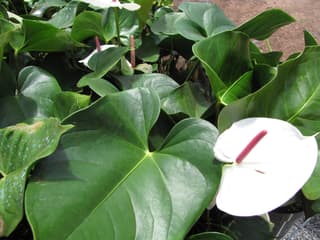
| Flamingo Flower | Medium | Partial shade | 5d | ⚠️ |
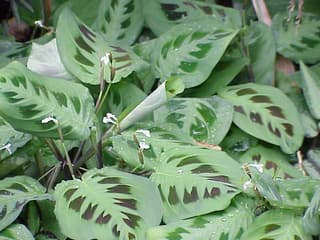
| Prayer Plant | Medium | Partial shade | 3d | ✓ |
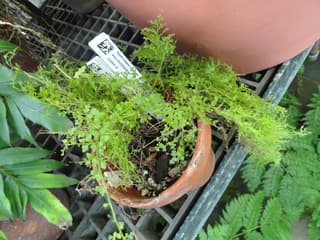
| Boston Fern | Medium | Partial shade | 3d | ✓ |
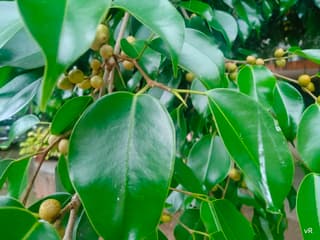
| Weeping Fig | Medium | Partial shade | 10d | ⚠️ |