Acanthaceae
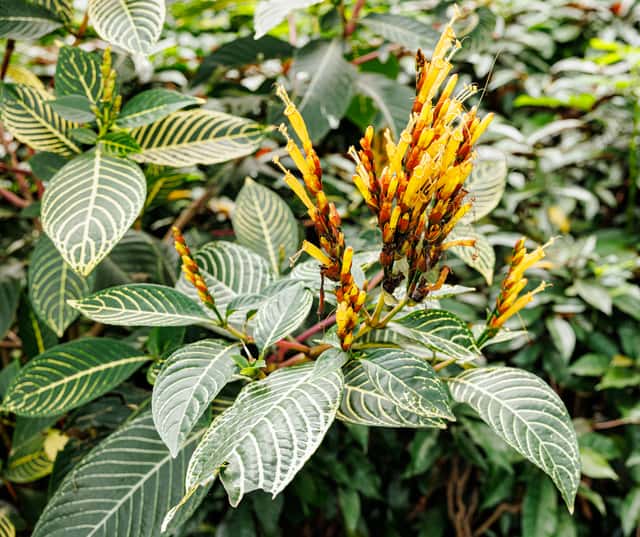
Sanchezia speciosa: The Tropical Shrub With Golden Veins
Sanchezia speciosa
A humidity-loving tropical shrub that thrives in bright indirect light with consistently moist soil. Ideal as an indoor statement plant or in sheltered tropical gardens. Water every 4-6 days, fertilize monthly in spring/summer, and mist leaves regularly to maintain humidity.
Every 5 days
Partial shade
15° - 27°C
60% - 80%
Categories
What is Shrubby Whitevein?
Shrubby Whitevein (Sanchezia speciosa) is a medium-care plant from the Acanthaceae family. Sanchezia speciosa is a striking tropical shrub from the Acanthaceae family, native to tropical South America. Its standout feature is its large, glossy dark-green leaves boldly marked with vivid yellow-gold veins, creating a dramatic ornamental display. Under favorable conditions it produces tubula...
Shrubby Whitevein grows up to 2.0m, spread of 90cm, watering every 5 days, 15°C – 27°C, 60–80% humidity. It is suitable for indoor environments and not safe for pets.
Without precautions, ingestion can cause irritation in pets. Keep out of reach of cats and dogs. Without adequate drainage, root rot can develop within 10 days.
How to Care for Shrubby Whitevein?
TLDR: Shrubby Whitevein needs Partial shade, watering every 5 days, and temperatures between 15-27°C with 60-80% humidity.
How Often Should You Water Shrubby Whitevein?
Water every 4-6 days in summer when the top third of soil feels dry. Avoid waterlogging — ensure excellent drainage. Reduce watering in winter. Use fluoride-free water or let tap water sit 24h before use.
How Much Light Does Shrubby Whitevein Need?
Bright indirect light is ideal — avoid intense direct sun which causes leaf scorch. Tolerates 1-2h of gentle morning sun. East or west-facing windows are perfect. In low light, leaf variegation fades.
What Is the Best Soil for Shrubby Whitevein?
Use rich organic, well-draining potting mix with slightly acidic to neutral pH (5.5-7.0). Mix potting soil with perlite or coarse sand for drainage. Replace substrate every 2 years.
What Pot Should You Use for Shrubby Whitevein?
Medium to large ceramic or terracotta pot with drainage holes. Avoid oversized pots that retain excessive moisture.
Care Schedule
Fertilize
Every 30 days
Misting
Every 3 days
Rotate
Every 14 days
Repot
Every 730 days
What Is Shrubby Whitevein and Where Does It Come From?
Sanchezia speciosa is a striking tropical shrub from the Acanthaceae family, native to tropical South America. Its standout feature is its large, glossy dark-green leaves boldly marked with vivid yellow-gold veins, creating a dramatic ornamental display. Under favorable conditions it produces tubular yellow-orange flowers in summer and fall.
How to Propagate Shrubby Whitevein?
Stem Cutting
Use sterilized scissors. Maintain high humidity by covering with a clear plastic bag. Replace mix if mold appears.
- 1 Cut a healthy stem at least 10cm long with 2-3 leaves
- 2 Dip the cut end in rooting hormone powder
- 3 Plant in a moist peat-based potting mix
- 4 Keep in a warm spot (20-25°C) with bright indirect light
- 5 Roots emerge in 2-8 weeks; new growth appears around week 12
Materials needed:
How Big Does Shrubby Whitevein Grow?
TLDR: Shrubby Whitevein can reach up to 2.0m tall with Medium growth rate.
Max height
2.0m
Spread
90cm
Growth rate
Medium
Foliage
Evergreen
Warning: Toxic Plant
This plant can be toxic if ingested. Keep out of reach of:
Plant Uses
Ornamental
Great for decoration
Is your plant showing symptoms?
Click on the symptom to discover possible causes:
What Diseases Commonly Affect Shrubby Whitevein?
TLDR: Shrubby Whitevein is susceptible to 10 known diseases. Monitor regularly for early detection.
Root Rot
Root rot is a serious fungal disease that affects the root system of plants, causing them to decay and die. It is primarily caused by overwatering, poor drainage, or soil-borne fungi such as Pythium, Phytophthora, Rhizoctonia, and Fusarium. The disease thrives in waterlogged conditions where roots are deprived of oxygen, making them susceptible to fungal infection.
Gray Mold (Botrytis Blight)
Gray mold, caused by the fungus Botrytis cinerea, is one of the most common fungal diseases in plants. It affects over 200 plant species, including ornamentals, vegetables, fruits, and houseplants. The disease thrives in cool, humid conditions with poor air circulation, causing grayish spots and soft rot on infected tissues.
Powdery Mildew
Powdery mildew is a common fungal disease caused by various fungi species including Erysiphe, Podosphaera, Oïdium, and Leveillula. It affects over 10,000 plant species worldwide. The disease thrives in warm, dry climates with high humidity and appears as a distinctive white powdery coating on plant surfaces.
Bacterial Leaf Spot
Bacterial leaf spot is a plant disease caused by bacteria in the Xanthomonas and Pseudomonas genera that affects various ornamental and edible plants. The bacteria infect leaves through wounds or natural openings, causing characteristic lesions that can lead to premature leaf drop and plant weakening.
Meaning & Symbolism
Symbol of exotic beauty and tropical vitality, bringing vibrant energy and lush color to any space.
Fun Facts
Sanchezia speciosa belongs to the Acanthaceae family, which contains over 2,500 tropical species
Its golden veins are produced by flavonoid pigments that also reflect ultraviolet light
In its native South American habitat it can grow up to 3 meters tall
It produces nectar-rich tubular flowers that attract hummingbirds and butterflies
Frequently asked questions
How often should I water Sanchezia speciosa?
Does Sanchezia need a lot of light?
Is Sanchezia toxic to cats and dogs?
Why are my Sanchezia leaves losing their yellow veins?
How do I propagate Sanchezia?
Compare with similar plants
| Attribute | Difficulty | Light | Watering | Pet Safe |
|---|---|---|---|---|
| Dark Fieldcap | Medium | Low light | 2d | ⚠️ |
| Azalea | Medium | Partial shade | 3d | ⚠️ |
| Bougainvillea | Medium | Direct sun | 7d | ⚠️ |
| Wild Lettuce | Medium | Direct sun | 7d | ⚠️ |



