Salicaceae
Weeping Willow (Salix babylonica): Complete Care Guide
Salix babylonica
Plant in full sun with moist soil, preferably near a water source. Water abundantly and regularly. Best suited for large open landscapes, parks, and waterside planting due to invasive root systems.
Every 3 days
Direct sun
-15° - 40°C
50% - 80%
Categories
What is Weeping Willow?
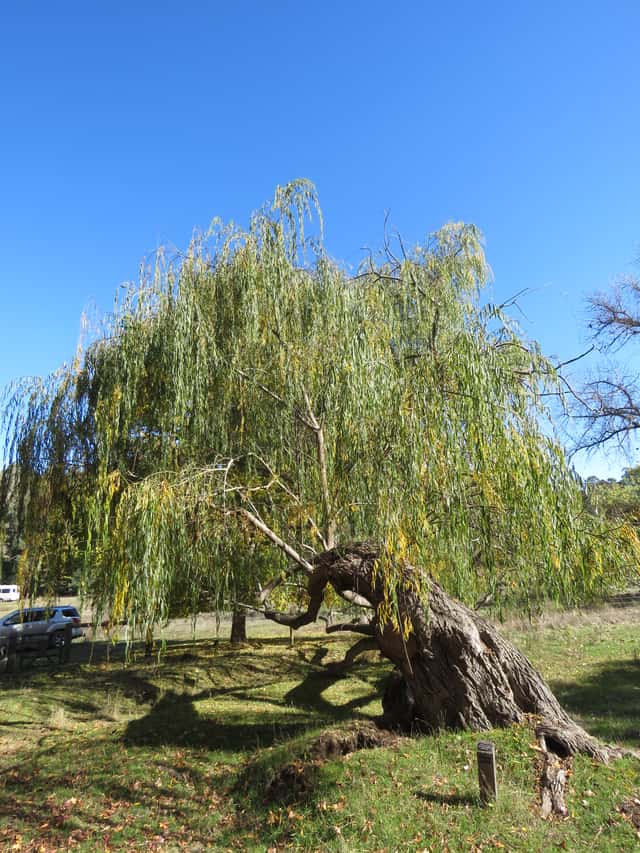
Weeping Willow (Salix babylonica) is a medium-care plant from the Salicaceae family. The Weeping Willow (Salix babylonica) is a majestic tree native to northern China, widely cultivated around the world for its graceful, cascading branches that sweep the ground. It thrives near water — rivers, lakes, and ponds — where it can reach its full potential. Its iconic silhouette makes it o...
Weeping Willow grows up to 15.0m, spread of 1500cm, watering every 3 days, -15°C – 40°C, 50–80% humidity. It is not suitable for indoor environments and not safe for pets.
Without precautions, ingestion can cause irritation in pets. Keep out of reach of cats and dogs.
How to Care for Weeping Willow?
TLDR: Weeping Willow needs Direct sun, watering every 3 days, and temperatures between -15-40°C with 50-80% humidity.
How Often Should You Water Weeping Willow?
Water every 2-3 days during hot, dry periods. Keep soil consistently moist — weeping willows love moisture and will not tolerate prolonged drought.
How Much Light Does Weeping Willow Need?
Requires full sun, at least 6 hours of direct sunlight per day. Will grow spindly and less healthy in shaded locations.
What Is the Best Soil for Weeping Willow?
Prefers rich, organic, slightly acidic to neutral soil (pH 5.5–7.5). Tolerates clay and wet soils. Avoid very sandy or dry conditions.
What Pot Should You Use for Weeping Willow?
Not suitable for container growing. Plant directly in open ground with ample space.
Care Schedule
Fertilize
Every 90 days
What Is Weeping Willow and Where Does It Come From?
The Weeping Willow (Salix babylonica) is a majestic tree native to northern China, widely cultivated around the world for its graceful, cascading branches that sweep the ground. It thrives near water — rivers, lakes, and ponds — where it can reach its full potential. Its iconic silhouette makes it one of the most recognizable ornamental trees globally.
How to Propagate Weeping Willow?
Stem Cutting
Willow cuttings root exceptionally easily — even fallen branches can take root on moist soil. Use young, healthy stems for best results.
- 1 Cut a healthy branch 20-30 cm long in early spring
- 2 Remove leaves from the lower half
- 3 Place in water or moist soil in a bright location
- 4 Wait for roots to develop before transplanting
Materials needed:
How Big Does Weeping Willow Grow?
TLDR: Weeping Willow can reach up to 15.0m tall with Fast growth rate.
Max height
15.0m
Spread
15.0m
Growth rate
Fast
Foliage
Deciduous
Warning: Toxic Plant
This plant can be toxic if ingested. Keep out of reach of:
Plant Uses
Ornamental
Great for decoration
Is your plant showing symptoms?
Click on the symptom to discover possible causes:
What Diseases Commonly Affect Weeping Willow?
TLDR: Weeping Willow is susceptible to 10 known diseases. Monitor regularly for early detection.
Anthracnose
Anthracnose is a fungal disease caused by fungi in the genus Colletotrichum that affects many plants, including vegetables, fruits, and trees. The disease thrives in cool, wet conditions, causing dark, sunken lesions on leaves, stems, flowers, and fruits.
Powdery Mildew
Powdery mildew is a common fungal disease caused by various fungi species including Erysiphe, Podosphaera, Oïdium, and Leveillula. It affects over 10,000 plant species worldwide. The disease thrives in warm, dry climates with high humidity and appears as a distinctive white powdery coating on plant surfaces.
Leaf Spot
Leaf spot is a common fungal disease caused by various pathogens including Alternaria, Ascochyta, Colletotrichum, Septoria, and Venturia. It primarily affects leaves, causing discolored spots that can lead to premature leaf drop if left untreated.
Canker
Canker is a disease caused by various fungi and bacteria that create necrotic, sunken areas on bark of branches, stems, and trunks. Pathogens enter through wounds and natural openings, especially when plants are stressed. Canker can gradually weaken or kill branches by disrupting water and nutrient flow.
Meaning & Symbolism
In both Western and Eastern cultures, the weeping willow symbolizes mourning, grief, and renewal. In China, it represents longevity and resilience.
Fun Facts
Weeping willows can grow up to 1.5 meters per month when young and well-watered
Its branches root so easily that fallen twigs on moist ground can sprout into new trees
Aspirin (acetylsalicylic acid) has historical roots in salicin extracted from Salix species
It typically lives 40-75 years, considered short-lived for a large tree
Frequently asked questions
How often should I water a Weeping Willow?
Is the Weeping Willow toxic to pets?
Can I plant a Weeping Willow near my house?
Does the Weeping Willow lose its leaves in winter?
Compare with similar plants
| Attribute | Difficulty | Light | Watering | Pet Safe |
|---|---|---|---|---|
| Dark Fieldcap | Medium | Low light | 2d | ⚠️ |
| Azalea | Medium | Partial shade | 3d | ⚠️ |
| Bougainvillea | Medium | Direct sun | 7d | ⚠️ |
| Wild Lettuce | Medium | Direct sun | 7d | ⚠️ |



