Gesneriaceae
Sinningia: Complete Genus Care Guide
Sinningia
Water every 3 days during active growth, avoiding wetting the leaves. Maintain 50–70% humidity. Provide bright indirect light. Fertilize every two weeks during flowering. In winter, reduce watering and allow the tuber to rest in slightly dry substrate.
Every 3 days
Partial shade
12° - 24°C
50% - 70%
Categories
What is Sinningia?
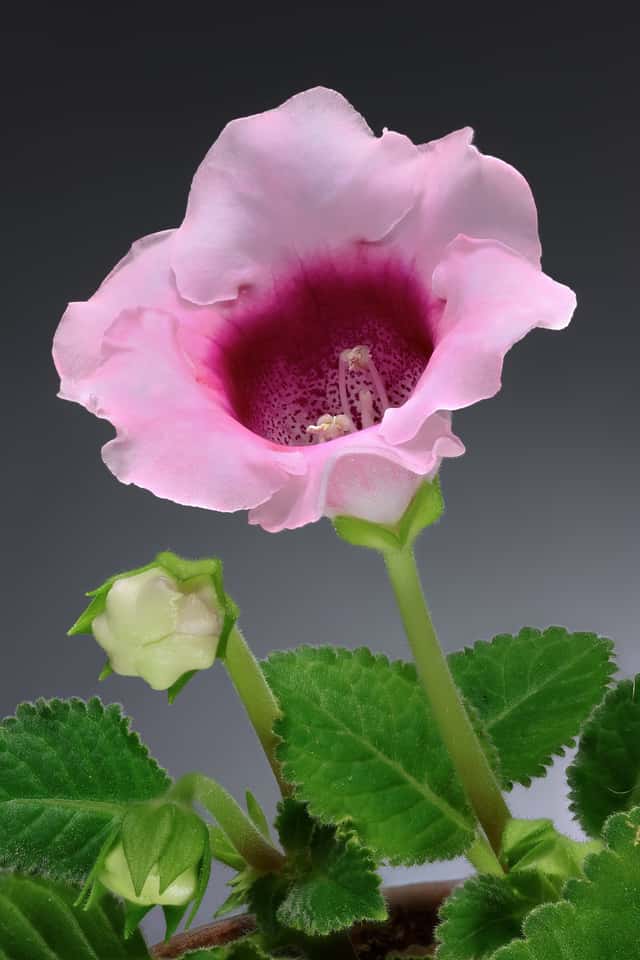
Sinningia (Sinningia) is a medium-care plant from the Gesneriaceae family. Sinningia is a genus of tuberous flowering plants native to Brazil, belonging to the family Gesneriaceae. Known for their stunning bell-shaped flowers in shades of purple, pink, red, and white, they are prized as ornamental houseplants worldwide. The most famous species, S. speciosa, is commonly cal...
Sinningia grows up to 30cm, spread of 30cm, watering every 3 days, 12°C – 24°C, 50–70% humidity. It is suitable for indoor environments and safe for pets.
Unlike many popular species, Sinningia is safe to keep around pets. Without adequate drainage, root rot can develop within 7 days.
How to Care for Sinningia?
TLDR: Sinningia needs Partial shade, watering every 3 days, and temperatures between 12-24°C with 50-70% humidity.
How Often Should You Water Sinningia?
Water at the base every 3 days during the growing season, keeping water off the leaves and tuber crown. Allow the top centimeter of soil to dry slightly between waterings. During dormancy, water just enough to prevent the substrate from drying out completely.
How Much Light Does Sinningia Need?
Place in bright indirect light, away from direct sun which can scorch the velvety leaves. Ideal range is 10,000–25,000 lux. An east- or west-facing window with a sheer curtain works perfectly.
What Is the Best Soil for Sinningia?
Use well-draining potting mix with a pH of 5.5–6.5. Combine a quality potting soil with perlite or coarse sand to ensure excellent drainage. Avoid dense, compacted mixes that retain excess moisture around the tuber.
What Pot Should You Use for Sinningia?
Terracotta or unglazed ceramic pots that allow root breathing. Prefer shallow, wide pots suited to the lateral growth of the tuber.
Care Schedule
Fertilize
Every 14 days
Misting
Every 3 days
Rotate
Every 7 days
Repot
Every 365 days
What Is Sinningia and Where Does It Come From?
Sinningia is a genus of tuberous flowering plants native to Brazil, belonging to the family Gesneriaceae. Known for their stunning bell-shaped flowers in shades of purple, pink, red, and white, they are prized as ornamental houseplants worldwide. The most famous species, S. speciosa, is commonly called Florist's Gloxinia. Plants are deciduous, entering dormancy in winter and re-emerging each spring from their tubers.
How Big Does Sinningia Grow?
TLDR: Sinningia can reach up to 30cm tall with Slow growth rate.
Max height
30cm
Spread
30cm
Growth rate
Slow
Foliage
Deciduous
Plant Uses
Ornamental
Great for decoration
Is your plant showing symptoms?
Click on the symptom to discover possible causes:
What Diseases Commonly Affect Sinningia?
TLDR: Sinningia is susceptible to 10 known diseases. Monitor regularly for early detection.
Root Rot
Root rot is a serious fungal disease that affects the root system of plants, causing them to decay and die. It is primarily caused by overwatering, poor drainage, or soil-borne fungi such as Pythium, Phytophthora, Rhizoctonia, and Fusarium. The disease thrives in waterlogged conditions where roots are deprived of oxygen, making them susceptible to fungal infection.
Gray Mold (Botrytis Blight)
Gray mold, caused by the fungus Botrytis cinerea, is a widespread necrotrophic pathogen affecting over 1,400 plant species. It thrives in cool, humid conditions and attacks weakened or aging plant tissues, causing soft rot and characteristic gray fuzzy growth.
Gray Mold (Botrytis Blight)
Gray mold, caused by the fungus Botrytis cinerea, is one of the most common fungal diseases in plants. It affects over 200 plant species, including ornamentals, vegetables, fruits, and houseplants. The disease thrives in cool, humid conditions with poor air circulation, causing grayish spots and soft rot on infected tissues.
Overwatering
Overwatering occurs when plants receive too much water, depriving roots of oxygen and causing root rot. This environmental stress is one of the most common causes of houseplant death, as waterlogged soil prevents roots from breathing and functioning properly.
Fun Facts
Sinningia is native to Brazil and was first described scientifically in 1785.
The genus contains over 70 species, many endemic to Brazilian mountain regions.
In the wild, their tubular flowers attract hummingbirds as pollinators.
The tuber can live for many years, re-sprouting reliably each spring.
S. speciosa was long misclassified under the genus Gloxinia — a historical error that stuck in popular culture.
Frequently asked questions
Does Sinningia need a lot of light?
What should I do when my Sinningia goes dormant?
How often should I water?
Compare with similar plants
| Attribute | Difficulty | Light | Watering | Pet Safe |
|---|---|---|---|---|
| Dark Fieldcap | Medium | Low light | 2d | ⚠️ |
| Azalea | Medium | Partial shade | 3d | ⚠️ |
| Bougainvillea | Medium | Direct sun | 7d | ⚠️ |
| Wild Lettuce | Medium | Direct sun | 7d | ⚠️ |



