Cactaceae
Golden Torch Cactus: Full Sun Plant
Soehrensia spachiana
It is a low-maintenance cactus that requires direct sun and a substrate with excellent drainage. Watering should be deep but infrequent, allowing the soil to dry out completely.
Every 21 days
Direct sun
-10° - 38°C
10% - 30%
Categories
What is Golden Torch Cactus?
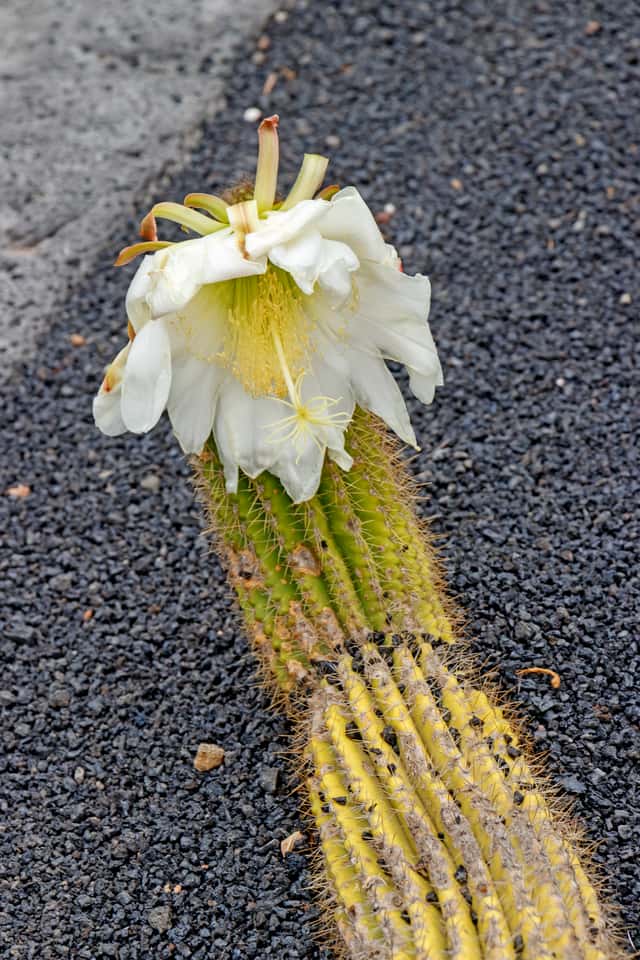
Golden Torch Cactus (Soehrensia spachiana) is a medium-care plant from the Cactaceae family. Soehrensia spachiana, formerly known as Echinopsis spachiana, is a columnar cactus that branches from the base and can reach up to 2 meters in height. It is famous for its spectacular, large white flowers that bloom at night. Its stems are lime green with well-defined ribs and golden-yellow spines t...
Golden Torch Cactus grows up to 2.0m, spread of 30cm, watering every 21 days, -10°C – 38°C, 10–30% humidity. It is suitable for indoor environments and safe for pets.
Unlike many popular species, Golden Torch Cactus is safe to keep around pets. Without adequate drainage, root rot can develop within 42 days.
How to Care for Golden Torch Cactus?
TLDR: Golden Torch Cactus needs Direct sun, watering every 21 days, and temperatures between -10-38°C with 10-30% humidity.
How Often Should You Water Golden Torch Cactus?
Follow the 'soak and dry' rule. Water only when the substrate is completely dry from top to bottom. In winter, suspend watering almost entirely.
How Much Light Does Golden Torch Cactus Need?
For optimal blooming and robust growth, place it in full sun. If grown indoors, it should be placed next to a south-facing window.
What Is the Best Soil for Golden Torch Cactus?
It requires a porous mineral substrate. A mix of 50% potting soil and 50% inorganic material such as pumice or coarse sand is ideal.
What Pot Should You Use for Golden Torch Cactus?
Unglazed clay or terracotta pot to facilitate the evaporation of excess moisture.
Care Schedule
Fertilize
Every 90 days
Rotate
Every 90 days
What Is Golden Torch Cactus and Where Does It Come From?
Soehrensia spachiana, formerly known as Echinopsis spachiana, is a columnar cactus that branches from the base and can reach up to 2 meters in height. It is famous for its spectacular, large white flowers that bloom at night. Its stems are lime green with well-defined ribs and golden-yellow spines that turn gray with age. It is a highly valued species in xeriscaping due to its hardiness and shrubby growth habit.
How to Propagate Golden Torch Cactus?
Offset separation
- Do not water immediately after planting; wait a week to prevent rot.
- Use thick gloves when handling the plant due to its spines.
- 1 Offset removal
Carefully cut a side shoot or offset from the base of the mother plant using a disinfected knife.
- 2 Callus drying
Leave the offset in a dry, shaded place for a week to allow the wound to heal and form a callus.
- 3 Planting
Place the offset on a slightly damp cactus substrate mix without burying it deeply.
Materials needed:
Stem cuttings
- Ensure you maintain the correct polarity (the part that was at the bottom must stay at the bottom).
- Avoid overwatering until you notice signs of new growth.
- 1 Stem cutting
Cut a top section of the stem about 15-20 cm long.
- 2 Callusing
Allow the cutting to dry vertically in a dry place for at least 10-14 days.
- 3 Rooting
Plant the cutting in coarse sand or mineral substrate and keep it in a warm place with indirect light.
Materials needed:
How Big Does Golden Torch Cactus Grow?
TLDR: Golden Torch Cactus can reach up to 2.0m tall with Slow growth rate.
Max height
2.0m
Spread
30cm
Growth rate
Slow
Foliage
Evergreen
Plant Uses
Ornamental
Great for decoration
Medicinal
Medicinal properties
Is your plant showing symptoms?
Click on the symptom to discover possible causes:
What Diseases Commonly Affect Golden Torch Cactus?
TLDR: Golden Torch Cactus is susceptible to 7 known diseases. Monitor regularly for early detection.
Root Rot
Root rot is a serious fungal disease that affects the root system of plants, causing them to decay and die. It is primarily caused by overwatering, poor drainage, or soil-borne fungi such as Pythium, Phytophthora, Rhizoctonia, and Fusarium. The disease thrives in waterlogged conditions where roots are deprived of oxygen, making them susceptible to fungal infection.
Mealybugs
Mealybugs are small, soft-bodied insects covered with a white, waxy, cottony material. They are common pests of houseplants and outdoor plants in mild climates. These sap-sucking insects feed on plant tissue, causing damage, stunted growth, and can lead to plant death if left untreated. They produce sticky honeydew which attracts sooty mold.
Spider Mites
Spider mites are tiny arachnids (less than 1/20 inch long) related to spiders and ticks that feed on plant sap. They thrive in hot, dry conditions and can cause significant damage to ornamental and vegetable plants. During severe infestations, crop losses can reach 14% or higher as these pests disrupt vital plant processes including photosynthesis, carbon dioxide absorption, and transpiration.
Scale Insects
Scale insects are small sap-sucking pests that appear as brown, shell-like bumps on plant stems and leaves. There are over 25 species, divided into armored (hard) and unarmored (soft) scales. They feed by piercing plant tissue and extracting sap, which weakens the plant and can lead to yellowing, stunted growth, and even death if left untreated. They also excrete honeydew, which attracts ants and promotes sooty mold growth.
Meaning & Symbolism
In cactus culture, it represents resilience in the face of adversity and hidden beauty revealed in the dark.
Compare with similar plants
| Attribute | Difficulty | Light | Watering | Pet Safe |
|---|---|---|---|---|
| Dark Fieldcap | Medium | Low light | 2d | ⚠️ |
| Azalea | Medium | Partial shade | 3d | ⚠️ |
| Bougainvillea | Medium | Direct sun | 7d | ⚠️ |
| Wild Lettuce | Medium | Direct sun | 7d | ⚠️ |




