Apocynaceae
Star Jasmine (Trachelospermum jasminoides): Care, Growing Tips & Characteristics
Trachelospermum jasminoides
Moderate care requirements. Grow in full sun to partial shade in well-drained, fertile soil. Water regularly until established, then allow the top inch of soil to dry between waterings. Fertilize every 30 days in spring and summer. Prune after flowering to maintain shape. Hardy in USDA zones 8–10.
Every 7 days
Bright indirect
-10° - 35°C
40% - 70%
Categories
What is Star Jasmine?
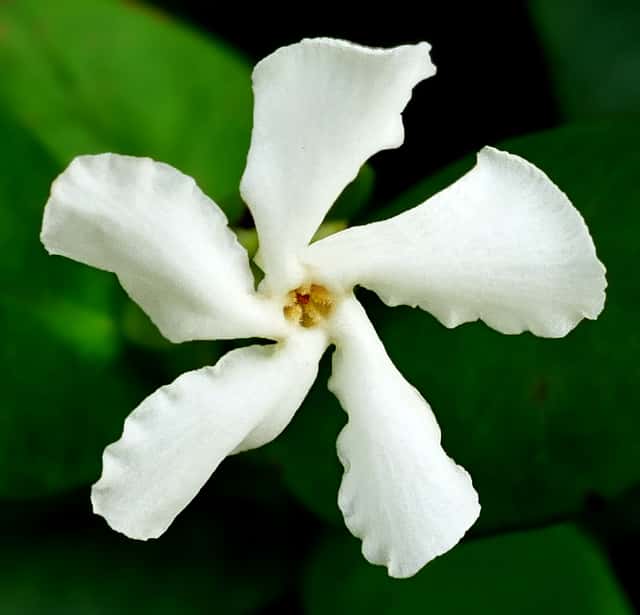
Star Jasmine (Trachelospermum jasminoides) is a medium-care plant from the Apocynaceae family. Trachelospermum jasminoides, commonly known as star jasmine or Confederate jasmine, is a vigorous evergreen climbing vine native to eastern and southeastern Asia (China, Japan, Korea, and Vietnam). It produces clusters of intensely fragrant, star-shaped white flowers in summer. The glossy dark green...
Star Jasmine grows up to 9.0m, spread of 500cm, watering every 7 days, -10°C – 35°C, 40–70% humidity. It is suitable for indoor environments and not safe for pets.
Without precautions, ingestion can cause irritation in pets. Keep out of reach of cats and dogs. Without adequate drainage, root rot can develop within 14 days.
How to Care for Star Jasmine?
TLDR: Star Jasmine needs Bright indirect, watering every 7 days, and temperatures between -10-35°C with 40-70% humidity.
How Often Should You Water Star Jasmine?
Water every 7 days during the growing season. Allow the top inch of soil to dry slightly between waterings. Avoid waterlogged conditions — prolonged wet soil leads to root rot.
How Much Light Does Star Jasmine Need?
Plant in full sun to partial shade. Star jasmine blooms most abundantly with at least 5–6 hours of direct sunlight per day. In deep shade, growth becomes sparse and flowering is significantly reduced.
What Is the Best Soil for Star Jasmine?
Use well-draining, fertile loam or chalk-based soil with a slightly acid to neutral pH (6.0–7.5). Incorporate coarse sand or perlite into heavy soils to improve drainage. Avoid clay-heavy or waterlogged sites.
What Pot Should You Use for Star Jasmine?
Terracotta pot with good drainage for container growing. In gardens, use trellises, pergolas, fences, or walls for support.
Care Schedule
Fertilize
Every 30 days
Repot
Every 730 days
What Is Star Jasmine and Where Does It Come From?
Trachelospermum jasminoides, commonly known as star jasmine or Confederate jasmine, is a vigorous evergreen climbing vine native to eastern and southeastern Asia (China, Japan, Korea, and Vietnam). It produces clusters of intensely fragrant, star-shaped white flowers in summer. The glossy dark green leaves are oval and leathery, often taking on attractive bronze-red tones in winter. Widely grown as an ornamental climber on fences, trellises, walls, and pergolas, it also performs well as a groundcover. Mildly toxic if ingested.
How to Propagate Star Jasmine?
Semi-ripe stem cutting
Maintain consistent moisture without waterlogging. Use a plastic bag or humidity dome to speed up rooting.
- 1 Take a 10–15 cm semi-ripe stem cutting with 2–3 pairs of leaves
- 2 Remove lower leaves and dip the base in rooting hormone powder
- 3 Plant in a moist, well-draining medium (sand + perlite)
- 4 Keep in a warm, humid spot with indirect light
- 5 Transplant once rooted, typically in 3–5 weeks
Materials needed:
Ground layering
Layering is the easiest and most reliable propagation method for this species.
- 1 Select a long, flexible stem still attached to the parent plant
- 2 Bury a middle section of the stem in moist soil and secure with a U-pin
- 3 Keep the soil moist until rooting occurs
- 4 Sever from the parent plant once roots are confirmed
Materials needed:
How Big Does Star Jasmine Grow?
TLDR: Star Jasmine can reach up to 9.0m tall with Medium growth rate.
Max height
9.0m
Spread
5.0m
Growth rate
Medium
Foliage
Evergreen
Warning: Toxic Plant
This plant can be toxic if ingested. Keep out of reach of:
Plant Uses
Ornamental
Great for decoration
Aromatic
Pleasant fragrance
Is your plant showing symptoms?
Click on the symptom to discover possible causes:
What Diseases Commonly Affect Star Jasmine?
TLDR: Star Jasmine is susceptible to 9 known diseases. Monitor regularly for early detection.
Powdery Mildew
Powdery mildew is a common fungal disease caused by various fungi species including Erysiphe, Podosphaera, Oïdium, and Leveillula. It affects over 10,000 plant species worldwide. The disease thrives in warm, dry climates with high humidity and appears as a distinctive white powdery coating on plant surfaces.
Leaf Spot
Leaf spot is a common fungal disease caused by various pathogens including Alternaria, Ascochyta, Colletotrichum, Septoria, and Venturia. It primarily affects leaves, causing discolored spots that can lead to premature leaf drop if left untreated.
Bacterial Leaf Spot
Bacterial leaf spot is a plant disease caused by bacteria in the Xanthomonas and Pseudomonas genera that affects various ornamental and edible plants. The bacteria infect leaves through wounds or natural openings, causing characteristic lesions that can lead to premature leaf drop and plant weakening.
Root Rot
Root rot is a serious fungal disease that affects the root system of plants, causing them to decay and die. It is primarily caused by overwatering, poor drainage, or soil-borne fungi such as Pythium, Phytophthora, Rhizoctonia, and Fusarium. The disease thrives in waterlogged conditions where roots are deprived of oxygen, making them susceptible to fungal infection.
Meaning & Symbolism
Associated with guidance and integrity — an Uzbek tradition holds that this plant pointed traders in the right direction, provided they were of good character.
Fun Facts
Despite its name, star jasmine is not a true jasmine — it belongs to the Apocynaceae family, not Oleaceae.
Its flowers are used to produce a precious essential oil prized in high-end perfumery in Japan and China.
The plant has been awarded the prestigious RHS Award of Garden Merit for its outstanding garden performance.
In the wild and ideal conditions, star jasmine can scale surfaces up to 9 metres (30 feet) high.
Frequently asked questions
How often should I water star jasmine?
Is star jasmine toxic to pets?
Why is my star jasmine not flowering?
When and how should I prune star jasmine?
Can star jasmine be grown in a pot?
Compare with similar plants
| Attribute | Difficulty | Light | Watering | Pet Safe |
|---|---|---|---|---|
| Dark Fieldcap | Medium | Low light | 2d | ⚠️ |
| Azalea | Medium | Partial shade | 3d | ⚠️ |
| Bougainvillea | Medium | Direct sun | 7d | ⚠️ |
| Wild Lettuce | Medium | Direct sun | 7d | ⚠️ |



