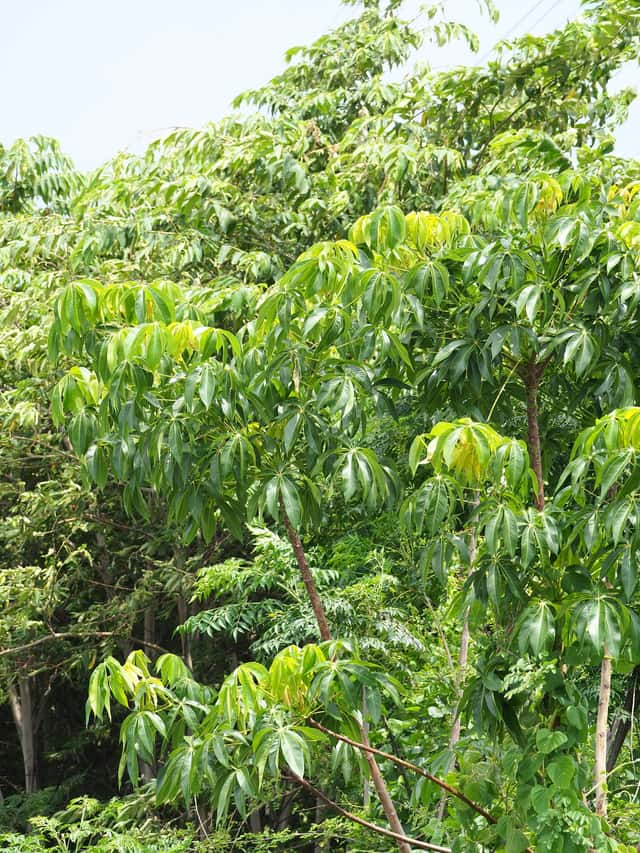
Malvaceae
Tropical Chestnut (Sterculia): Complete Guide to This Tropical Tree
Sterculia
Plant in full sun with well-draining soil. Water moderately — allow soil to dry between waterings. Drought-tolerant once established but thrives in warm, humid tropical conditions. Fertilize monthly during the growing season.
Every 10 days
Direct sun
18° - 38°C
50% - 80%
Categories
What is Tropical Chestnut?
Tropical Chestnut (Sterculia) is a medium-care plant from the Malvaceae family. Sterculia is a genus of tropical and subtropical trees in the family Malvaceae, comprising over 150 species found across Africa, Asia, and Australia. Notable species include Sterculia foetida (Java Olive) and S. quadrifida, prized for their timber, medicinal properties, and ornamental value. Some sp...
Tropical Chestnut grows up to 35.0m, spread of 1500cm, watering every 10 days, 18°C – 38°C, 50–80% humidity. It is not suitable for indoor environments and not safe for pets.
Without precautions, ingestion can cause irritation in pets. Keep out of reach of cats and dogs.
How to Care for Tropical Chestnut?
TLDR: Tropical Chestnut needs Direct sun, watering every 10 days, and temperatures between 18-38°C with 50-80% humidity.
How Often Should You Water Tropical Chestnut?
Water every 10 days on average, allowing the soil to dry out nearly completely between waterings. Avoid waterlogging as roots are prone to rot in soggy conditions.
How Much Light Does Tropical Chestnut Need?
Requires full direct sunlight for at least 6-8 hours daily. Does not tolerate shade or low-light environments.
What Is the Best Soil for Tropical Chestnut?
Prefers well-draining, slightly acidic soil (pH 6.0–7.5). Add coarse sand to improve drainage in clay-heavy soils.
What Pot Should You Use for Tropical Chestnut?
Terracotta or ceramic pot with adequate drainage holes. Use 30-40 cm pots for young specimens.
Care Schedule
Fertilize
Every 30 days
Repot
Every 730 days
What Is Tropical Chestnut and Where Does It Come From?
Sterculia is a genus of tropical and subtropical trees in the family Malvaceae, comprising over 150 species found across Africa, Asia, and Australia. Notable species include Sterculia foetida (Java Olive) and S. quadrifida, prized for their timber, medicinal properties, and ornamental value. Some species bear edible seeds and have been used in traditional medicine for centuries.
How to Propagate Tropical Chestnut?
Seed Sowing
Use fresh seeds for best germination rates. Avoid waterlogged soil.
- 1 Collect ripe seeds and remove any pulp
- 2 Sow in well-draining, moist growing medium
- 3 Keep in a warm location above 20°C (68°F)
- 4 Transplant when seedlings reach 10-15 cm tall
Materials needed:
Stem Cutting
Maintain in a warm location with high humidity until roots establish.
- 1 Take a semi-hardwood cutting 15-20 cm long
- 2 Remove lower leaves
- 3 Apply rooting hormone to the base
- 4 Plant in moist, well-draining medium
Materials needed:
How Big Does Tropical Chestnut Grow?
TLDR: Tropical Chestnut can reach up to 35.0m tall with Medium growth rate.
Max height
35.0m
Spread
15.0m
Growth rate
Medium
Foliage
Deciduous
Warning: Toxic Plant
This plant can be toxic if ingested. Keep out of reach of:
Plant Uses
Ornamental
Great for decoration
Medicinal
Medicinal properties
Edible
Can be consumed
Medicinal Uses
- Seed extracts used in traditional medicine as anti-inflammatory and hepatoprotective agents
- Antifungal and antibacterial properties reported in scientific studies for S. quadrifida and S. foetida
Culinary Uses
- S. foetida seeds eaten roasted in parts of Asia
- S. quadrifida seeds eaten raw or cooked by Indigenous Australian peoples
Is your plant showing symptoms?
Click on the symptom to discover possible causes:
What Diseases Commonly Affect Tropical Chestnut?
TLDR: Tropical Chestnut is susceptible to 5 known diseases. Monitor regularly for early detection.
Root Rot
Root rot is a serious fungal disease that affects the root system of plants, causing them to decay and die. It is primarily caused by overwatering, poor drainage, or soil-borne fungi such as Pythium, Phytophthora, Rhizoctonia, and Fusarium. The disease thrives in waterlogged conditions where roots are deprived of oxygen, making them susceptible to fungal infection.
Leaf Spot
Leaf spot is a common fungal disease caused by various pathogens including Alternaria, Ascochyta, Colletotrichum, Septoria, and Venturia. It primarily affects leaves, causing discolored spots that can lead to premature leaf drop if left untreated.
Aphids
Aphids are small, soft-bodied, pear-shaped insects (1/16 to 1/8 inch long) that feed by sucking nutrient-rich sap from plants. They reproduce rapidly and can quickly weaken plants, causing distorted growth and transmitting plant viruses. Aphids come in various colors including green, black, red, yellow, brown, and gray. They secrete honeydew, a sticky substance that attracts ants and encourages sooty mold growth.
Caterpillars
Caterpillars are the larval stage of moths and butterflies that feed voraciously on plant foliage, stems, flowers, and fruits. Common species include cabbage loopers, tomato hornworms, armyworms, and cutworms. These pests can cause extensive damage by consuming large amounts of plant tissue in a short time. They vary in size from small (1/4 inch) to large (5 inches), with colors ranging from green to brown, often featuring stripes or spots. Caterpillars are highly mobile and can quickly spread throughout gardens, making them one of the most destructive common pests.
Meaning & Symbolism
Strength and tropical abundance; the genus name derives from Sterculius, the Roman god of manure, referencing the distinctive smell of flowers in some species.
Fun Facts
The Sterculia genus contains over 150 species distributed across the tropics worldwide
The name Sterculia comes from Sterculius, the Roman god of manure, due to the foul-smelling flowers of some species
Sterculia quadrifida seeds have been eaten by Indigenous Australians for thousands of years
Sterculia foetida can reach 35 meters in height in its natural habitat
Frequently asked questions
How often should I water Sterculia?
Is Sterculia toxic to pets?
Can Sterculia be grown in a pot?
What is the best season to propagate Sterculia?
Compare with similar plants
| Attribute | Difficulty | Light | Watering | Pet Safe |
|---|---|---|---|---|
| Dark Fieldcap | Medium | Low light | 2d | ⚠️ |
| Azalea | Medium | Partial shade | 3d | ⚠️ |
| Bougainvillea | Medium | Direct sun | 7d | ⚠️ |
| Wild Lettuce | Medium | Direct sun | 7d | ⚠️ |



