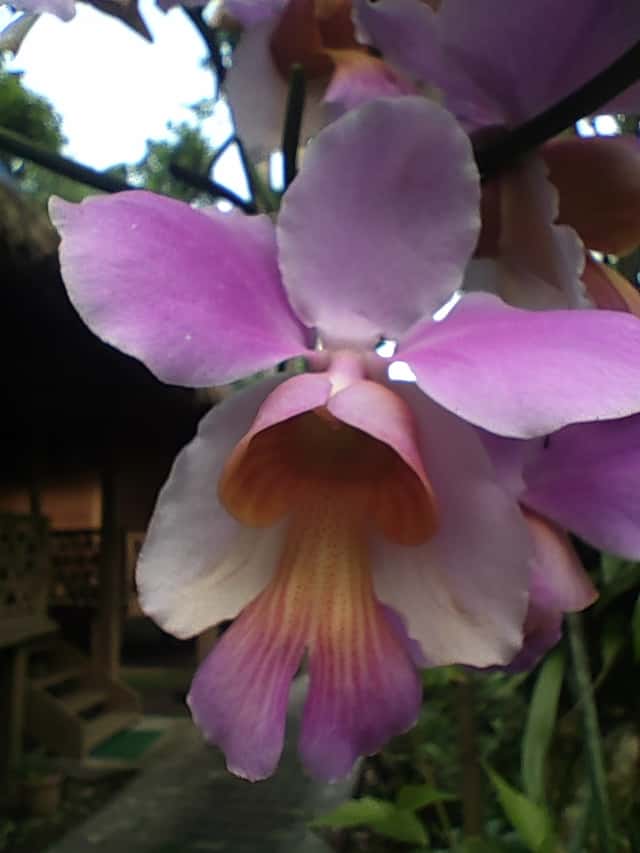
Orchidaceae
Terete Vanda (Papilionanthe teres)
Papilionanthe teres
A demanding orchid that requires full sun, frequent watering with quick root drying, and high humidity. Best grown in hanging baskets outdoors in tropical climates.
Every 1 days
Direct sun
13° - 32°C
55% - 85%
Categories
What is Terete Vanda?
Terete Vanda (Papilionanthe teres) is a hard-care plant from the Orchidaceae family. Terete Vanda (Papilionanthe teres) is a giant epiphytic orchid native to the eastern Himalayas, India, Myanmar, Thailand, Laos and Vietnam. It has a branching monopodial stem with long cylindrical (terete) leaves, the feature that gives the plant its common name. Large, fragrant magenta-pink flowers...
Terete Vanda grows up to watering every 1 days, 13°C – 32°C, 55–85% humidity. It is suitable for indoor environments and safe for pets.
Unlike easy-care plants, Terete Vanda demands constant attention to humidity and light. Not recommended for beginners. Unlike many popular species, Terete Vanda is safe to keep around pets. Without adequate drainage, root rot can develop within 7 days.
How to Care for Terete Vanda?
TLDR: Terete Vanda needs Direct sun, watering every 1 days, and temperatures between 13-32°C with 55-85% humidity.
How Often Should You Water Terete Vanda?
Water daily during active summer growth, reducing in autumn/winter, but never let it go without water for long. Roots must dry quickly after watering to avoid rot.
How Much Light Does Terete Vanda Need?
Needs full sun for most of the day (50,000-60,000 lux) to bloom well; shield only from the harshest midday sun to prevent leaf burn.
What Is the Best Soil for Terete Vanda?
Grow in hanging baskets or pots with airy, fast-draining media (coarse fir bark, tree-fern fiber) or bare-root with roots exposed to air.
What Pot Should You Use for Terete Vanda?
Hanging wooden basket or slotted pot for maximum drainage and root aeration
Care Schedule
Fertilize
Every 7 days
Misting
Every 1 days
What Is Terete Vanda and Where Does It Come From?
Terete Vanda (Papilionanthe teres) is a giant epiphytic orchid native to the eastern Himalayas, India, Myanmar, Thailand, Laos and Vietnam. It has a branching monopodial stem with long cylindrical (terete) leaves, the feature that gives the plant its common name. Large, fragrant magenta-pink flowers with a white-and-yellow lip appear mostly in late spring and early summer.
How to Propagate Terete Vanda?
Stem cutting
Use sterilized tools and avoid overwatering until rooted.
- 1 Cut a healthy stem section with at least 3 aerial roots
- 2 Let the cutting callus for a few hours in a shaded spot
- 3 Mount the cutting in a hanging basket with airy media or tree-fern fiber
- 4 Keep in a warm, humid spot until new roots establish
Materials needed:
Keiki division
Do not remove the keiki before its roots are well developed.
- 1 Wait until the keiki grows at least 2-3 roots several centimeters long
- 2 Cut the keiki from the mother stem with a clean tool
- 3 Pot in a small container or basket with airy media
Materials needed:
How Big Does Terete Vanda Grow?
TLDR: Terete Vanda can reach up to ?cm tall with Fast growth rate.
Growth rate
Fast
Foliage
Evergreen
Plant Uses
Ornamental
Great for decoration
Is your plant showing symptoms?
Click on the symptom to discover possible causes:
What Diseases Commonly Affect Terete Vanda?
TLDR: Terete Vanda is susceptible to 4 known diseases. Monitor regularly for early detection.
Aphids
Aphids are small, soft-bodied, pear-shaped insects (1/16 to 1/8 inch long) that feed by sucking nutrient-rich sap from plants. They reproduce rapidly and can quickly weaken plants, causing distorted growth and transmitting plant viruses. Aphids come in various colors including green, black, red, yellow, brown, and gray. They secrete honeydew, a sticky substance that attracts ants and encourages sooty mold growth.
Caterpillars
Caterpillars are the larval stage of moths and butterflies that feed voraciously on plant foliage, stems, flowers, and fruits. Common species include cabbage loopers, tomato hornworms, armyworms, and cutworms. These pests can cause extensive damage by consuming large amounts of plant tissue in a short time. They vary in size from small (1/4 inch) to large (5 inches), with colors ranging from green to brown, often featuring stripes or spots. Caterpillars are highly mobile and can quickly spread throughout gardens, making them one of the most destructive common pests.
Mosaic Virus
Mosaic virus is a group of plant viruses that cause mottled, patchy patterns on leaves and can affect a wide variety of plants. The virus creates characteristic yellow, white, and green mosaic patterns, often accompanied by stunted growth and deformed plant parts. This highly contagious disease spreads rapidly through insect vectors and contaminated tools.
Root Rot
Root rot is a serious fungal disease that affects the root system of plants, causing them to decay and die. It is primarily caused by overwatering, poor drainage, or soil-borne fungi such as Pythium, Phytophthora, Rhizoctonia, and Fusarium. The disease thrives in waterlogged conditions where roots are deprived of oxygen, making them susceptible to fungal infection.
Fun Facts
The stem can grow several meters long under ideal conditions, climbing supports in the wild.
Its cylindrical (terete) leaves are an adaptation to reduce water loss in intense sun.
It was one of the parents used to create the hybrid Vanda Miss Joaquim, the national flower of Singapore.
Frequently asked questions
Can Terete Vanda be grown in regular potting soil?
Why isn't my Terete Vanda blooming?
How often should I water Terete Vanda?
What pests commonly affect Terete Vanda?
Compare with similar plants
| Attribute | Difficulty | Light | Watering | Pet Safe |
|---|---|---|---|---|
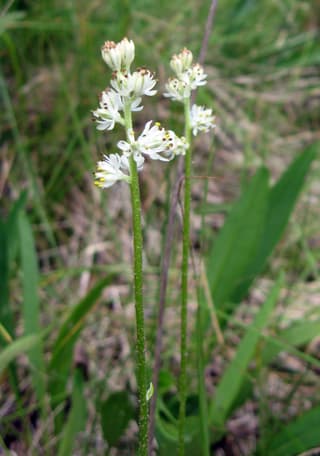
| Sticky false asphodel | Hard | Bright indirect | 1d | ✓ |
| Creeping bentgrass | Hard | Direct sun | 3d | ✓ |
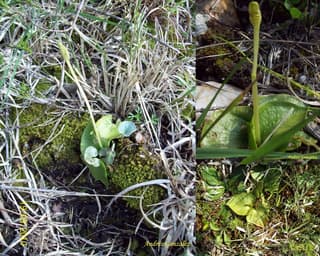
| Bulbous Adder's-tongue | Hard | Partial shade | 4d | ✓ |
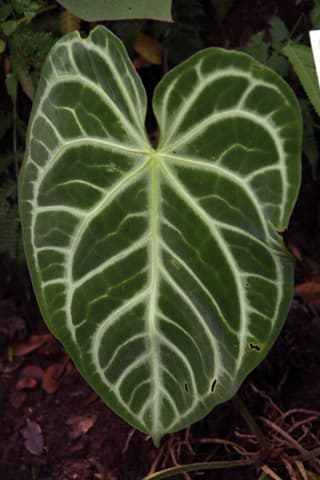
| Crystal Anthurium | Hard | Partial shade | 7d | ⚠️ |
Choose & Compare
Sources & References
- Papilionanthe teres (Roxb.) Schltr. 1915 - OrchidSpecies
- Papilionanthe teres care and culture
- Papilionanthe teres - The Butterfly Orchid (AOS)
- Papilionanthe Teres Alba Care Key
- Papilionanthe teres (OAPTE) Pests - EPPO Global Database
- Vanda-teres - Papilionanthe teres - Jardineiro.net
- Papilionanthe teres - Wikipedia