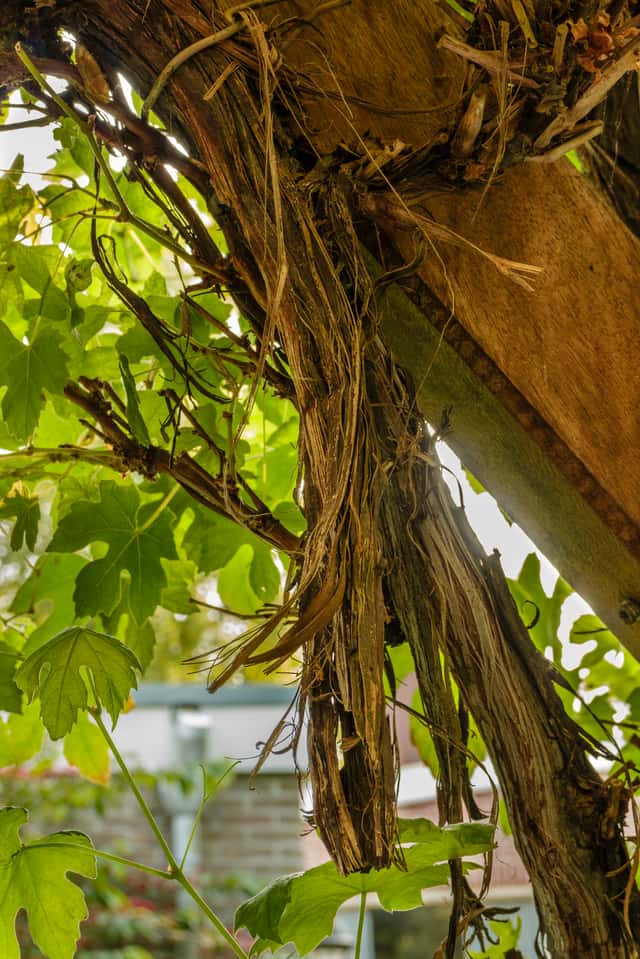
Vitaceae
Common Grapevine (Vitis vinifera): Complete Growing Guide
Vitis vinifera
Grapevines thrive in full sun with well-drained soil. Water regularly during the growing season and reduce in winter. Perform heavy annual pruning during dormancy. WARNING: grapes and raisins are TOXIC to dogs and can cause acute kidney failure.
Every 7 days
Direct sun
-15° - 38°C
40% - 70%
Categories
What is Common Grapevine?
Common Grapevine (Vitis vinifera) is a medium-care plant from the Vitaceae family. The Common Grapevine (Vitis vinifera) is one of the oldest cultivated plants in human history, originating from the Mediterranean basin and western Asia. A vigorous deciduous climber, it produces the famous grape clusters used for wine, fresh consumption, and raisins. Its lobed leaves are ornamental...
Common Grapevine grows up to 15.0m, spread of 300cm, watering every 7 days, -15°C – 38°C, 40–70% humidity. It is not suitable for indoor environments and not safe for pets.
Without precautions, ingestion can cause irritation in pets. Keep out of reach of cats and dogs.
How to Care for Common Grapevine?
TLDR: Common Grapevine needs Direct sun, watering every 7 days, and temperatures between -15-38°C with 40-70% humidity.
How Often Should You Water Common Grapevine?
Water every 7 days during the growing season, adjusting for climate and rainfall. Drastically reduce watering in winter during dormancy. Avoid waterlogging — excess moisture promotes root rot and mildew.
How Much Light Does Common Grapevine Need?
Requires full sun — at least 6 to 8 hours of direct sunlight daily. Place in an open, sunny location sheltered from strong winds. Insufficient light significantly reduces fruit production.
What Is the Best Soil for Common Grapevine?
Prefers well-drained, moderately fertile loamy soil with pH between 6.0 and 7.0. Tolerates sandy and clay soils as long as drainage is good. Enrich with organic compost before planting.
What Pot Should You Use for Common Grapevine?
Pergolas, trellises, and sturdy wooden or metal arbors are ideal. In containers, use large pots (minimum 60L) with excellent drainage and a robust support for the canes.
Care Schedule
Fertilize
Every 30 days
What Is Common Grapevine and Where Does It Come From?
The Common Grapevine (Vitis vinifera) is one of the oldest cultivated plants in human history, originating from the Mediterranean basin and western Asia. A vigorous deciduous climber, it produces the famous grape clusters used for wine, fresh consumption, and raisins. Its lobed leaves are ornamental and provide pleasant shade on pergolas and trellises.
How to Propagate Common Grapevine?
Hardwood Cutting
Use healthy canes from the previous year. Winter cuttings have a very high success rate in grapevines.
- 1 Cut 30-40 cm hardwood canes during winter pruning
- 2 Remove leaves and keep 3-4 buds per cutting
- 3 Dip base in rooting hormone powder
- 4 Plant in moist, well-drained substrate
- 5 Keep in a sheltered spot until sprouting
Materials needed:
Ground Layering
Simple method with high success rate. Ideal for multiplying without cutting the plant.
- 1 Select a long, flexible cane
- 2 Bury the middle section in the soil keeping the tip upright
- 3 Fix in place with a garden staple or stone
- 4 Water regularly until rooting
- 5 Separate from the mother plant once well rooted
Materials needed:
Grafting
Grafting is recommended for commercial production and guarantees phylloxera resistance. Requires skill and practice.
- 1 Select a phylloxera-resistant rootstock
- 2 Make bevel cuts on both rootstock and scion
- 3 Join the pieces aligning the cambium layers
- 4 Wrap with grafting tape
- 5 Protect from rain and wind for 3-4 weeks
Materials needed:
How Big Does Common Grapevine Grow?
TLDR: Common Grapevine can reach up to 15.0m tall with Fast growth rate.
Max height
15.0m
Spread
3.0m
Growth rate
Fast
Foliage
Deciduous
Warning: Toxic Plant
This plant can be toxic if ingested. Keep out of reach of:
Plant Uses
Ornamental
Great for decoration
Edible
Can be consumed
Medicinal Uses
- Leaves used in folk medicine for blood circulation support
- Grape seed extract rich in antioxidants (OPC)
Culinary Uses
- Fresh table grapes
- Red and white wine
- Grape juice
- Raisins
- Jams and jellies
- Leaves used in Mediterranean cuisine (dolmades/stuffed grape leaves)
Is your plant showing symptoms?
Click on the symptom to discover possible causes:
What Diseases Commonly Affect Common Grapevine?
TLDR: Common Grapevine is susceptible to 6 known diseases. Monitor regularly for early detection.
Powdery Mildew
Powdery mildew is a common fungal disease caused by various fungi species including Erysiphe, Podosphaera, Oïdium, and Leveillula. It affects over 10,000 plant species worldwide. The disease thrives in warm, dry climates with high humidity and appears as a distinctive white powdery coating on plant surfaces.
Downy Mildew
Downy mildew is a fungal-like disease caused by oomycetes (water molds) that thrives in cool, wet conditions. It affects a wide range of plants, causing yellowing leaves with fuzzy white-gray growth underneath, leading to defoliation and reduced yields if left untreated.
Gray Mold (Botrytis Blight)
Gray mold, caused by the fungus Botrytis cinerea, is a widespread necrotrophic pathogen affecting over 1,400 plant species. It thrives in cool, humid conditions and attacks weakened or aging plant tissues, causing soft rot and characteristic gray fuzzy growth.
Anthracnose
Anthracnose is a fungal disease caused by fungi in the genus Colletotrichum that affects many plants, including vegetables, fruits, and trees. The disease thrives in cool, wet conditions, causing dark, sunken lesions on leaves, stems, flowers, and fruits.
Meaning & Symbolism
Symbol of abundance, celebration, and fertility. The grapevine is deeply intertwined with Mediterranean culture, representing the joy of togetherness, a plentiful harvest, and the pleasure of living.
Fun Facts
Grapevines have been cultivated for over 8,000 years — among the oldest domesticated plants in human history
Vitis vinifera can live for centuries: some European vines are over 400 years old
Phylloxera, a tiny invasive insect, destroyed almost all European vineyards in the 19th century
A single well-trained grapevine can produce between 7 and 14 kg of grapes per season
Frequently asked questions
How often should I water a grapevine?
Are grapevines toxic to dogs?
When should I prune a grapevine?
Can grapevines grow in containers?
What are the main grapevine diseases?
Compare with similar plants
| Attribute | Difficulty | Light | Watering | Pet Safe |
|---|---|---|---|---|
| Dark Fieldcap | Medium | Low light | 2d | ⚠️ |
| Azalea | Medium | Partial shade | 3d | ⚠️ |
| Bougainvillea | Medium | Direct sun | 7d | ⚠️ |
| Wild Lettuce | Medium | Direct sun | 7d | ⚠️ |



