Gesneriaceae
Flame Violet - Episcia cupreata
Episcia cupreata
Provide bright indirect light, keep soil consistently moist without waterlogging, and maintain high humidity (60-90%). Ideal temperature range is 18-26C (65-80F). Avoid wetting the leaves directly. Fertilize every 2 weeks during spring and summer.
Every 4 days
Partial shade
18° - 26°C
60% - 90%
Categories
What is Flame Violet?
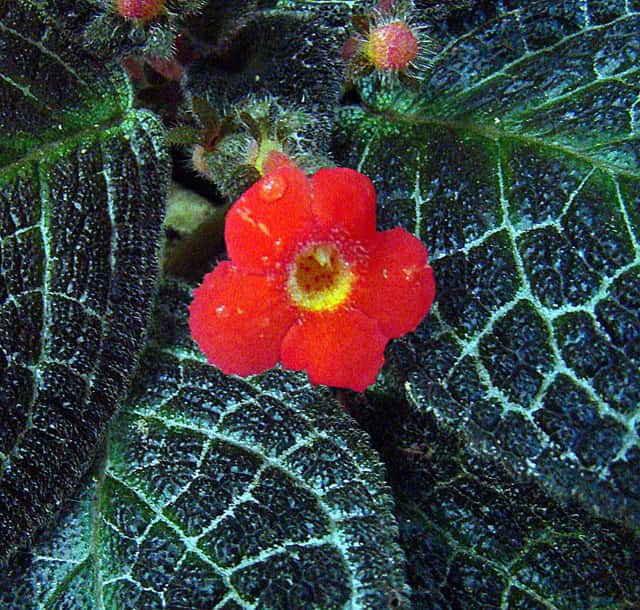
Flame Violet (Episcia cupreata) is a medium-care plant from the Gesneriaceae family. Episcia cupreata is a tropical creeping plant native to Colombia, belonging to the Gesneriaceae family. It features velvety leaves with stunning metallic patterns in shades of copper, silver, and green, along with tubular red or orange flowers that bloom throughout the year. Highly valued as a house...
Flame Violet grows up to 30cm, with spread of 60cm, watering every 4 days, 18°C – 26°C, 60–90% humidity. It is suitable for indoor environments and safe for pets.
Unlike many popular species, Flame Violet is safe to keep around pets. Without adequate drainage, root rot can develop within 8 days.
How to Care for Flame Violet?
TLDR: Flame Violet needs Partial shade, watering every 4 days, and temperatures between 18-26°C with 60-90% humidity.
How Often Should You Water Flame Violet?
Water when the top layer of soil begins to dry out, but never let it dry completely. Use bottom watering to avoid getting water on the velvety leaves, which are sensitive to direct moisture contact.
How Much Light Does Flame Violet Need?
Place in bright indirect light. Avoid direct sunlight which can scorch the leaves. An east or north-facing window is ideal. Requires at least 8 hours of light per day, and responds well to fluorescent or grow lights.
What Is the Best Soil for Flame Violet?
Use a rich, well-draining organic potting mix. An African violet mix works perfectly. Ideal pH range is 5.5 to 6.5.
What Pot Should You Use for Flame Violet?
Shallow, wide pots are ideal as Episcia has shallow roots and spreads laterally. Hanging baskets are also excellent for displaying the trailing stolons. Ensure adequate drainage holes.
Care Schedule
Fertilize
Every 14 days
Repot
Every 365 days
What Is Flame Violet and Where Does It Come From?
Episcia cupreata is a tropical creeping plant native to Colombia, belonging to the Gesneriaceae family. It features velvety leaves with stunning metallic patterns in shades of copper, silver, and green, along with tubular red or orange flowers that bloom throughout the year. Highly valued as a houseplant for its decorative foliage and trailing stoloniferous growth habit.
How to Propagate Flame Violet?
Stolon propagation
You can also root stolons while still attached to the mother plant by placing them on moist soil in an adjacent pot until roots form, then sever the connection.
- 1 Select a healthy plantlet with at least 4 leaves on the stolon
- 2 Cut the stolon about half an inch from the mother plant
- 3 Plant in moist potting mix and gently firm around the base
- 4 Cover with clear plastic to maintain humidity
Materials needed:
Leaf cutting
Stolon propagation is much easier and more productive than leaf cuttings. Use this method only if no stolons are available.
- 1 Cut a healthy leaf with the petiole intact
- 2 Dip the base in rooting hormone
- 3 Insert the petiole into moist potting mix
- 4 Keep in a warm, humid environment
Materials needed:
How Big Does Flame Violet Grow?
TLDR: Flame Violet can reach up to 30cm tall with Fast growth rate.
Max height
30cm
Spread
60cm
Growth rate
Fast
Foliage
Evergreen
Plant Uses
Ornamental
Great for decoration
Ground Cover
Soil coverage
Is your plant showing symptoms?
Click on the symptom to discover possible causes:
What Diseases Commonly Affect Flame Violet?
TLDR: Flame Violet is susceptible to 12 known diseases. Monitor regularly for early detection.
Root Rot
Root rot is a serious fungal disease that affects the root system of plants, causing them to decay and die. It is primarily caused by overwatering, poor drainage, or soil-borne fungi such as Pythium, Phytophthora, Rhizoctonia, and Fusarium. The disease thrives in waterlogged conditions where roots are deprived of oxygen, making them susceptible to fungal infection.
Gray Mold (Botrytis Blight)
Gray mold, caused by the fungus Botrytis cinerea, is a widespread necrotrophic pathogen affecting over 1,400 plant species. It thrives in cool, humid conditions and attacks weakened or aging plant tissues, causing soft rot and characteristic gray fuzzy growth.
Gray Mold (Botrytis Blight)
Gray mold, caused by the fungus Botrytis cinerea, is one of the most common fungal diseases in plants. It affects over 200 plant species, including ornamentals, vegetables, fruits, and houseplants. The disease thrives in cool, humid conditions with poor air circulation, causing grayish spots and soft rot on infected tissues.
Powdery Mildew
Powdery mildew is a common fungal disease caused by various fungi species including Erysiphe, Podosphaera, Oïdium, and Leveillula. It affects over 10,000 plant species worldwide. The disease thrives in warm, dry climates with high humidity and appears as a distinctive white powdery coating on plant surfaces.
Meaning & Symbolism
Symbolizes friendship and warmth, often gifted as a token of caring relationships.
Fun Facts
Episcia stolons can spread up to 60 cm, creating a living carpet of metallic foliage
It belongs to the same family as African Violets (Gesneriaceae) and shares many growing preferences
In the wild, it grows as ground cover in tropical forests of Colombia, Venezuela, and Brazil
There are over 100 cultivars with different foliage patterns, from bright silver to vibrant pink
Frequently asked questions
How often should I water my Flame Violet?
Is Episcia cupreata toxic to cats and dogs?
What is the best way to propagate Flame Violet?
Why are the edges of my Episcia leaves turning brown?
Compare with similar plants
| Attribute | Difficulty | Light | Watering | Pet Safe |
|---|---|---|---|---|
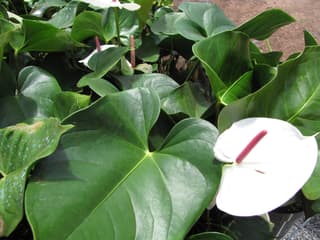
| Flamingo Flower | Medium | Partial shade | 5d | ⚠️ |
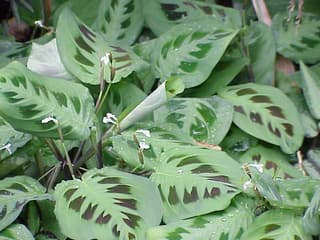
| Prayer Plant | Medium | Partial shade | 3d | ✓ |
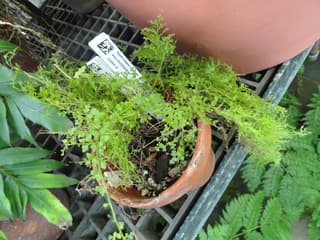
| Boston Fern | Medium | Partial shade | 3d | ✓ |
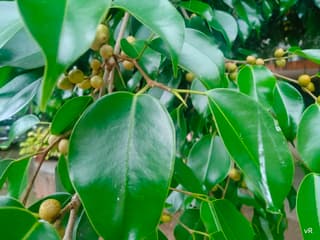
| Weeping Fig | Medium | Partial shade | 10d | ⚠️ |