Apiaceae
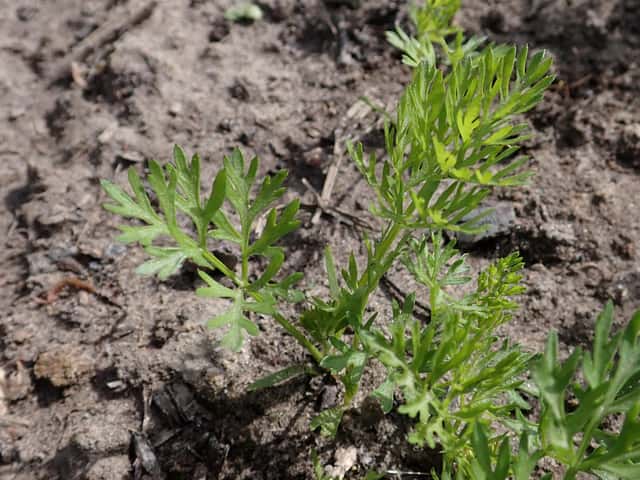
Garden Carrot (Daucus carota subsp. sativus)
Daucus carota subsp. sativus
Carrots need full sun, loose sandy well-drained soil, and regular watering every 2-3 days. They thrive in cool to moderate temperatures (15-25°C). Avoid excess nitrogen which promotes foliage over root development. Direct sow seeds — carrots do not tolerate transplanting.
Every 3 days
Direct sun
5° - 35°C
40% - 70%
Categories
What is Garden Carrot?
Garden Carrot (Daucus carota subsp. sativus) is a medium-care plant from the Apiaceae family. The garden carrot (Daucus carota subsp. sativus) is one of the world's most widely grown root vegetables, descended from the wild Eurasian carrot. Belonging to the Apiaceae family, it is prized for its sweet, nutrient-dense taproot rich in beta-carotene. A biennial grown as an annual, it produces fe...
Garden Carrot grows up to 90cm, spread of 8cm, watering every 3 days, 5°C – 35°C, 40–70% humidity. It is not suitable for indoor environments and safe for pets.
Unlike many popular species, Garden Carrot is safe to keep around pets.
How to Care for Garden Carrot?
TLDR: Garden Carrot needs Direct sun, watering every 3 days, and temperatures between 5-35°C with 40-70% humidity.
How Often Should You Water Garden Carrot?
Water every 2-3 days keeping soil consistently moist but never waterlogged. Irregular watering causes cracked or forked roots. Increase frequency during hot spells. Mulching helps retain moisture and regulate soil temperature.
How Much Light Does Garden Carrot Need?
Full sun is essential — at least 6 hours of direct sunlight daily. Partial shade significantly reduces root development and yield. Orient rows north-south for maximum sun exposure throughout the day.
What Is the Best Soil for Garden Carrot?
Use loose, deep, sandy or sandy-loam soil with good drainage, pH 6.0-8.0. Compact, stony, or clay soils cause forked and misshapen roots. Prepare the bed to at least 30 cm depth and incorporate compost, avoiding excess nitrogen.
What Pot Should You Use for Garden Carrot?
Raised garden bed or deep container (minimum 30 cm depth) with excellent drainage. Avoid shallow pots.
Care Schedule
Fertilize
Every 30 days
What Is Garden Carrot and Where Does It Come From?
The garden carrot (Daucus carota subsp. sativus) is one of the world's most widely grown root vegetables, descended from the wild Eurasian carrot. Belonging to the Apiaceae family, it is prized for its sweet, nutrient-dense taproot rich in beta-carotene. A biennial grown as an annual, it produces feathery foliage and white umbel flowers in its second year.
How to Propagate Garden Carrot?
Direct Sowing
Soak seeds in water for 24 hours before planting to speed germination. Never transplant carrots — always sow directly in the final location.
- 1 Prepare bed with loose, well-drained soil to 30 cm depth
- 2 Sow seeds 1-2 cm deep, 5-7 cm apart in rows 30 cm apart
- 3 Cover lightly with soil and water gently
- 4 Thin seedlings to 5-8 cm apart when they reach 5 cm tall
- 5 Harvest after 70-120 days when roots are 1.5-2 cm in diameter at the shoulder
Materials needed:
How Big Does Garden Carrot Grow?
TLDR: Garden Carrot can reach up to 90cm tall with Medium growth rate.
Max height
90cm
Spread
8cm
Growth rate
Medium
Foliage
Deciduous
Plant Uses
Edible
Can be consumed
Culinary Uses
- Eaten raw, cooked, juiced, or pickled worldwide
- Rich in beta-carotene (pro-vitamin A), fiber, and antioxidants
- Used in soups, stews, salads, juices, cakes, and stir-fries
- Young leaves are edible in salads
Is your plant showing symptoms?
Click on the symptom to discover possible causes:
What Diseases Commonly Affect Garden Carrot?
TLDR: Garden Carrot is susceptible to 9 known diseases. Monitor regularly for early detection.
Alternaria Leaf Spot
Alternaria leaf spot is a common fungal disease caused by Alternaria solani and Alternaria alternata that affects a wide range of plants including tomatoes, potatoes, brassicas, and ornamentals. The disease thrives in warm, humid conditions and can cause significant crop damage if left untreated. Spores overwinter on plant debris and can attach to seeds, making complete elimination difficult.
Powdery Mildew
Powdery mildew is a common fungal disease caused by various fungi species including Erysiphe, Podosphaera, Oïdium, and Leveillula. It affects over 10,000 plant species worldwide. The disease thrives in warm, dry climates with high humidity and appears as a distinctive white powdery coating on plant surfaces.
Damping Off
Damping off is a soil-borne fungal disease that affects seeds and young seedlings, causing rotting of stem and root tissues at and below the soil line. It is caused by several fungi including Pythium, Rhizoctonia, Fusarium, and Phytophthora. The disease thrives in cold, wet conditions with poor air circulation.
Root Rot
Root rot is a serious fungal disease that affects the root system of plants, causing them to decay and die. It is primarily caused by overwatering, poor drainage, or soil-borne fungi such as Pythium, Phytophthora, Rhizoctonia, and Fusarium. The disease thrives in waterlogged conditions where roots are deprived of oxygen, making them susceptible to fungal infection.
Fun Facts
Wild carrot (Daucus carota) still grows as a roadside weed across Europe and North America
The first cultivated carrots were purple and white — orange carrots were developed by Dutch growers in the 17th century
Carrots are biennial, flowering only in their second year of growth
One medium carrot provides over 200% of the daily recommended intake of vitamin A
Frequently asked questions
How often should I water carrots?
What is the best soil for carrots?
How much sun do carrots need?
When should I harvest carrots?
Are carrots toxic to pets?
Compare with similar plants
| Attribute | Difficulty | Light | Watering | Pet Safe |
|---|---|---|---|---|
| Dark Fieldcap | Medium | Low light | 2d | ⚠️ |
| Azalea | Medium | Partial shade | 3d | ⚠️ |
| Bougainvillea | Medium | Direct sun | 7d | ⚠️ |
| Wild Lettuce | Medium | Direct sun | 7d | ⚠️ |



