Saxifragaceae
American Alumroot (Heuchera americana)
Heuchera americana
Grows best in partial to full shade with well-draining, slightly acidic soil. Water weekly and keep soil consistently moist but not soggy. Divide clumps every 3 years to maintain vigor. Apply balanced slow-release fertilizer in spring.
Every 7 days
Partial shade
-20° - 35°C
30% - 50%
Categories
What is American Alumroot?
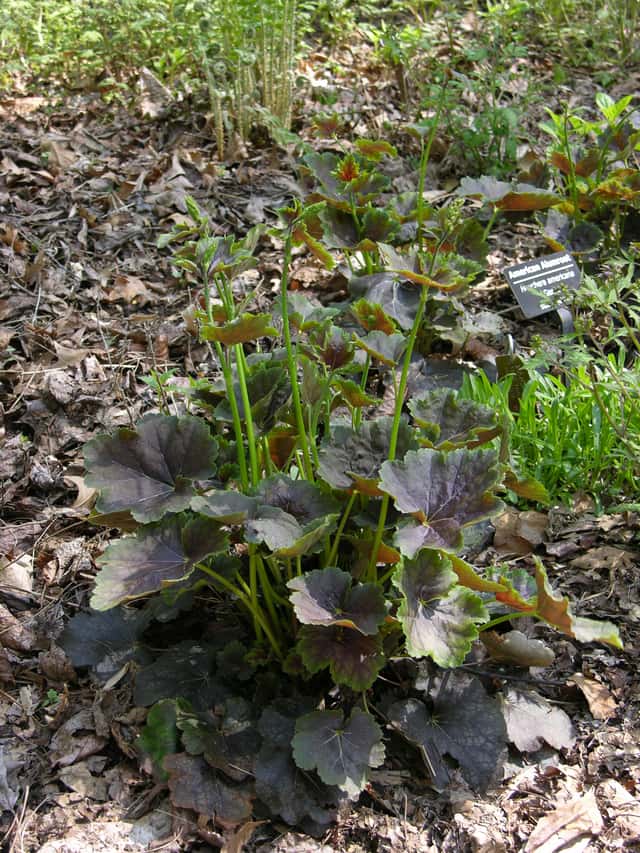
American Alumroot (Heuchera americana) is a medium-care plant from the Saxifragaceae family. Heuchera americana, commonly known as American Alumroot, is a native perennial of Eastern North America prized for its ornamental, deeply lobed foliage with silver-grey marbling. It produces delicate bell-shaped flowers on wiry stalks in late spring and thrives in shaded garden settings.
American Alumroot grows up to 46cm, spread of 46cm, watering every 7 days, -20°C – 35°C, 30–50% humidity. It is not suitable for indoor environments and safe for pets.
Unlike many popular species, American Alumroot is safe to keep around pets.
How to Care for American Alumroot?
TLDR: American Alumroot needs Partial shade, watering every 7 days, and temperatures between -20-35°C with 30-50% humidity.
How Often Should You Water American Alumroot?
Water deeply once a week, allowing the topsoil to approach dryness between waterings. Avoid wetting foliage to prevent fungal disease. Mulch around the base to retain moisture and prevent crown heaving in winter.
How Much Light Does American Alumroot Need?
Prefers partial to full shade — 2 to 6 hours of indirect or dappled sunlight per day. Avoid intense afternoon sun, which can scorch the foliage. Morning sun with afternoon shade is ideal in warmer climates.
What Is the Best Soil for American Alumroot?
Plant in well-draining soil rich in organic matter. A mix of loam, compost, and perlite works well. Aim for a slightly acidic pH of 5.5–6.5. Avoid clay-heavy soils that retain too much moisture.
What Pot Should You Use for American Alumroot?
Terracotta or ceramic pots with drainage holes; unglazed terracotta helps prevent overwatering
Care Schedule
Fertilize
Every 90 days
Repot
Every 1095 days
What Is American Alumroot and Where Does It Come From?
Heuchera americana, commonly known as American Alumroot, is a native perennial of Eastern North America prized for its ornamental, deeply lobed foliage with silver-grey marbling. It produces delicate bell-shaped flowers on wiry stalks in late spring and thrives in shaded garden settings.
How to Propagate American Alumroot?
Crown Division
Divide every 3 years to prevent overcrowding and rejuvenate growth. Discard old woody centers.
- 1 Dig up the entire clump in early spring or fall
- 2 Use a sharp knife or spade to divide the crown into sections with healthy roots and leaves
- 3 Replant divisions at the same depth as the original, with crown level with soil surface
- 4 Water thoroughly after planting and mulch to retain moisture
Materials needed:
Seed Propagation
Seeds from straight species will grow true. Hybrid cultivar seeds may not replicate the parent.
- 1 Sow seeds on the surface of moist seed-starting mix — do not cover, as seeds need light to germinate
- 2 Keep at 18-21°C (65-70°F) with consistent moisture
- 3 Transplant seedlings when they have 2-3 true leaves
Materials needed:
How Big Does American Alumroot Grow?
TLDR: American Alumroot can reach up to 46cm tall with Slow growth rate.
Max height
46cm
Spread
46cm
Growth rate
Slow
Foliage
Semi-evergreen
Plant Uses
Ornamental
Great for decoration
Ground Cover
Soil coverage
Is your plant showing symptoms?
Click on the symptom to discover possible causes:
What Diseases Commonly Affect American Alumroot?
TLDR: American Alumroot is susceptible to 9 known diseases. Monitor regularly for early detection.
Root Rot
Root rot is a serious fungal disease that affects the root system of plants, causing them to decay and die. It is primarily caused by overwatering, poor drainage, or soil-borne fungi such as Pythium, Phytophthora, Rhizoctonia, and Fusarium. The disease thrives in waterlogged conditions where roots are deprived of oxygen, making them susceptible to fungal infection.
Crown Rot
Crown rot is a serious fungal disease that attacks the crown (base) of the plant where the stem meets the soil. It is caused by various fungal pathogens including Phytophthora, Fusarium, and Rhizoctonia. The disease thrives in waterlogged conditions and can quickly spread to kill the entire plant if not addressed promptly.
Powdery Mildew
Powdery mildew is a common fungal disease caused by various fungi species including Erysiphe, Podosphaera, Oïdium, and Leveillula. It affects over 10,000 plant species worldwide. The disease thrives in warm, dry climates with high humidity and appears as a distinctive white powdery coating on plant surfaces.
Rust
Rust is a common fungal disease caused by fungi in the order Pucciniales that affects a wide variety of plants. The disease gets its name from the characteristic orange, yellow, or reddish-brown pustules that appear on leaves, resembling metal rust. This obligate fungal parasite requires living plants to survive and can cause significant economic losses in agricultural crops.
Meaning & Symbolism
Resilience and adaptability; thriving gracefully in challenging, shaded conditions
Fun Facts
American Alumroot is native to the Appalachian Mountains, where it grows in rocky, shaded woodland slopes
The name 'alumroot' comes from the alum-like astringency of its tannin-rich roots, historically used by Native Americans
Heuchera flowers are a key nectar source for hummingbirds in Eastern North American gardens
Unlike most perennials, Heuchera americana is semi-evergreen — it often retains its colorful foliage through mild winters
Frequently asked questions
How often should I water Heuchera americana?
Can American Alumroot grow in full shade?
Is Heuchera americana toxic to pets?
When should I divide my Heuchera?
Why are my Heuchera leaves turning brown at the edges?
Compare with similar plants
| Attribute | Difficulty | Light | Watering | Pet Safe |
|---|---|---|---|---|
| Dark Fieldcap | Medium | Low light | 2d | ⚠️ |
| Azalea | Medium | Partial shade | 3d | ⚠️ |
| Muriel's Bamboo | Medium | Partial shade | 3d | ✓ |
| Bougainvillea | Medium | Direct sun | 7d | ⚠️ |




