Amaryllidaceae
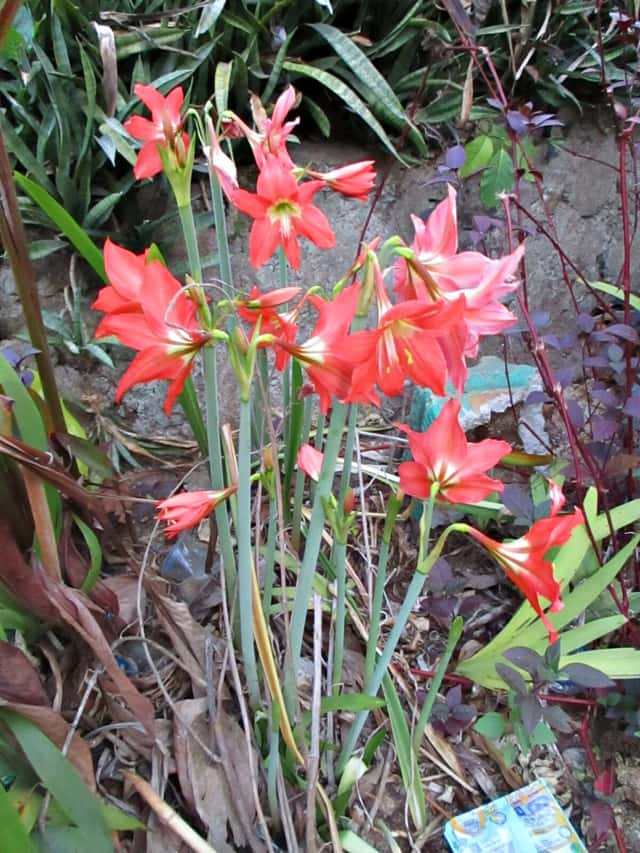
Barbados Lily (Hippeastrum puniceum)
Hippeastrum puniceum
An easy, tough bulb: full sun to part shade, free-draining soil and moderate water while in leaf and flower. Stop water and fertilizer during the winter rest. Not frost hardy. Toxic to cats, dogs and people.
Every 7 days
Bright indirect
° - °C
% - %
Categories
What is Barbados lily?
Barbados lily (Hippeastrum puniceum) is a easy-care plant from the Amaryllidaceae family. Hippeastrum puniceum, the Barbados lily, is a bulbous plant in the Amaryllidaceae family native to tropical South America and the Caribbean, grown in warm-climate gardens for centuries (it is also sold as Hippeastrum equestre). The 4 to 5 cm bulb produces strap-shaped leaves 25 to 60 cm long and hol...
Barbados lily grows up to 60cm, watering every 7 days. It is suitable for indoor environments and not safe for pets.
Unlike many tropical plants, Barbados lily tolerates watering mistakes. Best for beginners. Without precautions, ingestion can cause irritation in pets. Keep out of reach of cats and dogs. Without adequate drainage, root rot can develop within 14 days.
How to Care for Barbados lily?
TLDR: Barbados lily needs Bright indirect, watering every 7 days, and temperatures between 15-30°C with 40-70% humidity.
How Often Should You Water Barbados lily?
Water when the top few centimetres of soil are dry, about once a week while it has leaves and flowers. Avoid soggy soil, which rots the bulb. During the winter rest, almost no water.
How Much Light Does Barbados lily Need?
Full sun or part shade. More sun means more flowers, though it tolerates partial shade. Indoors, give it a very bright window.
What Is the Best Soil for Barbados lily?
Grows in many soil types as long as they drain well. In pots, use a light mix with coarse sand or perlite.
What Pot Should You Use for Barbados lily?
A clay or plastic pot with a drainage hole, only 3 to 5 cm wider than the bulb; it flowers better slightly pot-bound.
What Is Barbados lily and Where Does It Come From?
Hippeastrum puniceum, the Barbados lily, is a bulbous plant in the Amaryllidaceae family native to tropical South America and the Caribbean, grown in warm-climate gardens for centuries (it is also sold as Hippeastrum equestre). The 4 to 5 cm bulb produces strap-shaped leaves 25 to 60 cm long and hollow stalks 30 to 60 cm tall carrying 2 to 4 trumpet flowers, 8 to 12 cm across, red-orange with a greenish-white throat. In warm climates it blooms much of the year and rests in winter. It is one of the wild species behind many hybrid amaryllis. The whole bulb contains alkaloids such as lycorine and is toxic if eaten.
How to Propagate Barbados lily?
Offset bulbs
Offsets usually flower in 2 to 3 years. Wear gloves: the bulb is toxic.
- 1 At the end of the rest period, lift the clump
- 2 Separate offset bulbs that already have their own roots
- 3 Plant each with the neck at or slightly above soil level
- 4 Water sparingly until new leaves appear
Materials needed:
Seed
Fresh seed germinates best; seedlings take a few years to bloom.
- 1 Collect the flat black seeds when the capsule splits
- 2 Sow fresh on moist mix and cover lightly
- 3 Keep bright and warm, never letting it dry out
- 4 Transplant once a small bulb has formed
Materials needed:
How Big Does Barbados lily Grow?
TLDR: Barbados lily can reach up to 60cm tall with Medium growth rate.
Max height
60cm
Warning: Toxic Plant
This plant can be toxic if ingested. Keep out of reach of:
Plant Uses
Ornamental
Great for decoration
Medicinal Uses
- In folk medicine the bulb has been used in poultices for sores and abscesses; it is toxic and must not be eaten.
Is your plant showing symptoms?
Click on the symptom to discover possible causes:
What Diseases Commonly Affect Barbados lily?
TLDR: Barbados lily is susceptible to 7 known diseases. Monitor regularly for early detection.
Red Blotch (Stagonospora curtisii)
A common fungal disease affecting bulbous plants such as Amaryllis. It is characterized by elongated, bright red lesions that can deform leaves and stems, eventually weakening the bulb over time.
Root Rot
Root rot is a serious fungal disease that affects the root system of plants, causing them to decay and die. It is primarily caused by overwatering, poor drainage, or soil-borne fungi such as Pythium, Phytophthora, Rhizoctonia, and Fusarium. The disease thrives in waterlogged conditions where roots are deprived of oxygen, making them susceptible to fungal infection.
Mealybugs
Mealybugs are small, soft-bodied insects covered with a white, waxy, cottony material. They are common pests of houseplants and outdoor plants in mild climates. These sap-sucking insects feed on plant tissue, causing damage, stunted growth, and can lead to plant death if left untreated. They produce sticky honeydew which attracts sooty mold.
Thrips
Thrips are tiny cigar-shaped insects (1/25-inch long) that damage plants by sucking plant juices and scraping at fruits, flowers, and leaves. With over 6,000 species and rapid reproduction (lifecycle as short as 14 days), they can quickly infest plants and transmit viruses like tomato spotted wilt virus.
Fun Facts
It is one of the wild species behind the hybrid amaryllis sold in pots.
Alkaloids from its bulb, such as galantamine, are studied for inhibiting acetylcholinesterase.
Frequently asked questions
How often should I water a Barbados lily?
Is the Barbados lily toxic to cats and dogs?
Why won't my Barbados lily flower?
How do I propagate it?
Compare with similar plants
| Attribute | Difficulty | Light | Watering | Pet Safe |
|---|---|---|---|---|
| Field Maple | Easy | Bright indirect | 14d | ✓ |
| Iberian Houseleek | Easy | Direct sun | 14d | ✓ |
| Silver Birch | Easy | Direct sun | 14d | ✓ |
| Common Blanketflower | Easy | Direct sun | 10d | ✓ |
Choose & Compare
Sources & References
- Plant Pono (Hawaii) - Hippeastrum puniceum, Barbados lily
- StuartXchange Philippine Medicinal Plants - Orange lirio (Hippeastrum puniceum)
- EcuRed - Hippeastrum puniceum
- ASPCA - Barbados Lily (Hippeastrum spp.) toxic to dogs and cats
- EPPO Global Database - Hippeastrum puniceum
- Connecticut Agricultural Experiment Station - Plant Pest Handbook: Amaryllis (Hippeastrum)





