Papaveraceae
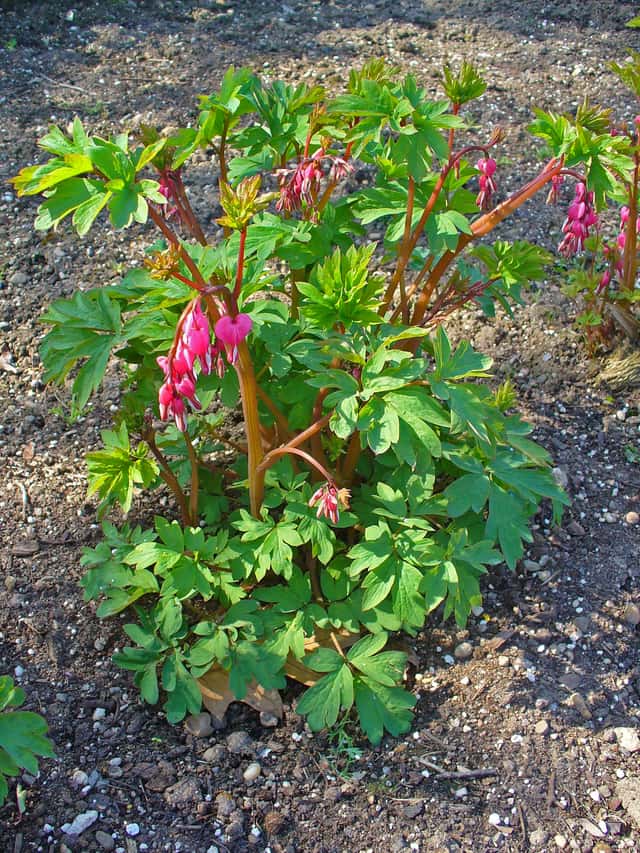
Bleeding Heart (Dicentra spectabilis)
Dicentra spectabilis
Bleeding Heart thrives in partial to full shade with consistently moist, rich, well-draining soil. Water weekly and fertilize monthly during the growing season. It goes dormant in summer heat — this is normal. Mulch in autumn for winter protection.
Every 7 days
Partial shade
-30° - 24°C
50% - 70%
Categories
What is Bleeding Heart?
Bleeding Heart (Dicentra spectabilis) is a medium-care plant from the Papaveraceae family. Dicentra spectabilis, commonly known as Bleeding Heart, is a shade-loving perennial native to northeastern China, Japan, and Korea. It produces stunning arching stems adorned with heart-shaped pink, red, or white flowers in spring, before going dormant in summer heat.
Bleeding Heart grows up to 91cm, spread of 91cm, watering every 7 days, -30°C – 24°C, 50–70% humidity. It is not suitable for indoor environments and not safe for pets.
Without precautions, ingestion can cause irritation in pets. Keep out of reach of cats and dogs.
How to Care for Bleeding Heart?
TLDR: Bleeding Heart needs Partial shade, watering every 7 days, and temperatures between -30-24°C with 50-70% humidity.
How Often Should You Water Bleeding Heart?
Water every 5–7 days keeping soil consistently moist but never waterlogged. Water at the base to avoid wetting foliage, which can promote fungal disease. Reduce watering as the plant enters summer dormancy.
How Much Light Does Bleeding Heart Need?
Provide partial to full shade — morning sun with afternoon shade is ideal. Avoid direct afternoon sun, which can scorch leaves and accelerate dormancy. Dappled light beneath deciduous trees mimics its natural habitat.
What Is the Best Soil for Bleeding Heart?
Use rich, loamy, woodland-type soil amended with compost or leaf mold. Soil must be well-draining while retaining consistent moisture. A slightly acidic to neutral pH between 6.0 and 7.5 is ideal.
What Pot Should You Use for Bleeding Heart?
Terracotta or ceramic pot with drainage holes for container growing; ensure at least 30 cm depth for rhizome development. Outdoors, plant directly in the ground in shaded borders.
Care Schedule
Fertilize
Every 30 days
What Is Bleeding Heart and Where Does It Come From?
Dicentra spectabilis, commonly known as Bleeding Heart, is a shade-loving perennial native to northeastern China, Japan, and Korea. It produces stunning arching stems adorned with heart-shaped pink, red, or white flowers in spring, before going dormant in summer heat.
How to Propagate Bleeding Heart?
Division
Divide every 3–4 years to rejuvenate growth. Handle roots gently as they are brittle. Wear gloves — all parts are toxic.
- 1 Dig up the clump carefully in early spring before new growth emerges.
- 2 Divide the rhizome into sections, each with at least 2–3 buds.
- 3 Replant divisions at the same depth in prepared, moist soil.
- 4 Water well and keep soil consistently moist until established.
Materials needed:
Seed
Fresh seeds germinate best. Self-sown seeds in the garden typically germinate more reliably than stored seeds.
- 1 Stratify seeds in moist sand in the refrigerator for 4–6 weeks.
- 2 Sow seeds in a seed tray with moist potting mix in early spring.
- 3 Keep at 15–18°C and maintain consistent moisture.
- 4 Transplant seedlings outdoors after last frost.
Materials needed:
How Big Does Bleeding Heart Grow?
TLDR: Bleeding Heart can reach up to 91cm tall with Medium growth rate.
Max height
91cm
Spread
91cm
Growth rate
Medium
Foliage
Deciduous
Warning: Toxic Plant
This plant can be toxic if ingested. Keep out of reach of:
Plant Uses
Ornamental
Great for decoration
Is your plant showing symptoms?
Click on the symptom to discover possible causes:
What Diseases Commonly Affect Bleeding Heart?
TLDR: Bleeding Heart is susceptible to 10 known diseases. Monitor regularly for early detection.
Powdery Mildew
Powdery mildew is a common fungal disease caused by various fungi species including Erysiphe, Podosphaera, Oïdium, and Leveillula. It affects over 10,000 plant species worldwide. The disease thrives in warm, dry climates with high humidity and appears as a distinctive white powdery coating on plant surfaces.
Leaf Spot
Leaf spot is a common fungal disease caused by various pathogens including Alternaria, Ascochyta, Colletotrichum, Septoria, and Venturia. It primarily affects leaves, causing discolored spots that can lead to premature leaf drop if left untreated.
Root Rot
Root rot is a serious fungal disease that affects the root system of plants, causing them to decay and die. It is primarily caused by overwatering, poor drainage, or soil-borne fungi such as Pythium, Phytophthora, Rhizoctonia, and Fusarium. The disease thrives in waterlogged conditions where roots are deprived of oxygen, making them susceptible to fungal infection.
Fusarium Wilt
Fusarium wilt is a serious fungal disease caused by the soil-borne fungus Fusarium oxysporum. The fungus invades roots and blocks the water-conducting vessels (xylem) of the plant, causing progressive wilting and eventual death. Host-specific forms of the pathogen exist that attack different plant species.
Meaning & Symbolism
Represents romantic love, nostalgia, and timeless beauty. Historically acclaimed as one of the finest hardy garden plants of the 19th century.
Fun Facts
Bleeding Heart is not a true Dicentra anymore — botanists reclassified it as Lamprocapnos spectabilis in 2011, though the old name remains widely used.
The plant goes completely dormant in summer heat and disappears underground, only to return triumphantly each spring.
Victorian-era gardeners considered it one of the most elegant cottage garden flowers, and it was praised as "the finest hardy plant of the 19th century".
Each dangling flower has two outer pink petals forming a heart shape, with white inner petals protruding below — resembling a heart with a drop of blood.
Frequently asked questions
How often should I water Bleeding Heart?
Is Bleeding Heart toxic to pets?
Why is my Bleeding Heart dying in summer?
Does Bleeding Heart grow in full shade?
How do I propagate Bleeding Heart?
Compare with similar plants
| Attribute | Difficulty | Light | Watering | Pet Safe |
|---|---|---|---|---|
| Dark Fieldcap | Medium | Low light | 2d | ⚠️ |
| Azalea | Medium | Partial shade | 3d | ⚠️ |
| Muriel's Bamboo | Medium | Partial shade | 3d | ✓ |
| Bougainvillea | Medium | Direct sun | 7d | ⚠️ |




