Rubiaceae
Buttonbush: Aromatic Plant
Cephalanthus occidentalis
Buttonbush thrives best in full sun to partial shade with consistently moist to wet, nutrient-rich soil. It is hardy (USDA zones 5a-9b), grows at a medium rate, and is generally free from serious pest and disease problems when planted in the right location. Fertilize once a year in early spring and remove dead or damaged branches during winter or early spring.
Every 2 days
Bright indirect
-34° - 38°C
50% - 90%
Categories
What is Buttonbush?
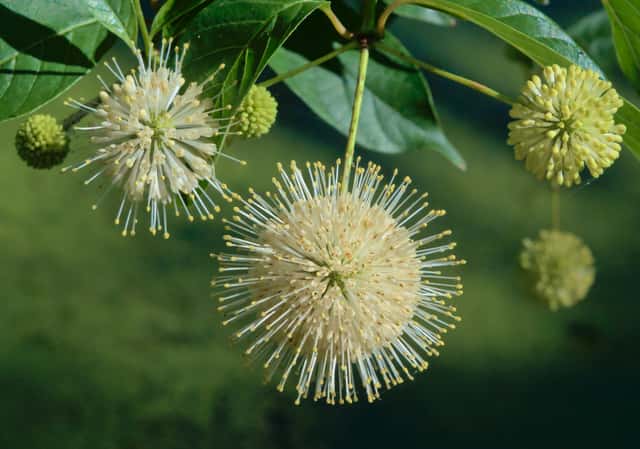
Buttonbush (Cephalanthus occidentalis) is a easy-care plant from the Rubiaceae family. The Common Buttonbush (Cephalanthus occidentalis) is a deciduous wetland shrub native to eastern North America, where it naturally grows along lakeshores, marshes, and streams. From June to August, it produces distinctive, spherical flower heads composed of small, white to cream-colored, fragrant tu...
Buttonbush grows up to 2.5m, spread of 200cm, watering every 2 days, -34°C – 38°C, 50–90% humidity. It is not suitable for indoor environments and not safe for pets.
Unlike many tropical plants, Buttonbush tolerates watering mistakes. Best for beginners. Without precautions, ingestion can cause irritation in pets. Keep out of reach of cats and dogs.
How to Care for Buttonbush?
TLDR: Buttonbush needs Bright indirect, watering every 2 days, and temperatures between -34-38°C with 50-90% humidity.
How Often Should You Water Buttonbush?
Keep the soil consistently moist to wet—buttonbush tolerates periods of standing water and flooding far better than drought. During dry spells or when the plant is newly established, provide extra water; it is ideally suited for rain gardens or pond edges where the soil naturally retains moisture.
How Much Light Does Buttonbush Need?
Prefers full sun (at least 6 hours of direct sunlight) for the most profuse blooming, but also performs well in partial shade, especially in warmer climates.
What Is the Best Soil for Buttonbush?
Thrives in nutrient-rich, moist to wet soil and tolerates clay, sand, and loam. Prefers slightly acidic to neutral pH (approx. 5.5-7.2) and can handle periodic flooding without issues.
What Pot Should You Use for Buttonbush?
Best suited for planting directly in moist garden beds or along water edges rather than in pots. If grown in a container, use a large planter with a saucer to ensure the soil can be kept constantly moist.
Care Schedule
Fertilize
Every 365 days
What Is Buttonbush and Where Does It Come From?
The Common Buttonbush (Cephalanthus occidentalis) is a deciduous wetland shrub native to eastern North America, where it naturally grows along lakeshores, marshes, and streams. From June to August, it produces distinctive, spherical flower heads composed of small, white to cream-colored, fragrant tubular flowers that resemble pincushions and attract butterflies, hummingbirds, and bees. The shrub typically reaches 5 to 8 feet in height and width, featuring glossy, dark green opposite leaves. Because it tolerates flooding and standing water, it is ideal for rain gardens, pond edges, and moist depressions.
How to Propagate Buttonbush?
How Big Does Buttonbush Grow?
TLDR: Buttonbush can reach up to 2.5m tall with Medium growth rate.
Max height
2.5m
Spread
2.0m
Growth rate
Medium
Foliage
Deciduous
Warning: Toxic Plant
This plant can be toxic if ingested. Keep out of reach of:
Plant Uses
Ornamental
Great for decoration
Aromatic
Pleasant fragrance
Is your plant showing symptoms?
Click on the symptom to discover possible causes:
What Diseases Commonly Affect Buttonbush?
TLDR: Buttonbush is susceptible to 6 known diseases. Monitor regularly for early detection.
Aphids
Aphids are small, soft-bodied, pear-shaped insects (1/16 to 1/8 inch long) that feed by sucking nutrient-rich sap from plants. They reproduce rapidly and can quickly weaken plants, causing distorted growth and transmitting plant viruses. Aphids come in various colors including green, black, red, yellow, brown, and gray. They secrete honeydew, a sticky substance that attracts ants and encourages sooty mold growth.
Scale Insects
Scale insects are small sap-sucking pests that appear as brown, shell-like bumps on plant stems and leaves. There are over 25 species, divided into armored (hard) and unarmored (soft) scales. They feed by piercing plant tissue and extracting sap, which weakens the plant and can lead to yellowing, stunted growth, and even death if left untreated. They also excrete honeydew, which attracts ants and promotes sooty mold growth.
Thrips
Thrips are tiny cigar-shaped insects (1/25-inch long) that damage plants by sucking plant juices and scraping at fruits, flowers, and leaves. With over 6,000 species and rapid reproduction (lifecycle as short as 14 days), they can quickly infest plants and transmit viruses like tomato spotted wilt virus.
Spider Mites
Spider mites are tiny arachnids (less than 1/20 inch long) related to spiders and ticks that feed on plant sap. They thrive in hot, dry conditions and can cause significant damage to ornamental and vegetable plants. During severe infestations, crop losses can reach 14% or higher as these pests disrupt vital plant processes including photosynthesis, carbon dioxide absorption, and transpiration.
Compare with similar plants
| Attribute | Difficulty | Light | Watering | Pet Safe |
|---|---|---|---|---|
| Field Maple | Easy | Bright indirect | 14d | ✓ |
| Silver Birch | Easy | Direct sun | 14d | ✓ |
| Common Blanketflower | Easy | Direct sun | 10d | ✓ |
| Cushion Bush | Easy | Direct sun | 14d | ✓ |
Choose & Compare
Sources & References
- Cephalanthus occidentalis (Buttonbush) - NC State Extension Gardener Plant Toolbox
- Buttonbush: A Growing Guide for Cephalanthus Occidentalis - Garden Design
- Buttonbush (Cephalanthus occidentalis): Grow, Care Guide - Gardenia.net
- Cephalanthus occidentalis, Buttonbush - Dallas County Master Gardeners Association





