Gesneriaceae
Cape Primrose (Streptocarpus rexii): Complete Care Guide
Streptocarpus rexii
Cape Primrose is a moderately challenging houseplant that rewards careful watering and bright indirect light with prolific blooms. Allow the soil to dry slightly between waterings, maintain temperatures between 10–24°C, and feed monthly during the growing season. Avoid direct sun and cold drafts.
Every 10 days
Partial shade
10° - 24°C
40% - 60%
Categories
What is Cape Primrose?
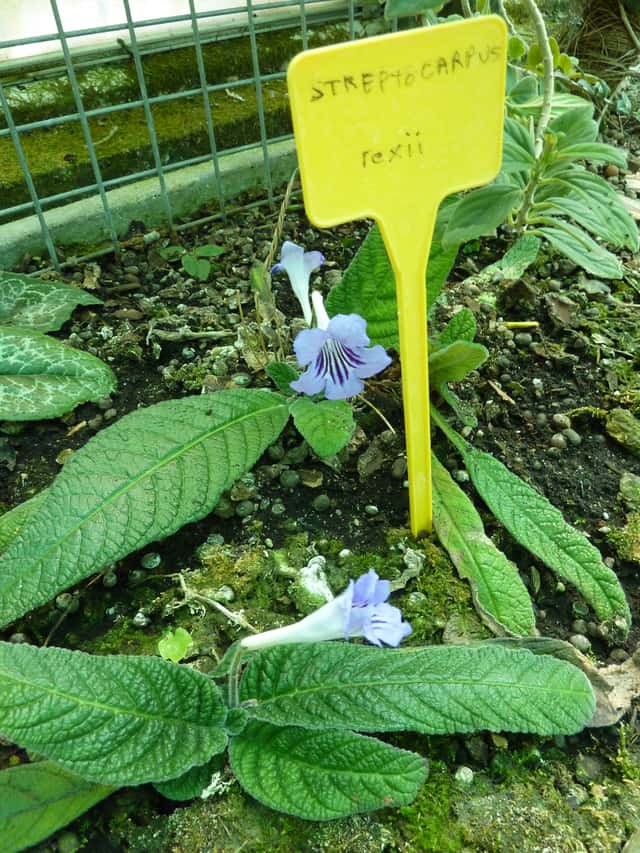
Cape Primrose (Streptocarpus rexii) is a medium-care plant from the Gesneriaceae family. Streptocarpus rexii, commonly known as Cape Primrose, is a stunning stemless herb native to the rocky coastal forests and stream banks of South Africa. It produces rosettes of long, strap-shaped leaves and bears delicate trumpet-shaped flowers in shades of white, blue, lilac, and violet from spring...
Cape Primrose grows up to 30cm, spread of 40cm, watering every 10 days, 10°C – 24°C, 40–60% humidity. It is suitable for indoor environments and safe for pets.
Unlike many popular species, Cape Primrose is safe to keep around pets. Without adequate drainage, root rot can develop within 20 days.
How to Care for Cape Primrose?
TLDR: Cape Primrose needs Partial shade, watering every 10 days, and temperatures between 10-24°C with 40-60% humidity.
How Often Should You Water Cape Primrose?
Water when the top layer of soil feels almost dry — every 7–14 days depending on season. Always use room-temperature water and avoid wetting the leaves. Bottom watering works well to prevent crown rot.
How Much Light Does Cape Primrose Need?
Provide bright, indirect light — an east or west-facing windowsill is ideal. Avoid direct afternoon sun which scorches leaves. In winter, move to the brightest location available.
What Is the Best Soil for Cape Primrose?
Use a well-draining, peat-free houseplant or African violet potting mix. Shallow, wide pots are preferred over deep containers to prevent waterlogging. Repot each spring into a slightly larger pot.
What Pot Should You Use for Cape Primrose?
Shallow, wide ceramic or terracotta pot with drainage holes. Avoid deep pots. A pot no more than 2cm larger than the root ball is ideal.
Care Schedule
Fertilize
Every 30 days
Rotate
Every 60 days
Repot
Every 365 days
What Is Cape Primrose and Where Does It Come From?
Streptocarpus rexii, commonly known as Cape Primrose, is a stunning stemless herb native to the rocky coastal forests and stream banks of South Africa. It produces rosettes of long, strap-shaped leaves and bears delicate trumpet-shaped flowers in shades of white, blue, lilac, and violet from spring through autumn. It thrives as a houseplant in bright indirect light.
How to Propagate Cape Primrose?
Leaf Cutting
Use a sharp, sterilized blade. Keep humidity high but allow air circulation to prevent mold. Bottom watering helps avoid overwatering.
- 1 Select a healthy, mature leaf and cut it into sections about 5cm long
- 2 Insert sections upright into a tray of moist seed compost or perlite
- 3 Cover loosely with a plastic bag to retain humidity
- 4 Place in bright indirect light at 20–24°C
- 5 Tiny plantlets emerge at the base in 6–8 weeks
- 6 Pot up individually when plantlets have 2–3 leaves
Materials needed:
Seed Propagation
Seeds are very fine — mix with a little sand for even sowing. Use a gentle misting spray to avoid washing seeds away.
- 1 Sow seeds on the surface of moist seed compost — do not cover
- 2 Place tray in a propagator or cover with plastic wrap at 21–24°C
- 3 Keep evenly moist until germination in 3–4 weeks
- 4 Prick out seedlings when large enough to handle
Materials needed:
Division
Divide only when the plant has produced multiple rosettes. Minimize root disturbance.
- 1 Remove plant from pot and gently separate offset rosettes with roots attached
- 2 Pot each division into its own small pot with fresh compost
- 3 Water lightly and keep in bright indirect light
Materials needed:
How Big Does Cape Primrose Grow?
TLDR: Cape Primrose can reach up to 30cm tall with Slow growth rate.
Max height
30cm
Spread
40cm
Growth rate
Slow
Foliage
Evergreen
Plant Uses
Ornamental
Great for decoration
Is your plant showing symptoms?
Click on the symptom to discover possible causes:
What Diseases Commonly Affect Cape Primrose?
TLDR: Cape Primrose is susceptible to 11 known diseases. Monitor regularly for early detection.
Root Rot
Root rot is a serious fungal disease that affects the root system of plants, causing them to decay and die. It is primarily caused by overwatering, poor drainage, or soil-borne fungi such as Pythium, Phytophthora, Rhizoctonia, and Fusarium. The disease thrives in waterlogged conditions where roots are deprived of oxygen, making them susceptible to fungal infection.
Gray Mold (Botrytis Blight)
Gray mold, caused by the fungus Botrytis cinerea, is a widespread necrotrophic pathogen affecting over 1,400 plant species. It thrives in cool, humid conditions and attacks weakened or aging plant tissues, causing soft rot and characteristic gray fuzzy growth.
Gray Mold (Botrytis Blight)
Gray mold, caused by the fungus Botrytis cinerea, is one of the most common fungal diseases in plants. It affects over 200 plant species, including ornamentals, vegetables, fruits, and houseplants. The disease thrives in cool, humid conditions with poor air circulation, causing grayish spots and soft rot on infected tissues.
Powdery Mildew
Powdery mildew is a common fungal disease caused by various fungi species including Erysiphe, Podosphaera, Oïdium, and Leveillula. It affects over 10,000 plant species worldwide. The disease thrives in warm, dry climates with high humidity and appears as a distinctive white powdery coating on plant surfaces.
Meaning & Symbolism
In its South African homeland, the Cape Primrose is a symbol of resilience and delicate beauty, thriving in rocky ravines and forest margins where few plants survive.
Fun Facts
Streptocarpus rexii is considered the parent species of most modern Cape Primrose hybrids grown worldwide today.
Each individual leaf of Streptocarpus rexii can produce its own flowering stems and even roots — making leaf cuttings remarkably easy.
In the wild, Cape Primrose grows in rocky ravines and along stream banks in South Africa, clinging to cliff faces with minimal soil.
Unlike most houseplants, Cape Primrose flowers most prolifically in the shorter days of autumn rather than in peak summer.
Frequently asked questions
How often should I water Cape Primrose?
Why are my Cape Primrose leaves wilting?
Why is my Cape Primrose not flowering?
Is Cape Primrose toxic to cats and dogs?
How do I propagate Cape Primrose?
Compare with similar plants
| Attribute | Difficulty | Light | Watering | Pet Safe |
|---|---|---|---|---|
| Dark Fieldcap | Medium | Low light | 2d | ⚠️ |
| Azalea | Medium | Partial shade | 3d | ⚠️ |
| Muriel's Bamboo | Medium | Partial shade | 3d | ✓ |
| Bougainvillea | Medium | Direct sun | 7d | ⚠️ |




