Capparaceae
Caper Bush — The Mediterranean Shrub That Produces Edible Capers
Capparis spinosa
Low-maintenance xerophyte. Requires full sun and excellent drainage. Water sparingly once established. Prune hard in late winter to encourage productive new growth.
Every 14 days
Direct sun
-7° - 40°C
20% - 50%
Categories
What is Caper Bush?
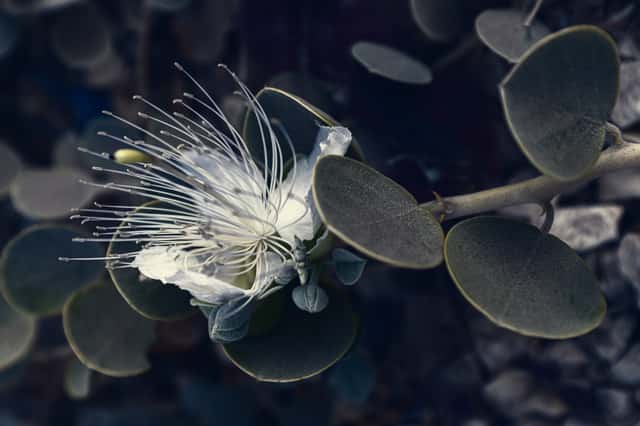
Caper Bush (Capparis spinosa) is a medium-care plant from the Capparaceae family. Capparis spinosa, the Caper Bush, is a drought-tolerant Mediterranean shrub prized for its edible flower buds — capers — widely used in European and Mediterranean cuisine. It produces striking white flowers with pink to purple stamens, blooming in spring and summer. The plant thrives in poor, rocky,...
Caper Bush grows up to 1.0m, spread of 250cm, watering every 14 days, -7°C – 40°C, 20–50% humidity. It is not suitable for indoor environments and safe for pets.
Unlike many popular species, Caper Bush is safe to keep around pets.
How to Care for Caper Bush?
TLDR: Caper Bush needs Direct sun, watering every 14 days, and temperatures between -7-40°C with 20-50% humidity.
How Often Should You Water Caper Bush?
Water deeply but infrequently. After the first 2 years, the plant is highly drought tolerant — watering every 14 days is sufficient. Avoid waterlogging as it causes root rot.
How Much Light Does Caper Bush Need?
Full sun is essential — minimum 6 hours daily. Does not tolerate shade. Ideal for south-facing gardens, Mediterranean landscapes, and sunny patios.
What Is the Best Soil for Caper Bush?
Prefers poor, sandy, rocky, and well-drained soils. Avoid clay or compacted soils. pH range 5.6–8.5. Does not require rich or amended substrate.
What Pot Should You Use for Caper Bush?
Terracotta or clay pot with large drainage holes. Avoid plastic pots as they retain too much moisture.
Care Schedule
Fertilize
Every 60 days
What Is Caper Bush and Where Does It Come From?
Capparis spinosa, the Caper Bush, is a drought-tolerant Mediterranean shrub prized for its edible flower buds — capers — widely used in European and Mediterranean cuisine. It produces striking white flowers with pink to purple stamens, blooming in spring and summer. The plant thrives in poor, rocky, well-drained soils and requires very little maintenance once established.
How to Propagate Caper Bush?
Seed
Germination is slow and erratic. Use germination hormone to improve success rate. Never overwater.
- 1 Scarify seeds with fine sandpaper or acid to break dormancy
- 2 Soak in warm water for 24 hours
- 3 Sow in sandy, well-drained substrate at 1 cm depth
- 4 Keep in a warm location (25-30°C) with indirect light
- 5 Expect irregular germination over 4-8 weeks
Materials needed:
Stem Cutting
Keep substrate slightly moist but never waterlogged. Rooting can be slow — be patient.
- 1 Take semi-hardwood cuttings of 10-15 cm from current year growth
- 2 Remove lower leaves, keeping 2-3 at the tip
- 3 Dip base in rooting hormone powder
- 4 Plant in sandy, well-drained substrate
- 5 Keep in a warm, bright location without direct sun until rooted
Materials needed:
How Big Does Caper Bush Grow?
TLDR: Caper Bush can reach up to 1.0m tall with Slow growth rate.
Max height
1.0m
Spread
2.5m
Growth rate
Slow
Foliage
Deciduous
Plant Uses
Ornamental
Great for decoration
Edible
Can be consumed
Medicinal
Medicinal properties
Medicinal Uses
- Used in traditional Mediterranean medicine for arthritis, gout, and liver conditions
- Rich in flavonoids and anti-inflammatory compounds
- Roots and bark used in herbal medicine
Culinary Uses
- Flower buds pickled as capers — used in sauces, pizza, pasta, and salads
- Young fruits also edible when pickled
- Classic ingredient in tartar sauce and Sicilian caponata
Is your plant showing symptoms?
Click on the symptom to discover possible causes:
What Diseases Commonly Affect Caper Bush?
TLDR: Caper Bush is susceptible to 6 known diseases. Monitor regularly for early detection.
Powdery Mildew
Powdery mildew is a common fungal disease caused by various fungi species including Erysiphe, Podosphaera, Oïdium, and Leveillula. It affects over 10,000 plant species worldwide. The disease thrives in warm, dry climates with high humidity and appears as a distinctive white powdery coating on plant surfaces.
Root Rot
Root rot is a serious fungal disease that affects the root system of plants, causing them to decay and die. It is primarily caused by overwatering, poor drainage, or soil-borne fungi such as Pythium, Phytophthora, Rhizoctonia, and Fusarium. The disease thrives in waterlogged conditions where roots are deprived of oxygen, making them susceptible to fungal infection.
Aphids
Aphids are small, soft-bodied, pear-shaped insects (1/16 to 1/8 inch long) that feed by sucking nutrient-rich sap from plants. They reproduce rapidly and can quickly weaken plants, causing distorted growth and transmitting plant viruses. Aphids come in various colors including green, black, red, yellow, brown, and gray. They secrete honeydew, a sticky substance that attracts ants and encourages sooty mold growth.
Spider Mites
Spider mites are tiny arachnids (less than 1/20 inch long) related to spiders and ticks that feed on plant sap. They thrive in hot, dry conditions and can cause significant damage to ornamental and vegetable plants. During severe infestations, crop losses can reach 14% or higher as these pests disrupt vital plant processes including photosynthesis, carbon dioxide absorption, and transpiration.
Meaning & Symbolism
Symbol of resilience and tenacity in harsh conditions. In Mediterranean culture, it represents the persistence of life in the most inhospitable environments.
Fun Facts
Caper buds are harvested by hand, one by one, before they open — making them a true artisanal gourmet ingredient
The plant can live for over 30 years, becoming more productive with age
It grows wild on walls and rock crevices throughout the Mediterranean basin
Caper flowers last only one day, opening at dawn and closing in the late afternoon
Frequently asked questions
How often should I water the Caper Bush?
Can the Caper Bush be grown in a pot?
When should I harvest capers?
Is the Caper Bush toxic to pets?
When should I prune the Caper Bush?
Compare with similar plants
| Attribute | Difficulty | Light | Watering | Pet Safe |
|---|---|---|---|---|
| Dark Fieldcap | Medium | Low light | 2d | ⚠️ |
| Azalea | Medium | Partial shade | 3d | ⚠️ |
| Muriel's Bamboo | Medium | Partial shade | 3d | ✓ |
| Bougainvillea | Medium | Direct sun | 7d | ⚠️ |




