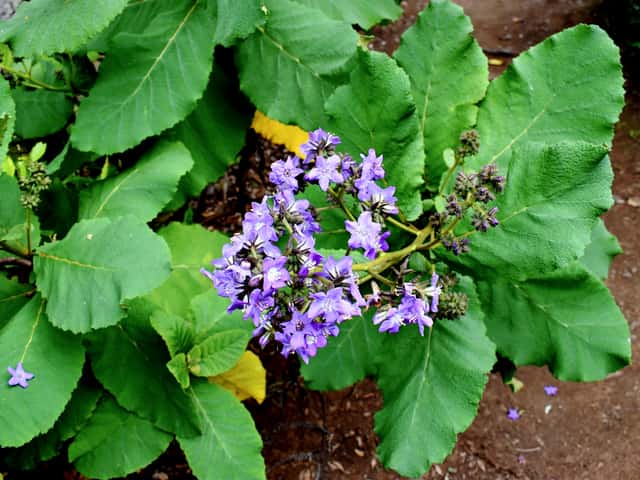
Boraginaceae
Caracas Wigandia (Wigandia urens)
Wigandia urens
Full sun outdoors, water every 2-3 weeks once established, well-draining soil. Fertilize monthly during growing season. Prune to shape every 3 months. Handle with thick gloves at all times — stinging hairs cause severe skin irritation.
Every 18 days
Direct sun
5° - 35°C
40% - 80%
Categories
What is Caracas Wigandia?
Caracas Wigandia (Wigandia urens) is a medium-care plant from the Boraginaceae family. Wigandia urens is a fast-growing large shrub or small tree native to Mexico and Central/South America, prized for its enormous textured leaves that can reach 30 cm long. The entire plant is covered in bristly stinging hairs that produce severe contact dermatitis, making it one of the most hazardous...
Caracas Wigandia grows up to 4.0m, spread of 300cm, watering every 18 days, 5°C – 35°C, 40–80% humidity. It is not suitable for indoor environments and not safe for pets.
Without precautions, ingestion can cause irritation in pets. Keep out of reach of cats and dogs.
How to Care for Caracas Wigandia?
TLDR: Caracas Wigandia needs Direct sun, watering every 18 days, and temperatures between 5-35°C with 40-80% humidity.
How Often Should You Water Caracas Wigandia?
Water deeply every 14-21 days during the growing season. Reduce to once a month in winter. Wigandia urens is drought tolerant; overwatering causes root rot. Ensure soil dries out between waterings.
How Much Light Does Caracas Wigandia Need?
Requires full direct sun (6+ hours per day). Does not tolerate shade — reduced light leads to sparse, weak growth and loss of the dramatic foliage effect.
What Is the Best Soil for Caracas Wigandia?
Thrives in well-draining soils. Tolerates poor, rocky, and clay-heavy soils. Avoid waterlogged conditions. Ideal pH 6.0–7.5. Does not need rich organic substrate.
What Pot Should You Use for Caracas Wigandia?
Outdoor bed or large container with drainage holes. Due to spreading underground shoots, in-ground planting in open space is preferred. Use large terracotta or concrete containers if growing in pots.
Care Schedule
Fertilize
Every 30 days
Repot
Every 730 days
What Is Caracas Wigandia and Where Does It Come From?
Wigandia urens is a fast-growing large shrub or small tree native to Mexico and Central/South America, prized for its enormous textured leaves that can reach 30 cm long. The entire plant is covered in bristly stinging hairs that produce severe contact dermatitis, making it one of the most hazardous ornamentals to handle. In summer, it produces striking clusters of deep purple flowers with a white throat, attracting pollinators. It thrives in full sun outdoors and is highly drought tolerant once established.
How to Propagate Caracas Wigandia?
Stem Cutting
Use clean tools to avoid infection. Protect hands with heavy gloves when handling cuttings. Bottom heat improves success rate.
- 1 Take a healthy stem cutting 15-20 cm long
- 2 Remove lower leaves and dip base in rooting hormone
- 3 Plant in sandy, well-draining medium
- 4 Keep under cover with warmth and indirect light until rooted
Materials needed:
Seed
Seeds germinate readily. Wear gloves when handling seedlings as young plants also bear irritating hairs.
- 1 Collect ripe seeds from dried flower heads
- 2 Sow on surface of moist seed-raising mix
- 3 Do not cover — seeds need light to germinate
- 4 Keep warm (20-25°C) until germination
Materials needed:
How Big Does Caracas Wigandia Grow?
TLDR: Caracas Wigandia can reach up to 4.0m tall with Fast growth rate.
Max height
4.0m
Spread
3.0m
Growth rate
Fast
Foliage
Semi-evergreen
Warning: Toxic Plant
This plant can be toxic if ingested. Keep out of reach of:
Plant Uses
Ornamental
Great for decoration
Is your plant showing symptoms?
Click on the symptom to discover possible causes:
What Diseases Commonly Affect Caracas Wigandia?
TLDR: Caracas Wigandia is susceptible to 5 known diseases. Monitor regularly for early detection.
Root Rot
Root rot is a serious fungal disease that affects the root system of plants, causing them to decay and die. It is primarily caused by overwatering, poor drainage, or soil-borne fungi such as Pythium, Phytophthora, Rhizoctonia, and Fusarium. The disease thrives in waterlogged conditions where roots are deprived of oxygen, making them susceptible to fungal infection.
Overwatering
Overwatering occurs when plants receive too much water, depriving roots of oxygen and causing root rot. This environmental stress is one of the most common causes of houseplant death, as waterlogged soil prevents roots from breathing and functioning properly.
Whiteflies
Whiteflies are small, soft-bodied, winged insects closely related to aphids and mealybugs. They are moth-like in appearance, about 1/16 inch long, triangular in shape, and gray-white in color. These sap-sucking pests feed on plant tissue, causing yellowing, stunted growth, and wilting. They also excrete honeydew, which attracts ants and promotes sooty mold growth. Whiteflies can transmit serious plant viruses.
Aphids
Aphids are small, soft-bodied, pear-shaped insects (1/16 to 1/8 inch long) that feed by sucking nutrient-rich sap from plants. They reproduce rapidly and can quickly weaken plants, causing distorted growth and transmitting plant viruses. Aphids come in various colors including green, black, red, yellow, brown, and gray. They secrete honeydew, a sticky substance that attracts ants and encourages sooty mold growth.
Meaning & Symbolism
Symbol of resilience and dramatic tropical beauty in subtropical gardens.
Fun Facts
Its stinging hairs contain 2,3-dimethoxy-geranyl-1,4-benzoquinone, a sensitizer found nowhere else in the plant kingdom.
Despite its hazardous hairs, Wigandia urens is a valuable nectar source for bees and hummingbirds.
It can spread through hard, compact ground and even crack asphalt with its underground shoots.
Leaves can grow up to 30 cm long, giving it a truly prehistoric, jungle-like appearance.
Frequently asked questions
Is Caracas Wigandia dangerous to touch?
How often should I water Wigandia urens?
Can I grow Caracas Wigandia indoors?
When does Wigandia urens flower?
Is Wigandia urens toxic to pets?
Compare with similar plants
| Attribute | Difficulty | Light | Watering | Pet Safe |
|---|---|---|---|---|
| Dark Fieldcap | Medium | Low light | 2d | ⚠️ |
| Azalea | Medium | Partial shade | 3d | ⚠️ |
| Muriel's Bamboo | Medium | Partial shade | 3d | ✓ |
| Bougainvillea | Medium | Direct sun | 7d | ⚠️ |




