Acanthaceae
Caricature Plant – Graptophyllum pictum Complete Care Guide
Graptophyllum pictum
The Caricature Plant is an easy-to-care-for tropical shrub that thrives in bright, indirect light with consistently moist, well-draining soil. Keep humidity between 40–70%, temperature above 15°C, and fertilize every 6 weeks during the growing season. It is non-toxic to pets and humans.
Every 7 days
Bright indirect
15° - 27°C
40% - 70%
Categories
What is Caricature Plant?
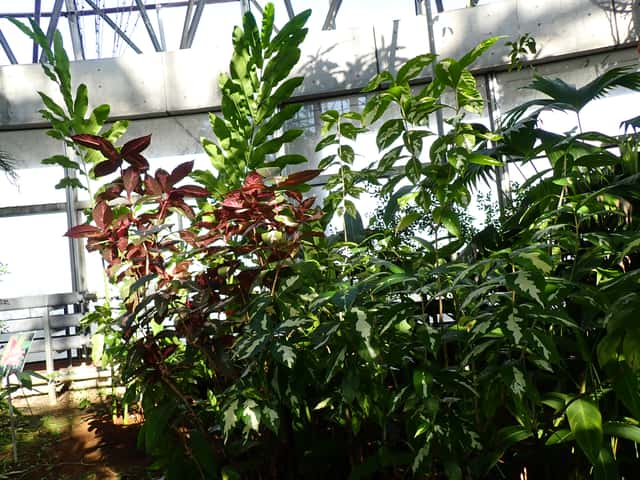
Caricature Plant (Graptophyllum pictum) is a easy-care plant from the Acanthaceae family. Graptophyllum pictum, commonly known as the Caricature Plant, is a tropical evergreen shrub native to the Pacific islands, particularly the New Guinea and Solomon Islands region. It is celebrated for its striking variegated leaves, which display patterns of green, yellow, and red that some observers...
Caricature Plant grows up to 3.5m, spread of 120cm, watering every 7 days, 15°C – 27°C, 40–70% humidity. It is suitable for indoor environments and safe for pets.
Unlike many tropical plants, Caricature Plant tolerates watering mistakes. Best for beginners. Unlike many popular species, Caricature Plant is safe to keep around pets. Without adequate drainage, root rot can develop within 14 days.
How to Care for Caricature Plant?
TLDR: Caricature Plant needs Bright indirect, watering every 7 days, and temperatures between 15-27°C with 40-70% humidity.
How Often Should You Water Caricature Plant?
Water every 5–7 days, allowing the top 2 inches of soil to dry slightly between waterings. Reduce watering in winter. Avoid waterlogging as it can lead to root rot.
How Much Light Does Caricature Plant Need?
Provide bright, indirect light or filtered sun for the most vibrant variegation. It tolerates full sun outdoors but may scorch in intense midday heat. Indoors, place near a south or east-facing window.
What Is the Best Soil for Caricature Plant?
Use a rich, well-draining potting mix with added perlite or coarse sand. A slightly acidic to neutral pH of 6.1–7.0 is ideal. Avoid heavy clay soils that retain too much moisture.
What Pot Should You Use for Caricature Plant?
Use a pot with drainage holes in terracotta or plastic. Terracotta is preferred for better aeration; plastic retains moisture longer, which can be helpful in dry climates.
Care Schedule
Fertilize
Every 45 days
Misting
Every 3 days
Rotate
Every 30 days
Repot
Every 365 days
What Is Caricature Plant and Where Does It Come From?
Graptophyllum pictum, commonly known as the Caricature Plant, is a tropical evergreen shrub native to the Pacific islands, particularly the New Guinea and Solomon Islands region. It is celebrated for its striking variegated leaves, which display patterns of green, yellow, and red that some observers liken to caricatures of the human face. Growing to 3.5 metres in ideal conditions, it is a popular choice for tropical landscaping and indoor cultivation in temperate climates.
How to Propagate Caricature Plant?
Stem Cutting
Use clean, sharp scissors to avoid crushing the stem. Keep the soil consistently moist but not soggy. A plastic bag over the cutting can help maintain humidity.
- 1 Select a healthy stem with at least 4–6 leaves
- 2 Remove the lower 2–3 leaves to expose a 5–7 cm bare stem section
- 3 Dip the cut end in rooting hormone powder (optional)
- 4 Plant in moist potting mix or place in water
- 5 Keep in a warm, humid spot with indirect light
- 6 Roots should establish within 6–8 weeks
Materials needed:
How Big Does Caricature Plant Grow?
TLDR: Caricature Plant can reach up to 3.5m tall with Medium growth rate.
Max height
3.5m
Spread
1.2m
Growth rate
Medium
Foliage
Evergreen
Plant Uses
Ornamental
Great for decoration
Medicinal
Medicinal properties
Medicinal Uses
- Used in traditional Pacific and Asian folk medicine to treat skin conditions, wounds, and inflammation
- Leaf extracts have been studied for antimicrobial and antioxidant properties
- In some regions, leaf poultices are applied to relieve joint pain and rheumatism
Is your plant showing symptoms?
Click on the symptom to discover possible causes:
What Diseases Commonly Affect Caricature Plant?
TLDR: Caricature Plant is susceptible to 10 known diseases. Monitor regularly for early detection.
Spider Mites
Spider mites are tiny arachnids (less than 1/20 inch long) related to spiders and ticks that feed on plant sap. They thrive in hot, dry conditions and can cause significant damage to ornamental and vegetable plants. During severe infestations, crop losses can reach 14% or higher as these pests disrupt vital plant processes including photosynthesis, carbon dioxide absorption, and transpiration.
Aphids
Aphids are small, soft-bodied, pear-shaped insects (1/16 to 1/8 inch long) that feed by sucking nutrient-rich sap from plants. They reproduce rapidly and can quickly weaken plants, causing distorted growth and transmitting plant viruses. Aphids come in various colors including green, black, red, yellow, brown, and gray. They secrete honeydew, a sticky substance that attracts ants and encourages sooty mold growth.
Scale Insects
Scale insects are small sap-sucking pests that appear as brown, shell-like bumps on plant stems and leaves. There are over 25 species, divided into armored (hard) and unarmored (soft) scales. They feed by piercing plant tissue and extracting sap, which weakens the plant and can lead to yellowing, stunted growth, and even death if left untreated. They also excrete honeydew, which attracts ants and promotes sooty mold growth.
Whiteflies
Whiteflies are small, soft-bodied, winged insects closely related to aphids and mealybugs. They are moth-like in appearance, about 1/16 inch long, triangular in shape, and gray-white in color. These sap-sucking pests feed on plant tissue, causing yellowing, stunted growth, and wilting. They also excrete honeydew, which attracts ants and promotes sooty mold growth. Whiteflies can transmit serious plant viruses.
Meaning & Symbolism
In Pacific island cultures, the Caricature Plant is associated with creativity and individuality, reflecting the unique 'faces' seen in its leaves. It symbolises uniqueness and the beauty of natural variation.
Fun Facts
The leaf markings on Graptophyllum pictum resemble human faces, giving rise to its whimsical common name.
Despite its tropical appearance, the Caricature Plant is non-toxic — safe for children, cats, and dogs.
Traditional healers in Papua New Guinea and the Pacific islands have used its leaves to treat skin conditions for centuries.
The plant produces striking tubular red flowers that attract hummingbirds and sunbirds in its native habitat.
Frequently asked questions
How often should I water my Caricature Plant?
Is the Caricature Plant toxic to cats and dogs?
Why are my Caricature Plant leaves losing their variegation?
Can I grow the Caricature Plant indoors?
When does the Caricature Plant flower?
Compare with similar plants
| Attribute | Difficulty | Light | Watering | Pet Safe |
|---|---|---|---|---|
| Field Maple | Easy | Bright indirect | 14d | ✓ |
| Silver Birch | Easy | Direct sun | 14d | ✓ |
| Common Blanketflower | Easy | Direct sun | 10d | ✓ |
| Cushion Bush | Easy | Direct sun | 14d | ✓ |





