Salicaceae
Carolina poplar (Populus × canadensis)
Populus × canadensis
An easy, very vigorous tree for large spaces. Plant it in full sun in moist but well-drained soil; it accepts clay, sand, chalk and any pH. It needs plenty of water and suffers in drought. Very cold hardy (down to USDA zone 3). Because of its aggressive roots and brittle branches, keep it away from houses, drains and power lines. Choose male or seedless, canker-resistant clones.
Every 7 days
Direct sun
-34° - °C
% - %
Categories
What is Carolina poplar?
Carolina poplar (Populus × canadensis) is a easy-care plant from the Salicaceae family. Carolina poplar (Populus × canadensis, also called Populus × euramericana) is a hybrid between the European black poplar (Populus nigra) and the North American eastern cottonwood (Populus deltoides). It arose in France soon after 1700, when the two species were first grown side by side, and has sinc...
Carolina poplar grows up to 35.0m, watering every 7 days. It is not suitable for indoor environments and safe for pets.
Unlike many tropical plants, Carolina poplar tolerates watering mistakes. Best for beginners. Unlike many popular species, Carolina poplar is safe to keep around pets.
How to Care for Carolina poplar?
TLDR: Carolina poplar needs Direct sun, watering every 7 days, and temperatures between -34-30°C with 40-70% humidity.
How Often Should You Water Carolina poplar?
For the first two years water deeply every week, especially in summer. Once established the roots find water on their own, but a deep soak during long droughts prevents early leaf drop.
How Much Light Does Carolina poplar Need?
Full sun. It does not tolerate shade: in shade it grows lopsided and loses its lower branches.
What Is the Best Soil for Carolina poplar?
Deep, moist, well-drained soil. Tolerates clay, sand, chalk and salty soil; pH is not critical.
What Pot Should You Use for Carolina poplar?
Not suited to containers: it is a large tree with vigorous roots. Plant it in the ground with plenty of room.
What Is Carolina poplar and Where Does It Come From?
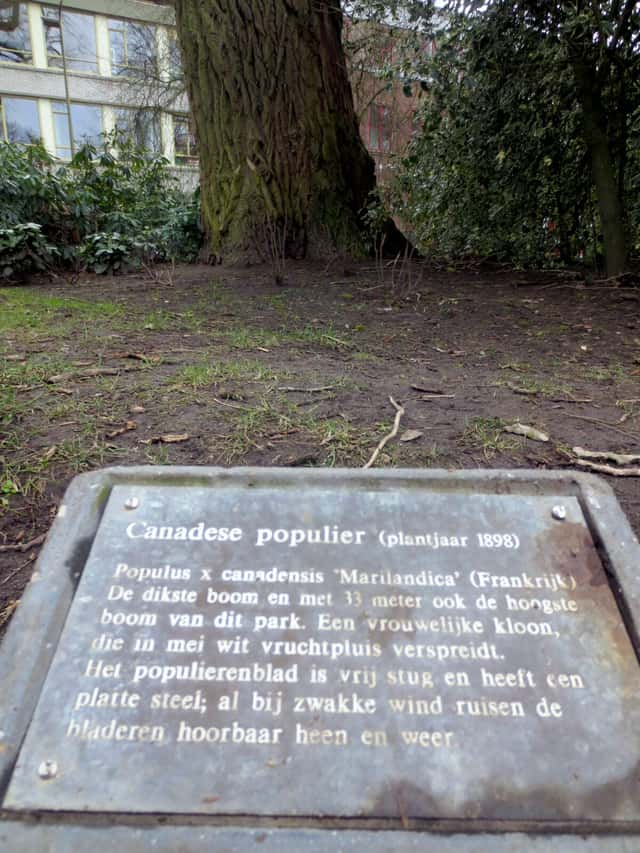
Carolina poplar (Populus × canadensis, also called Populus × euramericana) is a hybrid between the European black poplar (Populus nigra) and the North American eastern cottonwood (Populus deltoides). It arose in France soon after 1700, when the two species were first grown side by side, and has since become one of the most planted trees in forestry plantations and along roads and rivers in Europe and North America. It is a very fast-growing deciduous tree with a columnar to oval crown, reaching 35-45 m. The leaves are triangular, 8-14 cm long, glossy green with scalloped edges. In early spring it bears catkins: red on male trees and green on female trees, which later release seeds wrapped in white, cotton-like fluff. There are many clones, such as 'Serotina', 'Robusta', 'Eugenei' and the golden 'Serotina Aurea'. The wood is weak and the tree is relatively short-lived.
How to Propagate Carolina poplar?
Hardwood cutting
This is how nurseries reproduce poplar clones, because it keeps the traits of the parent tree. Use cuttings at least as thick as a pencil.
- 1 In winter, while the tree is leafless, cut 20-30 cm lengths of this year's shoots
- 2 Push the cuttings into the ground, leaving only one or two buds above the soil
- 3 Keep the soil moist through spring
- 4 Move to the final site the following winter
Materials needed:
Root suckers
Do this in autumn or late winter. Suckers you don't want should be removed at the same time.
- 1 Find a sucker growing from the roots near the tree
- 2 Sever the root connecting it to the parent with a sharp spade
- 3 Lift the sucker with a ball of soil
- 4 Replant and water well
Materials needed:
How Big Does Carolina poplar Grow?
TLDR: Carolina poplar can reach up to 35.0m tall with Fast growth rate.
Max height
35.0m
Growth rate
Fast
Foliage
Deciduous
Plant Uses
Ornamental
Great for decoration
Is your plant showing symptoms?
Click on the symptom to discover possible causes:
What Diseases Commonly Affect Carolina poplar?
TLDR: Carolina poplar is susceptible to 5 known diseases. Monitor regularly for early detection.
Bacterial Canker
Serious bacterial disease affecting stone fruits and tomatoes caused by Pseudomonas syringae or Clavibacter michiganensis. Creates sunken lesions that ooze sap.
Canker
Canker is a disease caused by various fungi and bacteria that create necrotic, sunken areas on bark of branches, stems, and trunks. Pathogens enter through wounds and natural openings, especially when plants are stressed. Canker can gradually weaken or kill branches by disrupting water and nutrient flow.
Rust
Rust is a common fungal disease caused by fungi in the order Pucciniales that affects a wide variety of plants. The disease gets its name from the characteristic orange, yellow, or reddish-brown pustules that appear on leaves, resembling metal rust. This obligate fungal parasite requires living plants to survive and can cause significant economic losses in agricultural crops.
Leaf Spot
Leaf spot is a common fungal disease caused by various pathogens including Alternaria, Ascochyta, Colletotrichum, Septoria, and Venturia. It primarily affects leaves, causing discolored spots that can lead to premature leaf drop if left untreated.
Fun Facts
It arose in France in the 18th century from a cross between a European and an American poplar
The tallest one measured, in Germany, is 47 m tall
It is heavily attacked by mistletoe, which helps tell it apart from black poplar
Frequently asked questions
How fast does Carolina poplar grow?
Can I plant it near my house?
Does it need a lot of water?
Why does it shed cotton in spring?
Compare with similar plants
| Attribute | Difficulty | Light | Watering | Pet Safe |
|---|---|---|---|---|
| Field Maple | Easy | Bright indirect | 14d | ✓ |
| Iberian Houseleek | Easy | Direct sun | 14d | ✓ |
| Silver Birch | Easy | Direct sun | 14d | ✓ |
| Common Blanketflower | Easy | Direct sun | 10d | ✓ |
Choose & Compare
Sources & References
- Wikipedia — Populus × canadensis (hybrid black poplar)
- RHS — Populus × canadensis (Canadian poplar)
- Utah State University Extension Tree Browser — Poplar, Carolina and other hybrids
- Van den Berk Nurseries — Populus × canadensis hybrid black poplar
- Herbari Virtual UIB — Populus x canadensis (Spanish names)





