Phyllanthaceae
Cheese Trees (genus Glochidion)
Glochidion
An easy, low-maintenance tree for warm climates. It wants sun or light shade and plenty of water until established. After that it copes with drought and has few pests.
Every 7 days
Bright indirect
-2° - 38°C
% - %
Categories
What is Cheese trees?
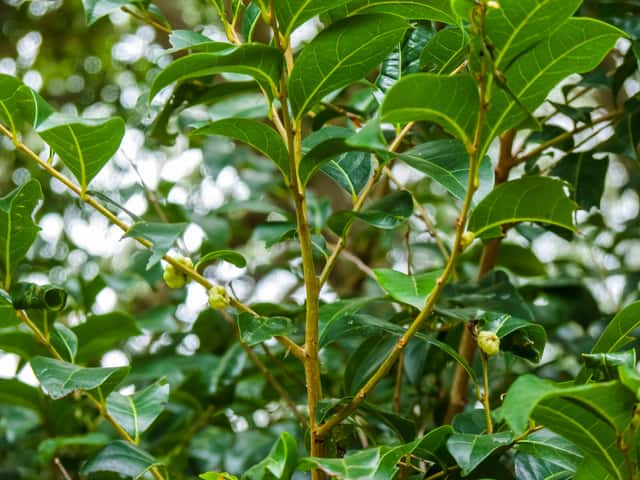
Cheese trees (Glochidion) is a easy-care plant from the Phyllanthaceae family. Glochidion is a genus of trees and shrubs in the family Phyllanthaceae, close relatives of the leafflowers (Phyllanthus). There are about 170 species, from Madagascar and tropical Asia to Australia and the Pacific Islands. In Australia they are called cheese trees or buttonwood, because the fruit lo...
Cheese trees grows up to 10.0m, watering every 7 days, -2°C – 38°C. It is not suitable for indoor environments and safe for pets.
Unlike many tropical plants, Cheese trees tolerates watering mistakes. Best for beginners. Unlike many popular species, Cheese trees is safe to keep around pets.
How to Care for Cheese trees?
TLDR: Cheese trees needs Bright indirect, watering every 7 days, and temperatures between -2-38°C with 40-70% humidity.
How Often Should You Water Cheese trees?
Water once a week, deeply, during the first year. Once established, rain is usually enough; water in long dry spells.
How Much Light Does Cheese trees Need?
Full sun or light shade. In sun the crown grows denser.
What Is the Best Soil for Cheese trees?
Grows in sandy, clay or ordinary garden soil. Does best in soil with added compost that holds a little moisture.
What Is Cheese trees and Where Does It Come From?
Glochidion is a genus of trees and shrubs in the family Phyllanthaceae, close relatives of the leafflowers (Phyllanthus). There are about 170 species, from Madagascar and tropical Asia to Australia and the Pacific Islands. In Australia they are called cheese trees or buttonwood, because the fruit looks like a tiny round cheese divided into wedges. It starts green, turns white or pink, and splits open to show bright red seeds that pigeons and parrots eat. The flowers are tiny and green-yellow, and each species is pollinated only by its own leafflower moths, which lay eggs in the flower; their caterpillars eat some of the seeds. The most planted species, Glochidion ferdinandi, usually reaches about 8 metres, with oval leaves 3 to 10 cm long and a dense crown.
How to Propagate Cheese trees?
Seed
Germination is easy but can take a few months. Be patient and do not let the mix dry out.
- 1 Collect the fruits when they split and show the red seeds
- 2 Remove the red coating around each seed
- 3 Sow shallowly in moist seed mix
- 4 Keep moist and in a bright spot until they sprout
Materials needed:
Cuttings
Cuttings strike easily.
- 1 Take semi-hardwood tip cuttings 10 to 15 cm long
- 2 Strip the lower leaves
- 3 Insert in a light, moist mix
- 4 Keep humid and in bright shade until rooted
Materials needed:
How Big Does Cheese trees Grow?
TLDR: Cheese trees can reach up to 10.0m tall with Fast growth rate.
Max height
10.0m
Growth rate
Fast
Foliage
Evergreen
Plant Uses
Ornamental
Great for decoration
Medicinal
Medicinal properties
Medicinal Uses
- In Asia, the bark and seeds of some species are used in traditional medicine for stomach and skin complaints
Is your plant showing symptoms?
Click on the symptom to discover possible causes:
What Diseases Commonly Affect Cheese trees?
TLDR: Cheese trees is susceptible to 1 known diseases. Monitor regularly for early detection.
Fun Facts
Each species relies on its own moth for pollination, much like figs and fig wasps.
Some botanists propose merging the whole genus into Phyllanthus.
In Australia the dense crown of the cheese tree is a favourite nesting site for birds.
Frequently asked questions
Why is it called a cheese tree?
Is a cheese tree frost hardy?
Is it hard to look after?
Are the fruits edible?
Compare with similar plants
| Attribute | Difficulty | Light | Watering | Pet Safe |
|---|---|---|---|---|
| Field Maple | Easy | Bright indirect | 14d | ✓ |
| Iberian Houseleek | Easy | Direct sun | 14d | ✓ |
| Silver Birch | Easy | Direct sun | 14d | ✓ |
| Common Blanketflower | Easy | Direct sun | 10d | ✓ |
Choose & Compare
Sources & References
- Wikipedia - Glochidion (cheese trees, leafflower trees)
- Wikipedia - Phyllanthus (Glochidion) ferdinandi, cheese tree
- Wikipedia - Phyllanthus (Glochidion) eriocarpus
- Gardening With Angus - Glochidion ferdinandi, Cheese Tree
- Australian Plants Society - Glochidion ferdinandi
- Noosa's Native Plants - Glochidion ferdinandi





