Asparagaceae
Creeping Lilyturf (Liriope spicata)
Liriope spicata
An easy groundcover for part to full shade in well-drained soil. Water regularly for the first two seasons; after that it is drought tolerant. Feed once a year in early spring and mow or cut the old leaves to about 7 cm in late winter before new growth. Because it spreads by rhizomes, plant it inside hardscape or behind a root barrier.
Every 10 days
Partial shade
° - °C
% - %
Categories
What is Creeping Lilyturf?
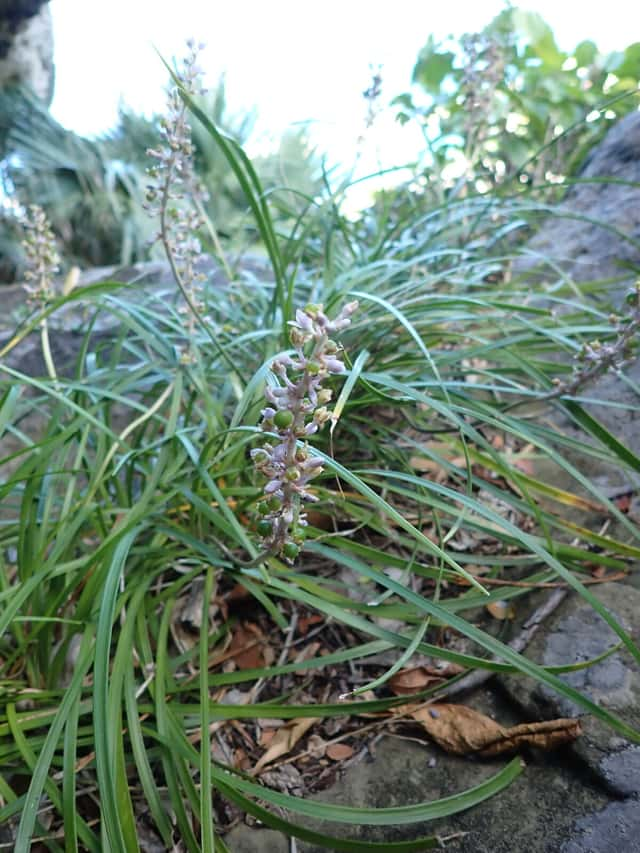
Creeping Lilyturf (Liriope spicata) is a easy-care plant from the Asparagaceae family. Liriope spicata is an evergreen perennial in the Asparagaceae family, native to China, Taiwan and Vietnam. It forms tufts of narrow, dark green, arching leaves 15 to 45 cm tall and spreads by underground rhizomes into a dense, grass-like mat. In summer and early fall it sends up spikes of small pale...
Creeping Lilyturf grows up to 45cm, spread of 60cm, watering every 10 days. It is not suitable for indoor environments and safe for pets.
Unlike many tropical plants, Creeping Lilyturf tolerates watering mistakes. Best for beginners. Unlike many popular species, Creeping Lilyturf is safe to keep around pets.
How to Care for Creeping Lilyturf?
TLDR: Creeping Lilyturf needs Partial shade, watering every 10 days, and temperatures between 15-30°C with 40-70% humidity.
How Often Should You Water Creeping Lilyturf?
Keep the soil moist until the plants are established, through the first two seasons. After that, water about every 10 days, or only during long summer droughts. Avoid soggy soil and late-day overhead watering: too much water leads to crown and root rot.
How Much Light Does Creeping Lilyturf Need?
Prefers part shade to deep shade, where the foliage is fullest. It tolerates full sun in mild climates; in strong heat, direct sun scorches the leaf tips.
What Is the Best Soil for Creeping Lilyturf?
Grows in clay, sand or loam, acidic or alkaline, as long as it drains well. It will not take wet feet. A thin layer of mulch (2 to 5 cm of bark or shredded leaves) helps until the planting fills in; do not pile it against the crowns.
What Pot Should You Use for Creeping Lilyturf?
In a container, use a wide, shallow pot with drainage holes to hold the rhizomes. In most gardens it does better in the ground as a groundcover.
Care Schedule
Fertilize
Every 365 days
What Is Creeping Lilyturf and Where Does It Come From?
Liriope spicata is an evergreen perennial in the Asparagaceae family, native to China, Taiwan and Vietnam. It forms tufts of narrow, dark green, arching leaves 15 to 45 cm tall and spreads by underground rhizomes into a dense, grass-like mat. In summer and early fall it sends up spikes of small pale lavender to off-white flowers, followed by blue-black berries. It is finer and far more aggressive than Liriope muscari: instead of staying in a clump it moves through the bed, which is why it is planted as a groundcover for shade, slopes and under trees. It is listed as invasive in parts of the United States.
How to Propagate Creeping Lilyturf?
Division
Divide in early spring or in fall. Every piece with rhizome takes easily.
- 1 Dig up a section of the planting with a spade
- 2 Pull or cut it into pieces, each with leaves and a good length of rhizome
- 3 Replant at the same depth about 30 cm apart
- 4 Water well and keep the soil moist for the first few weeks
Materials needed:
Seed
Slower than division. Remove the pulp before sowing.
- 1 Collect ripe blue-black berries
- 2 Remove the pulp from the seeds
- 3 Sow in moist, well-drained mix
- 4 Keep in part shade until seedlings are sturdy
Materials needed:
How Big Does Creeping Lilyturf Grow?
TLDR: Creeping Lilyturf can reach up to 45cm tall with Medium growth rate.
Max height
45cm
Spread
60cm
Growth rate
Medium
Foliage
Evergreen
Plant Uses
Ornamental
Great for decoration
Ground Cover
Soil coverage
Is your plant showing symptoms?
Click on the symptom to discover possible causes:
What Diseases Commonly Affect Creeping Lilyturf?
TLDR: Creeping Lilyturf is susceptible to 6 known diseases. Monitor regularly for early detection.
Anthracnose
Anthracnose is a fungal disease caused by fungi in the genus Colletotrichum that affects many plants, including vegetables, fruits, and trees. The disease thrives in cool, wet conditions, causing dark, sunken lesions on leaves, stems, flowers, and fruits.
Crown Rot
Crown rot is a serious fungal disease that attacks the crown (base) of the plant where the stem meets the soil. It is caused by various fungal pathogens including Phytophthora, Fusarium, and Rhizoctonia. The disease thrives in waterlogged conditions and can quickly spread to kill the entire plant if not addressed promptly.
Root Rot
Root rot is a serious fungal disease that affects the root system of plants, causing them to decay and die. It is primarily caused by overwatering, poor drainage, or soil-borne fungi such as Pythium, Phytophthora, Rhizoctonia, and Fusarium. The disease thrives in waterlogged conditions where roots are deprived of oxygen, making them susceptible to fungal infection.
Slugs and Snails
Slugs and snails are mollusks that feed on plant tissue, causing irregular holes in leaves and damage to young seedlings. They are most active at night and in moist conditions, leaving characteristic silvery slime trails. These pests can quickly devastate gardens, especially during wet seasons.
Fun Facts
It is the most cold-hardy liriope, surviving USDA zone 4 winters
In the southern United States it is often called monkey grass
It is listed as invasive in parts of the US, including Tennessee and Georgia
Frequently asked questions
What is the difference between Liriope spicata and Liriope muscari?
Is creeping lilyturf invasive?
When should I cut back Liriope spicata?
Is Liriope spicata toxic to dogs and cats?
Compare with similar plants
| Attribute | Difficulty | Light | Watering | Pet Safe |
|---|---|---|---|---|
| Field Maple | Easy | Bright indirect | 14d | ✓ |
| Iberian Houseleek | Easy | Direct sun | 14d | ✓ |
| Silver Birch | Easy | Direct sun | 14d | ✓ |
| Common Blanketflower | Easy | Direct sun | 10d | ✓ |
Choose & Compare
Sources & References
- NC State Extension Gardener Plant Toolbox — Liriope spicata
- UF/IFAS EDIS FP350 — Liriope spicata: Creeping Lilyturf
- GardenersHQ — Creeping Lilyturf (Liriope spicata) Growing & Care Guide
- Clemson HGIC — Liriope factsheet (anthracnose, crown rot, root rot)
- ASPCA — Turf Lily / Lilyturf (Liriope), non-toxic to dogs, cats, horses





