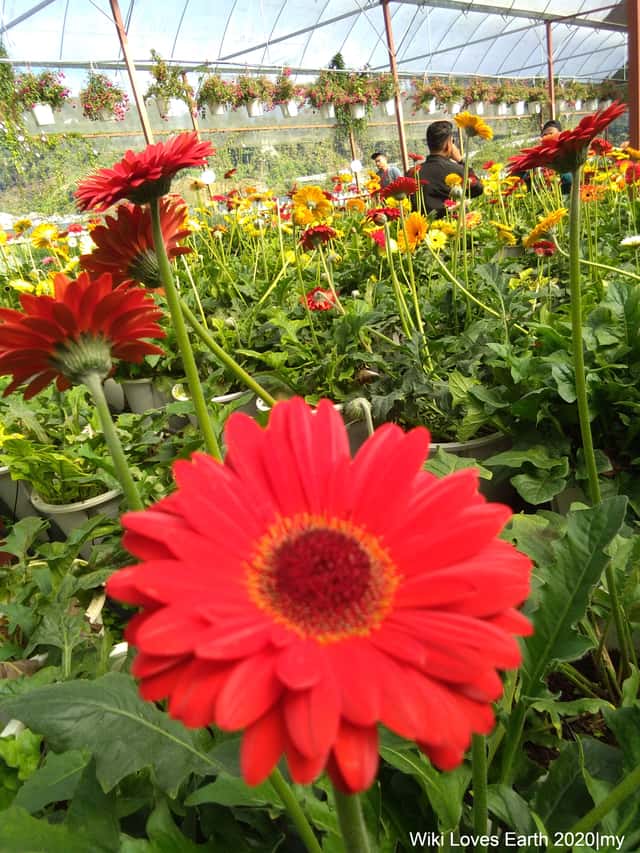
Asteraceae
Gerbera Daisy (Gerbera hybrida): Complete Care Guide
Gerbera hybrida
Gerbera Daisies thrive in bright light and well-draining soil. Water every 7 days, allowing the topsoil to dry slightly between sessions. Avoid wetting the foliage or crown to prevent fungal disease. Fertilize monthly during the growing season and deadhead spent blooms to encourage continuous flowering.
Every 7 days
Bright indirect
13° - 24°C
40% - 60%
Categories
What is Gerbera Daisy?
Gerbera Daisy (Gerbera hybrida) is a medium-care plant from the Asteraceae family. Gerbera hybrida, commonly known as the Gerbera Daisy, is a cheerful and vibrant flowering plant originating from South Africa. It produces large, showy blooms in an extraordinary range of colors including white, yellow, pink, salmon, red, orange, and lavender. A popular choice for both indoor contai...
Gerbera Daisy grows up to 60cm, spread of 45cm, watering every 7 days, 13°C – 24°C, 40–60% humidity. It is suitable for indoor environments and safe for pets.
Unlike many popular species, Gerbera Daisy is safe to keep around pets. Without adequate drainage, root rot can develop within 14 days.
How to Care for Gerbera Daisy?
TLDR: Gerbera Daisy needs Bright indirect, watering every 7 days, and temperatures between 13-24°C with 40-60% humidity.
How Often Should You Water Gerbera Daisy?
Water every 7 days, directing water at the base of the plant — never on the leaves or crown. Allow the top layer of soil to dry slightly before the next watering. Overwatering leads to root rot and crown rot, which are the most common killers of Gerbera Daisies.
How Much Light Does Gerbera Daisy Need?
Place your Gerbera Daisy within 30 cm (12 inches) of a bright window where it receives at least 6 hours of bright, indirect or gentle direct sunlight daily. East- and west-facing windows are ideal. In low-light conditions, blooming will stop.
What Is the Best Soil for Gerbera Daisy?
Use a well-draining, slightly acidic potting mix (pH 5.5–6.5). Add perlite or coarse sand to improve drainage. Never let the plant sit in waterlogged soil — poor drainage is the primary cause of root rot.
What Pot Should You Use for Gerbera Daisy?
Terracotta or ceramic pot with drainage holes. Avoid plastic pots that retain moisture. A pot only slightly larger than the root ball keeps the plant in check and reduces overwatering risk.
Care Schedule
Fertilize
Every 30 days
Rotate
Every 30 days
Repot
Every 365 days
What Is Gerbera Daisy and Where Does It Come From?
Gerbera hybrida, commonly known as the Gerbera Daisy, is a cheerful and vibrant flowering plant originating from South Africa. It produces large, showy blooms in an extraordinary range of colors including white, yellow, pink, salmon, red, orange, and lavender. A popular choice for both indoor containers and outdoor garden beds, Gerbera Daisies bloom prolifically from spring through fall and are celebrated for their air-purifying properties.
How to Propagate Gerbera Daisy?
Seed Sowing
Seeds may not breed true to parent plant colors in hybrid varieties. Use fresh seed for best germination rates.
- 1 Sow seeds in a tray with moist, well-draining seed compost
- 2 Lightly cover seeds and keep at around 21°C (70°F)
- 3 Keep the soil moist but not waterlogged until germination
- 4 Transplant seedlings when large enough to handle, typically after 6–8 weeks
Materials needed:
Crown Division
Divide every 2–3 years to rejuvenate the plant and maintain vigorous blooming.
- 1 Remove the plant from its pot and gently separate root crowns
- 2 Ensure each section has healthy roots and at least one growing point
- 3 Replant divisions in fresh well-draining soil
- 4 Water lightly and place in bright indirect light
Materials needed:
How Big Does Gerbera Daisy Grow?
TLDR: Gerbera Daisy can reach up to 60cm tall with Medium growth rate.
Max height
60cm
Spread
45cm
Growth rate
Medium
Foliage
Evergreen
Plant Uses
Ornamental
Great for decoration
Air Purifying
Improves air quality
Is your plant showing symptoms?
Click on the symptom to discover possible causes:
What Diseases Commonly Affect Gerbera Daisy?
TLDR: Gerbera Daisy is susceptible to 12 known diseases. Monitor regularly for early detection.
Gray Mold (Botrytis Blight)
Gray mold, caused by the fungus Botrytis cinerea, is a widespread necrotrophic pathogen affecting over 1,400 plant species. It thrives in cool, humid conditions and attacks weakened or aging plant tissues, causing soft rot and characteristic gray fuzzy growth.
Powdery Mildew
Powdery mildew is a common fungal disease caused by various fungi species including Erysiphe, Podosphaera, Oïdium, and Leveillula. It affects over 10,000 plant species worldwide. The disease thrives in warm, dry climates with high humidity and appears as a distinctive white powdery coating on plant surfaces.
Anthracnose
Anthracnose is a fungal disease caused by fungi in the genus Colletotrichum that affects many plants, including vegetables, fruits, and trees. The disease thrives in cool, wet conditions, causing dark, sunken lesions on leaves, stems, flowers, and fruits.
Crown Rot
Crown rot is a serious fungal disease that attacks the crown (base) of the plant where the stem meets the soil. It is caused by various fungal pathogens including Phytophthora, Fusarium, and Rhizoctonia. The disease thrives in waterlogged conditions and can quickly spread to kill the entire plant if not addressed promptly.
Meaning & Symbolism
Gerbera Daisies symbolize cheerfulness, innocence, and purity. They are given to convey happiness, admiration, and warm affection — making them one of the most popular gifting flowers worldwide.
Fun Facts
The Gerbera Daisy is the 5th most popular cut flower in the world, after roses, carnations, chrysanthemums, and tulips.
NASA listed Gerbera daisies as one of the top air-purifying plants, shown to absorb benzene and produce oxygen during the night.
There are over 30 wild Gerbera species, but most modern garden hybrids descend from Gerbera jamesonii, first discovered in South Africa in 1884.
Gerbera flowers can last 7 to 14 days in a vase — longer than most cut flowers when kept in fresh water.
Frequently asked questions
How often should I water my Gerbera Daisy?
Why is my Gerbera Daisy not blooming?
Is Gerbera Daisy toxic to cats and dogs?
How do I prevent root rot in Gerbera Daisy?
Can Gerbera Daisy grow indoors?
Compare with similar plants
| Attribute | Difficulty | Light | Watering | Pet Safe |
|---|---|---|---|---|
| Dark Fieldcap | Medium | Low light | 2d | ⚠️ |
| Azalea | Medium | Partial shade | 3d | ⚠️ |
| Muriel's Bamboo | Medium | Partial shade | 3d | ✓ |
| Bougainvillea | Medium | Direct sun | 7d | ⚠️ |




