Equisetaceae
Giant Horsetail (Equisetum giganteum)
Equisetum giganteum
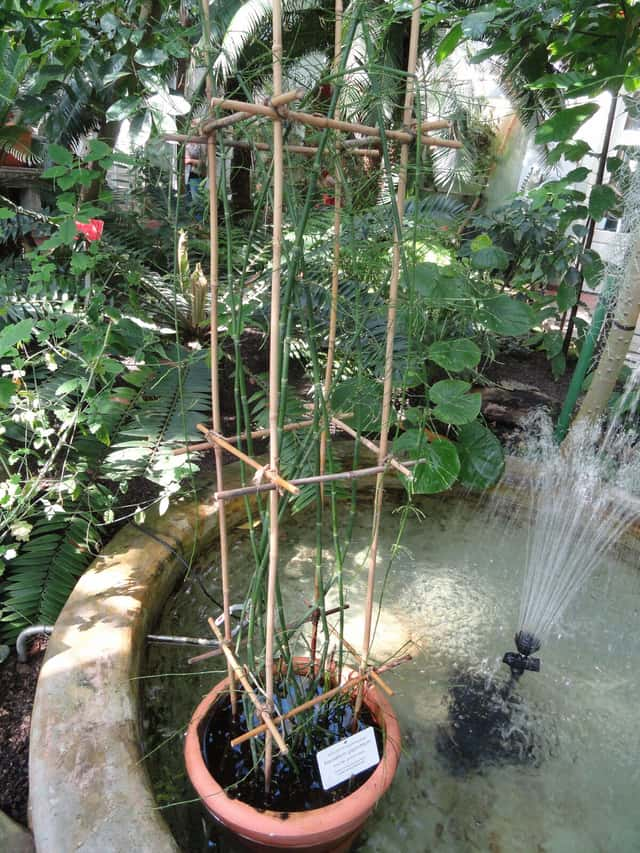
An easy, fast-growing bog plant. Give it sun or part shade and constantly wet soil. It takes light frosts (to about -9 °C) and invades gardens through its rhizomes, so grow it in a large pot without drainage holes or in a pond.
Every 2 days
Bright indirect
-9° - °C
% - %
Categories
What is Giant Horsetail?
Giant Horsetail (Equisetum giganteum) is a easy-care plant from the Equisetaceae family. Equisetum giganteum is one of the largest horsetails in the world, native to South and Central America, from central Chile east to Brazil and north to southern Mexico. It has no flowers or seeds: it reproduces by spores, formed in cones at the tips of some branches. The stems are green, hollow and c...
Giant Horsetail grows up to 5.0m, watering every 2 days. It is not suitable for indoor environments and safe for pets.
Unlike many tropical plants, Giant Horsetail tolerates watering mistakes. Best for beginners. Unlike many popular species, Giant Horsetail is safe to keep around pets.
How to Care for Giant Horsetail?
TLDR: Giant Horsetail needs Bright indirect, watering every 2 days, and temperatures between -9-30°C with 40-70% humidity.
How Often Should You Water Giant Horsetail?
Never let it dry out. In a pot, keep the mix soaking wet with the pot standing in a saucer or tray of water, and check every 1-2 days in hot weather. It can also sit with its base submerged at the edge of a pond.
How Much Light Does Giant Horsetail Need?
Full sun to part shade. More sun gives firmer, greener stems.
What Is the Best Soil for Giant Horsetail?
Any soil that stays moist or wet works: bog mud, garden soil with compost or aquatic plant compost. Constant water matters more than soil type.
What Pot Should You Use for Giant Horsetail?
A large, deep pot without drainage holes (or with holes sealed), or an aquatic basket sunk in a pond. Planting straight into the ground in warm climates lets it spread out of control.
What Is Giant Horsetail and Where Does It Come From?
Equisetum giganteum is one of the largest horsetails in the world, native to South and Central America, from central Chile east to Brazil and north to southern Mexico. It has no flowers or seeds: it reproduces by spores, formed in cones at the tips of some branches. The stems are green, hollow and clearly jointed, 1-2 cm thick, with dense whorls of thin branches that give a feathery look. It usually grows 2-5 m tall; plants of 11-12 m, leaning on surrounding vegetation, have been recorded in the Pantanal and Venezuela. It spreads very fast through underground rhizomes.
How to Propagate Giant Horsetail?
Rhizome division
Divide every few years when the pot is packed with rhizomes. Do not dump rhizome scraps in the garden or compost: they sprout.
- 1 In spring, lift the clump from its pot or dig out a section
- 2 Cut rhizome pieces, each with a few stems and roots
- 3 Plant in a pot without holes, or with a saucer full of water, in constantly wet soil
- 4 Keep in part shade until new shoots appear
Materials needed:
How Big Does Giant Horsetail Grow?
TLDR: Giant Horsetail can reach up to 5.0m tall with Fast growth rate.
Max height
5.0m
Growth rate
Fast
Foliage
Evergreen
Plant Uses
Ornamental
Great for decoration
Medicinal
Medicinal properties
Medicinal Uses
- Used in folk medicine in Brazil, Bolivia, Chile and Peru as a diuretic and for inflammation, rheumatism and urinary complaints (studied only in animals; not a substitute for medical advice)
Is your plant showing symptoms?
Click on the symptom to discover possible causes:
What Diseases Commonly Affect Giant Horsetail?
TLDR: Giant Horsetail is susceptible to 2 known diseases. Monitor regularly for early detection.
Underwatering
Water deficiency occurs when a plant cannot absorb enough moisture to meet its transpiration and metabolic demands. Also known as drought stress or underwatering, this condition deprives cells of turgor pressure, leading to wilting, leaf scorch, and — if prolonged — permanent root and tissue damage. It is one of the most common causes of houseplant decline and is fully reversible when caught early.
Cold Damage
Cold damage, also known as frost injury, occurs when plants are exposed to freezing or near-freezing temperatures. This environmental stress can cause cellular damage as ice crystals form within plant tissues, rupturing cells and disrupting normal plant functions. Chilling injury can also occur in sensitive species at temperatures between 32-55°F (0-10°C), even without actual freezing.
Fun Facts
It is one of the largest horsetails on Earth; plants 12 m tall have been seen in the Pantanal.
Horsetails are a plant lineage more than 300 million years old, distant relatives of ferns.
It has the thickest stems of any horsetail, up to 3.5 cm.
Frequently asked questions
Can I plant giant horsetail in the ground?
How much water does it need?
Does giant horsetail flower?
Can it be used as a tea?
Compare with similar plants
| Attribute | Difficulty | Light | Watering | Pet Safe |
|---|---|---|---|---|
| Field Maple | Easy | Bright indirect | 14d | ✓ |
| Iberian Houseleek | Easy | Direct sun | 14d | ✓ |
| Silver Birch | Easy | Direct sun | 14d | ✓ |
| Common Blanketflower | Easy | Direct sun | 10d | ✓ |
Choose & Compare
Sources & References
- Wikipedia - Equisetum giganteum
- Plant Delights Nursery - Equisetum giganteum 'El Tabacal'
- PMC review - Equisetum species: traditional uses, phytochemistry and pharmacology
- Easyscape - Southern Giant Horsetail (search snippet)
- Royal Botanic Garden Edinburgh - Equisetum myriochaetum care notes (close relative, search snippet)





