Aspleniaceae
Green Spleenwort (Asplenium viride): Complete Care Guide
Asplenium viride
Keep soil consistently moist, provide bright indirect light and high humidity. Avoid direct sun and waterlogging. Fertilize monthly in spring/summer. Mist every 3 days.
Every 4 days
Low light
5° - 22°C
60% - 80%
Categories
What is Green Spleenwort?
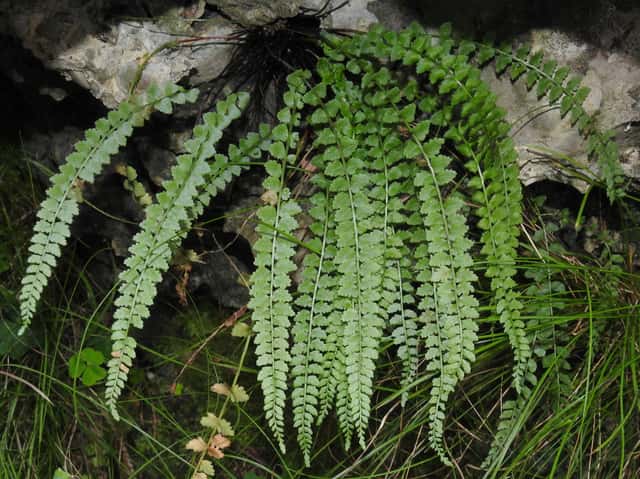
Green Spleenwort (Asplenium viride) is a medium-care plant from the Aspleniaceae family. Green Spleenwort (Asplenium viride) is a small rock-crevice fern native to calcareous mountain rocks across northern temperate Eurasia and North America. It is distinguished from the similar Maidenhair Spleenwort (Asplenium trichomanes) by its green stipes and rachises. A slow-growing, cold-hardy ev...
Green Spleenwort grows up to 20cm, spread of 20cm, watering every 4 days, 5°C – 22°C, 60–80% humidity. It is suitable for indoor environments and safe for pets.
Unlike many popular species, Green Spleenwort is safe to keep around pets. Without adequate drainage, root rot can develop within 8 days.
How to Care for Green Spleenwort?
TLDR: Green Spleenwort needs Low light, watering every 4 days, and temperatures between 5-22°C with 60-80% humidity.
How Often Should You Water Green Spleenwort?
Water every 4 days, keeping the substrate evenly moist but never waterlogged. Reduce frequency in winter. Rainwater or filtered water is preferred.
How Much Light Does Green Spleenwort Need?
Thrives in bright indirect light or partial shade. Direct sun scorches the delicate fronds. North or east-facing windowsills are ideal indoors.
What Is the Best Soil for Green Spleenwort?
Use well-draining loamy soil with pH 6.0–7.0. A mix of fern compost, perlite, and pine bark works well. Good drainage is essential to prevent root rot.
What Pot Should You Use for Green Spleenwort?
Terracotta or ceramic pot with drainage holes. Shallow, wide pots suit this fern's fibrous, spreading root system.
Care Schedule
Fertilize
Every 30 days
Misting
Every 3 days
Repot
Every 730 days
What Is Green Spleenwort and Where Does It Come From?
Green Spleenwort (Asplenium viride) is a small rock-crevice fern native to calcareous mountain rocks across northern temperate Eurasia and North America. It is distinguished from the similar Maidenhair Spleenwort (Asplenium trichomanes) by its green stipes and rachises. A slow-growing, cold-hardy evergreen fern, it is well suited for rock gardens, troughs, and cool, humid indoor settings.
How to Propagate Green Spleenwort?
Crown Division
Divide only when the plant is healthy and roots are abundant. Maintain high humidity for the first few weeks after division.
- 1 Carefully remove the plant from its pot in early spring
- 2 Gently separate clumps by hand or with a sterilized knife
- 3 Plant each division in moist, well-draining substrate
- 4 Keep in a humid location with indirect light until established
Materials needed:
Spore Propagation
Spore propagation requires patience and very high humidity. Results may take months.
- 1 Collect mature fronds with brown spore cases on the underside
- 2 Sprinkle spores over moist, sterilized substrate
- 3 Cover with clear plastic to retain humidity
- 4 Wait for germination in a warm, indirectly lit location
Materials needed:
How Big Does Green Spleenwort Grow?
TLDR: Green Spleenwort can reach up to 20cm tall with Slow growth rate.
Max height
20cm
Spread
20cm
Growth rate
Slow
Foliage
Evergreen
Plant Uses
Ornamental
Great for decoration
Is your plant showing symptoms?
Click on the symptom to discover possible causes:
What Diseases Commonly Affect Green Spleenwort?
TLDR: Green Spleenwort is susceptible to 10 known diseases. Monitor regularly for early detection.
Bacterial Blight
Bacterial blight is a serious plant disease caused by pathogenic bacteria that enters plants through wounds or natural openings. It spreads rapidly in warm, wet conditions and can cause significant damage to leaves, stems, and flowers. The bacteria are transmitted by water splash, contaminated tools, and insects.
Root Rot
Root rot is a serious fungal disease that affects the root system of plants, causing them to decay and die. It is primarily caused by overwatering, poor drainage, or soil-borne fungi such as Pythium, Phytophthora, Rhizoctonia, and Fusarium. The disease thrives in waterlogged conditions where roots are deprived of oxygen, making them susceptible to fungal infection.
Pythium Root Rot
Pythium root rot is a serious fungal disease caused by various Pythium species including P. aphanidermatum, P. ultimum, and P. irregulare. These water molds are present in practically all cultivated soils and attack plant roots under wet conditions, causing rapid wet rot that can extend into the stem. The disease is favored by poor drainage, overwatering, and specific temperatures depending on the species.
Scale Insects
Scale insects are small sap-sucking pests that appear as brown, shell-like bumps on plant stems and leaves. There are over 25 species, divided into armored (hard) and unarmored (soft) scales. They feed by piercing plant tissue and extracting sap, which weakens the plant and can lead to yellowing, stunted growth, and even death if left untreated. They also excrete honeydew, which attracts ants and promotes sooty mold growth.
Fun Facts
Green Spleenwort grows naturally in calcareous rock crevices, surviving in almost no soil at all.
Its species name viride is Latin for "green," referring to its distinctive green stipes — unlike the similar Asplenium trichomanes, which has dark-colored stipes.
It is one of the few ferns that tolerates very cold climates, hardy down to USDA Zone 3 (-40°C / -40°F).
It can hybridize with Asplenium trichomanes to form the naturally occurring hybrid Asplenium × adulterinum.
Frequently asked questions
How often should I water Green Spleenwort?
Is Green Spleenwort toxic to pets?
How much light does Green Spleenwort need?
Can I grow Green Spleenwort indoors?
How often does Green Spleenwort need repotting?
Compare with similar plants
| Attribute | Difficulty | Light | Watering | Pet Safe |
|---|---|---|---|---|
| Dark Fieldcap | Medium | Low light | 2d | ⚠️ |
| Azalea | Medium | Partial shade | 3d | ⚠️ |
| Muriel's Bamboo | Medium | Partial shade | 3d | ✓ |
| Bougainvillea | Medium | Direct sun | 7d | ⚠️ |




