Rosaceae
Harsh Downy-Rose (Rosa tomentosa)
Rosa tomentosa
Plant it in the ground in a sunny spot with soil that drains. Once settled it asks for little: a weekly watering in hot spells and a light prune once a year. It handles cold down to about -15 °C.
Every 7 days
Bright indirect
-15° - °C
% - %
Categories
What is Harsh downy-rose?
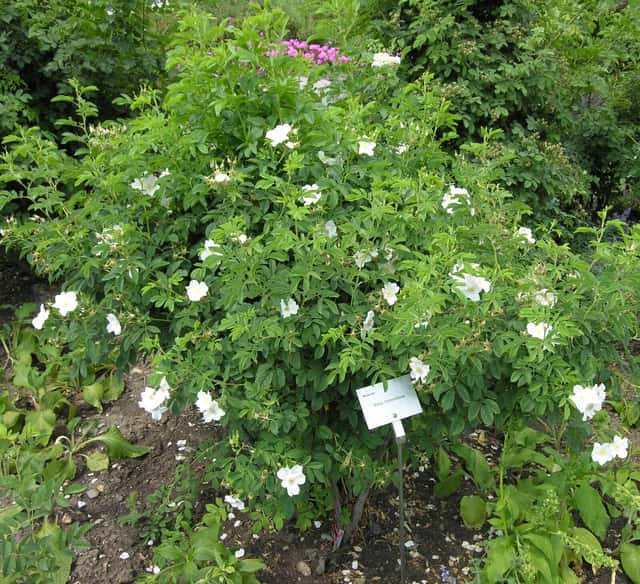
Harsh downy-rose (Rosa tomentosa) is a easy-care plant from the Rosaceae family. Harsh downy-rose is a wild shrub rose found across much of Europe and Asia Minor, mostly in hedgerows and along woodland edges. It grows to about 3 m. The leaves are soft with fine hairs, which is where the name tomentosa comes from. The flowers are small, up to 4 cm across, pale pink to nearly whit...
Harsh downy-rose grows up to 3.0m, spread of 250cm, watering every 7 days. It is not suitable for indoor environments and safe for pets.
Unlike many tropical plants, Harsh downy-rose tolerates watering mistakes. Best for beginners. Unlike many popular species, Harsh downy-rose is safe to keep around pets.
How to Care for Harsh downy-rose?
TLDR: Harsh downy-rose needs Bright indirect, watering every 7 days, and temperatures between -15-30°C with 40-70% humidity.
How Often Should You Water Harsh downy-rose?
Water about once a week in warm weather, above all during its first year. It likes moist soil but not soggy soil.
How Much Light Does Harsh downy-rose Need?
Full sun suits it best. It also grows in light shade at the edge of trees, usually with fewer flowers.
What Is the Best Soil for Harsh downy-rose?
It grows in most soils, heavy clay included. What it won't put up with is water sitting around its roots.
What Pot Should You Use for Harsh downy-rose?
Not a pot plant, since it gets too big. If you have to, use a large, deep pot with drainage holes while it's young.
What Is Harsh downy-rose and Where Does It Come From?
Harsh downy-rose is a wild shrub rose found across much of Europe and Asia Minor, mostly in hedgerows and along woodland edges. It grows to about 3 m. The leaves are soft with fine hairs, which is where the name tomentosa comes from. The flowers are small, up to 4 cm across, pale pink to nearly white, and open in small clusters in early summer. Oval red hips with bristles follow. This is a plant for a big garden or a hedge, not for indoors.
How to Propagate Harsh downy-rose?
Hardwood cutting
It's slow, but most cuttings usually take. Use clean secateurs and gloves for the thorns.
- 1 In early autumn, cut pencil-thick shoots from this year's growth, 20-25 cm long
- 2 Push them into soil in a sheltered spot or a cold frame
- 3 Keep the soil moist
- 4 Move the new plant the following year
Materials needed:
Seed
The seed needs a cold spell before it sprouts. Seedlings may differ from the parent because it crosses easily with other roses.
- 1 Take the seeds from ripe hips and clean off the hairs
- 2 Sow straight away in a tray outdoors, somewhere cold
- 3 Wait: sprouting can take up to two years
- 4 Move seedlings into their own pots once you can handle them
Materials needed:
How Big Does Harsh downy-rose Grow?
TLDR: Harsh downy-rose can reach up to 3.0m tall with Medium growth rate.
Max height
3.0m
Spread
2.5m
Foliage
Deciduous
Plant Uses
Ornamental
Great for decoration
Edible
Can be consumed
Culinary Uses
- Plant databases list the hips and seeds as edible raw or cooked, with the inner hairs removed. Check the ID before eating any.
Is your plant showing symptoms?
Click on the symptom to discover possible causes:
What Diseases Commonly Affect Harsh downy-rose?
TLDR: Harsh downy-rose is susceptible to 4 known diseases. Monitor regularly for early detection.
Rust
Rust is a common fungal disease caused by fungi in the order Pucciniales that affects a wide variety of plants. The disease gets its name from the characteristic orange, yellow, or reddish-brown pustules that appear on leaves, resembling metal rust. This obligate fungal parasite requires living plants to survive and can cause significant economic losses in agricultural crops.
Black Spot
Black spot is the most serious fungal disease affecting roses, caused by the fungus Diplocarpon rosae. It is characterized by dark circular spots on leaves that progress to yellowing and premature leaf drop. The disease thrives in humid and cool conditions, especially early in the growing season.
Powdery Mildew
Powdery mildew is a common fungal disease caused by various fungi species including Erysiphe, Podosphaera, Oïdium, and Leveillula. It affects over 10,000 plant species worldwide. The disease thrives in warm, dry climates with high humidity and appears as a distinctive white powdery coating on plant surfaces.
Aphids
Aphids are small, soft-bodied, pear-shaped insects (1/16 to 1/8 inch long) that feed by sucking nutrient-rich sap from plants. They reproduce rapidly and can quickly weaken plants, causing distorted growth and transmitting plant viruses. Aphids come in various colors including green, black, red, yellow, brown, and gray. They secrete honeydew, a sticky substance that attracts ants and encourages sooty mold growth.
Fun Facts
The name tomentosa refers to the soft hairs on the plant.
It can reach about 3 m in hedgerows.
Rose seed can take up to two years to sprout.
Frequently asked questions
When does harsh downy-rose flower?
Should I deadhead it?
Does it need pruning?
What diseases can it get?
Compare with similar plants
| Attribute | Difficulty | Light | Watering | Pet Safe |
|---|---|---|---|---|
| Field Maple | Easy | Bright indirect | 14d | ✓ |
| Iberian Houseleek | Easy | Direct sun | 14d | ✓ |
| Silver Birch | Easy | Direct sun | 14d | ✓ |
| Common Blanketflower | Easy | Direct sun | 10d | ✓ |





