Ericaceae
Andean Blueberry: Edible Plant
Macleania rupestris
A plant suited for mild and humid climates, typical of high Andean altitudes. It prefers bright indirect light to partial shade, an acidic and well-drained substrate, and high air humidity. It is sensitive to waterlogging—water regularly, but allow the top layer of the substrate to dry out between waterings to prevent root rot.
Every 7 days
Partial shade
8° - 24°C
60% - 85%
Categories
What is Andean Blueberry?
Andean Blueberry (Macleania rupestris) is a hard-care plant from the Ericaceae family. The Andean blueberry is a woody shrub in the Ericaceae family, native to cloud forests and the Andean páramo at altitudes between 2,000 and 4,100 m, ranging from Venezuela and Colombia to Ecuador and northern Peru. It grows as an epiphyte on trees or directly on exposed rocky outcrops, with branches...
Andean Blueberry grows up to 2.5m, spread of 120cm, watering every 7 days, 8°C – 24°C, 60–85% humidity. It is suitable for indoor environments and safe for pets.
Unlike easy-care plants, Andean Blueberry demands constant attention to humidity and light. Not recommended for beginners. Unlike many popular species, Andean Blueberry is safe to keep around pets. Without adequate drainage, root rot can develop within 14 days.
How to Care for Andean Blueberry?
TLDR: Andean Blueberry needs Partial shade, watering every 7 days, and temperatures between 8-24°C with 60-85% humidity.
How Often Should You Water Andean Blueberry?
Keep the substrate uniformly moist, watering when the top few inches dry out. Avoid waterlogging: excess water is the main cause of cultivation problems for this species, as it promotes root rot.
How Much Light Does Andean Blueberry Need?
Provide bright indirect light or dappled partial shade, similar to what is found under the canopy of Andean cloud forests. Avoid intense direct sun, especially at midday, as it can burn the leaves.
What Is the Best Soil for Andean Blueberry?
Use an acidic substrate (pH 4.5–6.0) that is light and well-drained—a mix based on peat/coconut fiber with perlite or orchid bark replicates its natural epiphytic habitat conditions well.
What Pot Should You Use for Andean Blueberry?
Clay or ceramic pots with good drainage holes are ideal. Due to its epiphytic habit, a light substrate such as an orchid mix (pine bark, perlite, coconut fiber) in a medium-sized pot favors root development.
Care Schedule
Fertilize
Every 30 days
Misting
Every 3 days
Rotate
Every 14 days
Repot
Every 730 days
What Is Andean Blueberry and Where Does It Come From?
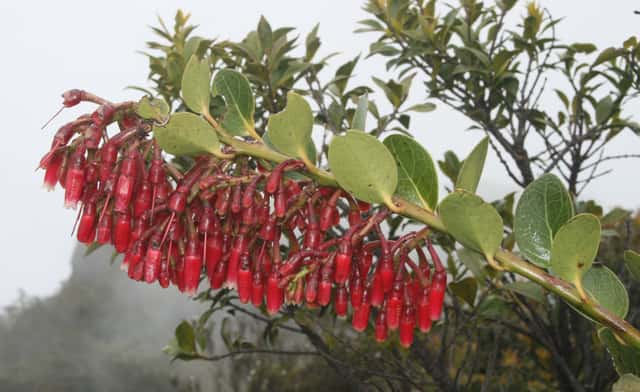
The Andean blueberry is a woody shrub in the Ericaceae family, native to cloud forests and the Andean páramo at altitudes between 2,000 and 4,100 m, ranging from Venezuela and Colombia to Ecuador and northern Peru. It grows as an epiphyte on trees or directly on exposed rocky outcrops, with branches that can reach up to 2.5 m (occasionally 6 m when climbing). Its leaves are small, rigid, and thick, adapted to nutrient-poor soils. It produces tubular magenta flowers pollinated by hummingbirds, followed by rounded edible berries with sweet and juicy pulp.
How to Propagate Andean Blueberry?
Air Layering
Concentrations of 500-1000 mg/L of IBA accelerate and increase the number of roots per layer, according to studies on the species.
- 1 Choose a healthy branch and make a ring cut, removing a 2-3 cm strip of bark
- 2 Apply rooting hormone (500-1000 mg/L IBA) to the exposed area
- 3 Wrap with moistened sphagnum moss and cover with plastic, tying the ends
- 4 Keep moist and wait for the first adventitious roots to appear after 60 days
- 5 Cut below the formed roots and plant in a light, acidic substrate
Materials needed:
Cuttings
Rooting is slower and more irregular than air layering; maintaining high humidity is essential for success.
- 1 Cut semi-woody cuttings of 10-15 cm from healthy branches
- 2 Remove leaves from the bottom half and apply rooting hormone to the base
- 3 Plant in a light, acidic, and well-drained substrate
- 4 Keep in a humid, shaded environment with bottom heat until rooted
Materials needed:
Seed
Germination is slow and variable; air layering is commercially preferred for producing more uniform seedlings.
- 1 Extract seeds from very ripe fruits and wash to remove pulp
- 2 Sow in a light, acidic, and slightly moist substrate
- 3 Keep in a location with indirect light and constant humidity until germination
- 4 Transplant seedlings once they develop true leaves
Materials needed:
How Big Does Andean Blueberry Grow?
TLDR: Andean Blueberry can reach up to 2.5m tall with Medium growth rate.
Max height
2.5m
Spread
1.2m
Growth rate
Medium
Foliage
Evergreen
Plant Uses
Ornamental
Great for decoration
Edible
Can be consumed
Medicinal
Medicinal properties
Medicinal Uses
- Fresh fruit traditionally used to relieve respiratory problems
- Fruit decoction used for nervous conditions
- Leaf poultice applied to bruises
- Fruit extract rich in anthocyanins and flavonoids with proven antioxidant and antimicrobial activity in phytochemical studies
Culinary Uses
- Fruits consumed raw, with a sweet and pleasant flavor
- Used in the preparation of juices, wines, and jams
- Flower petals used in regional sweets
- Fruit skin used to extract natural dye
Is your plant showing symptoms?
Click on the symptom to discover possible causes:
What Diseases Commonly Affect Andean Blueberry?
TLDR: Andean Blueberry is susceptible to 5 known diseases. Monitor regularly for early detection.
Root Rot
Root rot is a serious fungal disease that affects the root system of plants, causing them to decay and die. It is primarily caused by overwatering, poor drainage, or soil-borne fungi such as Pythium, Phytophthora, Rhizoctonia, and Fusarium. The disease thrives in waterlogged conditions where roots are deprived of oxygen, making them susceptible to fungal infection.
Pestalotiopsis Leaf Spot
Pestalotiopsis is a group of fungi (now often placed in Neopestalotiopsis and related genera) that causes leaf spots and tip blight, especially on plants that are stressed or kept too wet. It shows up most after cool, rainy weather or in crowded plantings with poor airflow. Look for tan to dark-brown spots that may have a yellow edge, or shoot tips that brown and die back from the tip inward. Tiny black pinhead-like dots often appear in the dead tissue—these are the fungus’s spore-producing bodies. It commonly affects arborvitae, juniper, cypress, yew, boxwood, many palms (including indoor palms), and can also occur on strawberry leaves and fruit.
Cladosporium Leaf Mold
Cladosporium is a group of fungi that cause leaf spots and a soft, olive-green to dark brown, velvety growth on leaves and sometimes stems. It thrives in high humidity, poor air movement, and crowded plants. Typical signs are pale or yellow patches on the upper side of the leaf and darker, fuzzy growth on the underside, followed by leaf drop. It is common on tomatoes (especially in greenhouses and high tunnels), peppers, cucumbers, many ornamentals (including roses), and houseplants kept in low light with damp foliage. The fungus spreads by tiny spores moved by air, splashing water, tools, and hands.
Alternaria Leaf Spot
Alternaria leaf spot is a common fungal disease caused by Alternaria solani and Alternaria alternata that affects a wide range of plants including tomatoes, potatoes, brassicas, and ornamentals. The disease thrives in warm, humid conditions and can cause significant crop damage if left untreated. Spores overwinter on plant debris and can attach to seeds, making complete elimination difficult.
Meaning & Symbolism
A symbol of Andean resilience: it sprouts and blooms on bare rocks and poor páramo soils, sustaining the diet and economy of local communities with its wild fruits.
Compare with similar plants
| Attribute | Difficulty | Light | Watering | Pet Safe |
|---|---|---|---|---|
| Azalea | Medium | Partial shade | 3d | ⚠️ |
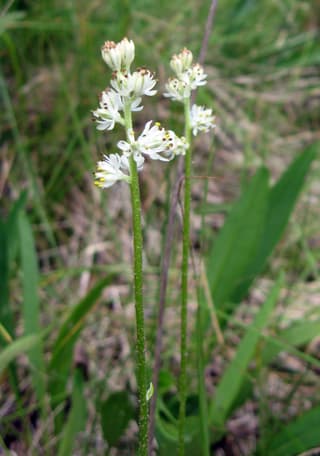
| Sticky false asphodel | Hard | Bright indirect | 1d | ✓ |
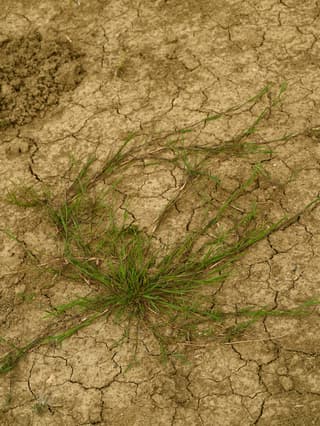
| Creeping bentgrass | Hard | Direct sun | 3d | ✓ |
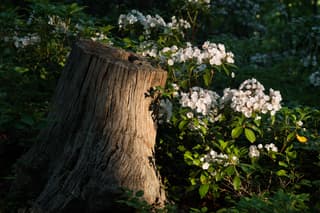
| Mountain Laurel | Medium | Partial shade | 7d | ⚠️ |
Choose & Compare
Sources & References
- Evaluation of uva camarona (Macleania rupestris) propagation with air layering
- Macleania rupestris - Useful Tropical Plants
- How to Care for Macleania: Water, Sunlight & More
- Macleania rupestris - Plant Lust
- Macleania rupestris - Colombian Plants made accessible
- Phytochemical Composition and Biological Properties of Macleania rupestris Fruit Extract
- Hongos fitopatogenos encontrados en hojas, flores y frutos de Macleania rupestris