Pinaceae
Maritime Pine (Pinus pinaster)
Pinus pinaster
A large tree for open land, not for a pot. It wants full sun and light, well-drained soil, even if poor. Once settled it handles drought and salt wind. Watch for trees that dry out suddenly: pine wood nematode can kill a pine within weeks and is a notifiable pest in Europe.
Every 14 days
Direct sun
° - °C
% - %
Categories
What is Maritime pine?
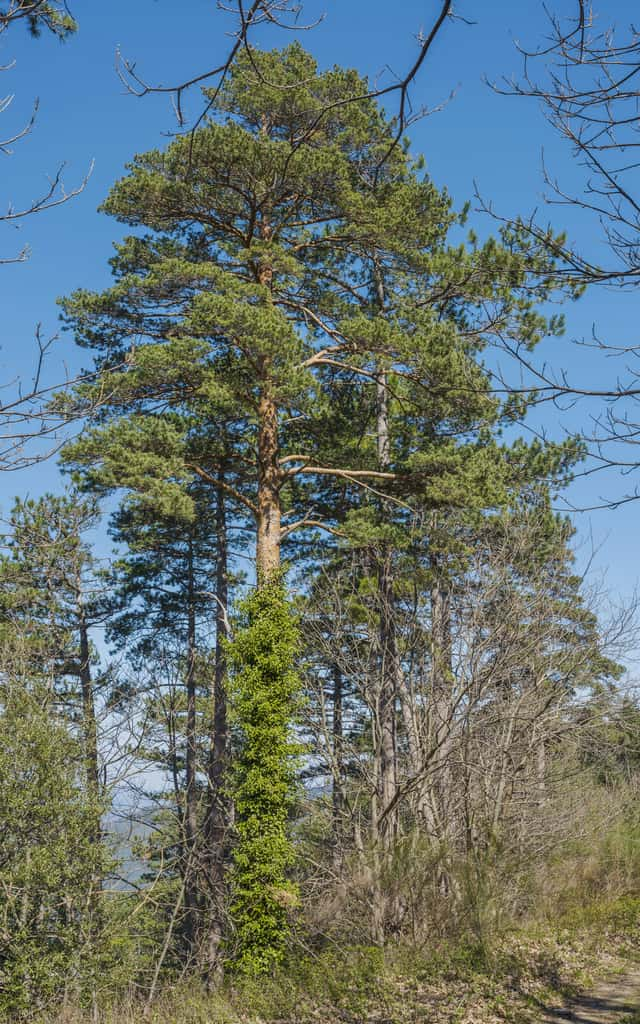
Maritime pine (Pinus pinaster) is a easy-care plant from the Pinaceae family. Maritime pine is a tree of the western Mediterranean and the Atlantic coast of Europe, native to Portugal, Spain, France, Italy and North Africa. It usually reaches 20 to 35 metres, with thick, orange-red bark that is deeply fissured at the base of the trunk. The needles come in pairs, 10 to 25 cm l...
Maritime pine grows up to 35.0m, watering every 14 days. It is not suitable for indoor environments and safe for pets.
Unlike many tropical plants, Maritime pine tolerates watering mistakes. Best for beginners. Unlike many popular species, Maritime pine is safe to keep around pets.
How to Care for Maritime pine?
TLDR: Maritime pine needs Direct sun, watering every 14 days, and temperatures between 15-30°C with 40-70% humidity.
How Often Should You Water Maritime pine?
Water every two weeks in summer if it does not rain, while the young tree builds roots. After that it usually gets by on rainfall and copes with dry spells. Avoid ground that stays waterlogged.
How Much Light Does Maritime pine Need?
Full sun. This pine cannot grow in shade, so plant it away from taller trees and buildings.
What Is the Best Soil for Maritime pine?
Sandy or gravelly soil that drains well, from acidic to neutral. It does well in poor ground and dune sand, and does worst in heavy, wet soil.
What Is Maritime pine and Where Does It Come From?
Maritime pine is a tree of the western Mediterranean and the Atlantic coast of Europe, native to Portugal, Spain, France, Italy and North Africa. It usually reaches 20 to 35 metres, with thick, orange-red bark that is deeply fissured at the base of the trunk. The needles come in pairs, 10 to 25 cm long, and are the longest and sturdiest of any European pine. The cones are 8 to 22 cm long, ripen to a glossy red-brown after two years, and can stay closed for years, sometimes opening only in the heat of a forest fire. It is the most common conifer in Portugal, where it covers nearly 30% of the forest.
How to Propagate Maritime pine?
Seed
It seeds itself readily. In a favourable climate it can spread on its own, so avoid planting it near natural areas where it is not native.
- 1 Collect ripe cones and keep them somewhere warm and dry until they open
- 2 Take out the seeds and sow them in a deep pot of sandy soil
- 3 Keep in the sun with the soil lightly moist
- 4 Plant the seedling in its final spot while it is still young
Materials needed:
How Big Does Maritime pine Grow?
TLDR: Maritime pine can reach up to 35.0m tall with Fast growth rate.
Max height
35.0m
Growth rate
Fast
Foliage
Evergreen
Plant Uses
Ornamental
Great for decoration
Is your plant showing symptoms?
Click on the symptom to discover possible causes:
What Diseases Commonly Affect Maritime pine?
TLDR: Maritime pine is susceptible to 5 known diseases. Monitor regularly for early detection.
Root-Knot Nematodes
Root-knot nematodes (Meloidogyne species) are microscopic roundworms that parasitize plant roots, causing characteristic galls or knots. These soil-borne pests are among the most economically damaging plant pathogens worldwide, affecting a wide range of ornamental and edible plants. The nematodes inject enzymes into root cells, causing abnormal swelling and disrupting water and nutrient uptake.
Caterpillars
Caterpillars are the larval stage of moths and butterflies that feed voraciously on plant foliage, stems, flowers, and fruits. Common species include cabbage loopers, tomato hornworms, armyworms, and cutworms. These pests can cause extensive damage by consuming large amounts of plant tissue in a short time. They vary in size from small (1/4 inch) to large (5 inches), with colors ranging from green to brown, often featuring stripes or spots. Caterpillars are highly mobile and can quickly spread throughout gardens, making them one of the most destructive common pests.
Root Rot
Root rot is a serious fungal disease that affects the root system of plants, causing them to decay and die. It is primarily caused by overwatering, poor drainage, or soil-borne fungi such as Pythium, Phytophthora, Rhizoctonia, and Fusarium. The disease thrives in waterlogged conditions where roots are deprived of oxygen, making them susceptible to fungal infection.
Canker
Canker is a disease caused by various fungi and bacteria that create necrotic, sunken areas on bark of branches, stems, and trunks. Pathogens enter through wounds and natural openings, especially when plants are stressed. Canker can gradually weaken or kill branches by disrupting water and nutrient flow.
Fun Facts
It is the main source of resin in Europe, used for rosin and turpentine.
Its cones can stay shut for years and open in the heat of a fire.
It is planted to hold dunes in place, but outside its home range it has become invasive in places like South Africa.
Frequently asked questions
My maritime pine dried out suddenly. What could it be?
Can maritime pine grow in a pot?
Does it need watering?
How is it different from stone pine?
Compare with similar plants
| Attribute | Difficulty | Light | Watering | Pet Safe |
|---|---|---|---|---|
| Field Maple | Easy | Bright indirect | 14d | ✓ |
| Iberian Houseleek | Easy | Direct sun | 14d | ✓ |
| Silver Birch | Easy | Direct sun | 14d | ✓ |
| Common Blanketflower | Easy | Direct sun | 10d | ✓ |
Choose & Compare
Sources & References
- Wikipedia: Pinus pinaster
- Wikipédia: Pinheiro-bravo
- The Gymnosperm Database: Pinus pinaster
- Plants For A Future: Pinus pinaster
- EUFORGEN: Pinus pinaster
- MITECO: Pinus pinaster, regiones de procedencia
- Ministère de l'Agriculture (France): guide du pin maritime
- Faria et al. 2023, Vida Rural: nemátode da madeira do pinheiro





