Selaginellaceae
How to Care for Martens' Spikemoss (Selaginella martensii)
Selaginella martensii
Martens' Spikemoss needs consistently high humidity (60–90%), indirect low to medium light, and evenly moist peaty soil. Water every 3–5 days with soft water, mist regularly, and maintain temperatures between 10–27°C. Fertilize lightly every two weeks during the growing season. Repot every 2 years into a shallow container.
Every 4 days
Low light
10° - 27°C
60% - 90%
Categories
What is Martens' Spikemoss?
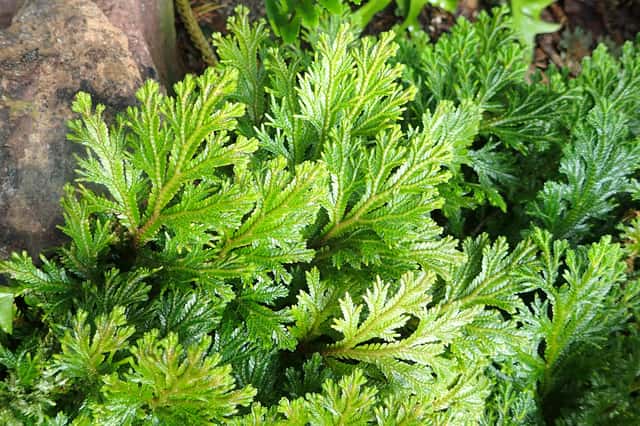
Martens' Spikemoss (Selaginella martensii) is a medium-care plant from the Selaginellaceae family. Selaginella martensii, known as Martens' Spikemoss, is a stunning lycophyte native to Mexico and Central America. Despite its fern-like appearance, it belongs to an ancient lineage of vascular plants — neither a true moss nor a fern, but a fern-ally or lycophyte. Its feathery, overlapping scale-like...
Martens' Spikemoss grows up to 30cm, spread of 30cm, watering every 4 days, 10°C – 27°C, 60–90% humidity. It is suitable for indoor environments and safe for pets.
Unlike many popular species, Martens' Spikemoss is safe to keep around pets. Without adequate drainage, root rot can develop within 8 days.
How to Care for Martens' Spikemoss?
TLDR: Martens' Spikemoss needs Low light, watering every 4 days, and temperatures between 10-27°C with 60-90% humidity.
How Often Should You Water Martens' Spikemoss?
Water every 3–5 days with soft, lime-free water — rainwater or distilled is ideal. Keep the soil consistently moist but never waterlogged. Do not let the substrate dry out completely, as this causes rapid foliage decline.
How Much Light Does Martens' Spikemoss Need?
Place in low to medium indirect light — near a north or east-facing window is ideal. Avoid direct sunlight, which will scorch the delicate foliage. It tolerates low light better than most houseplants.
What Is the Best Soil for Martens' Spikemoss?
Use a peaty, well-draining mix — a blend of peat moss, perlite, and coarse sand works well. Slightly acidic pH of 5.0–6.0 is preferred. Shallow containers are fine due to its minimal root depth.
What Pot Should You Use for Martens' Spikemoss?
Shallow terracotta or plastic pot with drainage holes; terrariums and glass containers with lids work exceptionally well due to humidity retention.
Care Schedule
Fertilize
Every 14 days
Misting
Every 3 days
Repot
Every 730 days
What Is Martens' Spikemoss and Where Does It Come From?
Selaginella martensii, known as Martens' Spikemoss, is a stunning lycophyte native to Mexico and Central America. Despite its fern-like appearance, it belongs to an ancient lineage of vascular plants — neither a true moss nor a fern, but a fern-ally or lycophyte. Its feathery, overlapping scale-like leaves create a lush, emerald carpet, with some varieties displaying striking white-tipped variegation. It thrives in high-humidity environments, making it a favorite for terrariums, paludariums, and moisture-rich indoor spaces.
How to Propagate Martens' Spikemoss?
Clump Division
Keep humidity above 70% during establishment. A clear plastic dome or terrarium enclosure speeds up rooting significantly.
- 1 Gently remove the plant from its pot in spring.
- 2 Separate the rhizomes into smaller clumps using your hands or a clean knife.
- 3 Plant each clump into moist peaty substrate.
- 4 Keep in a humid environment and avoid direct sunlight until established.
Materials needed:
Stem Cutting
Avoid rooting hormone — cuttings root best in high humidity. Patience is key; do not disturb cuttings for at least 3 weeks.
- 1 Take a 5–8 cm stem cutting from a healthy shoot.
- 2 Press the cut end into moist sphagnum moss or peaty mix.
- 3 Cover with a plastic bag or dome to maintain humidity.
- 4 Mist daily and keep in bright indirect light until rooted.
Materials needed:
How Big Does Martens' Spikemoss Grow?
TLDR: Martens' Spikemoss can reach up to 30cm tall with Slow growth rate.
Max height
30cm
Spread
30cm
Growth rate
Slow
Foliage
Evergreen
Plant Uses
Ornamental
Great for decoration
Is your plant showing symptoms?
Click on the symptom to discover possible causes:
What Diseases Commonly Affect Martens' Spikemoss?
TLDR: Martens' Spikemoss is susceptible to 11 known diseases. Monitor regularly for early detection.
Root Rot
Root rot is a serious fungal disease that affects the root system of plants, causing them to decay and die. It is primarily caused by overwatering, poor drainage, or soil-borne fungi such as Pythium, Phytophthora, Rhizoctonia, and Fusarium. The disease thrives in waterlogged conditions where roots are deprived of oxygen, making them susceptible to fungal infection.
Crown Rot
Crown rot is a serious fungal disease that attacks the crown (base) of the plant where the stem meets the soil. It is caused by various fungal pathogens including Phytophthora, Fusarium, and Rhizoctonia. The disease thrives in waterlogged conditions and can quickly spread to kill the entire plant if not addressed promptly.
Overwatering
Overwatering occurs when plants receive too much water, depriving roots of oxygen and causing root rot. This environmental stress is one of the most common causes of houseplant death, as waterlogged soil prevents roots from breathing and functioning properly.
Low Humidity Stress
Low humidity stress occurs when indoor air becomes too dry, causing plants to lose moisture faster than they can absorb it through their roots. This is especially common during winter heating periods, near radiators and heating vents, or in air-conditioned spaces. Tropical plants are particularly susceptible to low humidity damage.
Meaning & Symbolism
A symbol of resilience and endurance, reflecting its ancient lineage spanning hundreds of millions of years.
Fun Facts
Selaginella is one of the oldest plant genera on Earth, with fossil relatives dating back over 400 million years.
Despite looking like a moss or fern, Selaginella martensii is a lycophyte — a distinct ancient lineage of vascular plants.
It thrives in terrariums precisely because it evolved on humid rainforest floors in Mexico and Central America.
Some varieties of Selaginella martensii display striking white-tipped variegation, earning them the nickname "Frosty Fern" around Christmas.
Frequently asked questions
How often should I water Selaginella martensii?
Is Selaginella martensii toxic to cats or dogs?
Why are my Selaginella leaves turning brown and crispy?
Is Selaginella martensii a moss or a fern?
Can Selaginella martensii grow in a terrarium?
Compare with similar plants
| Attribute | Difficulty | Light | Watering | Pet Safe |
|---|---|---|---|---|
| Dark Fieldcap | Medium | Low light | 2d | ⚠️ |
| Azalea | Medium | Partial shade | 3d | ⚠️ |
| Muriel's Bamboo | Medium | Partial shade | 3d | ✓ |
| Bougainvillea | Medium | Direct sun | 7d | ⚠️ |




