Araceae
Monstera Thai Constellation: Air Purifying Plant
Monstera deliciosa 'Thai Constellation'
Give this cultivar bright, indirect light year-round to preserve its variegation, water only once the top 2-3 inches of chunky, well-draining aroid mix have dried out, and keep humidity at 60% or higher. It grows slower and is pickier about water quality and light than a standard Monstera deliciosa, so consistency matters more than frequency of care.
Every 9 days
Bright indirect
18° - 27°C
60% - 80%
Categories
What is Monstera Thai Constellation?
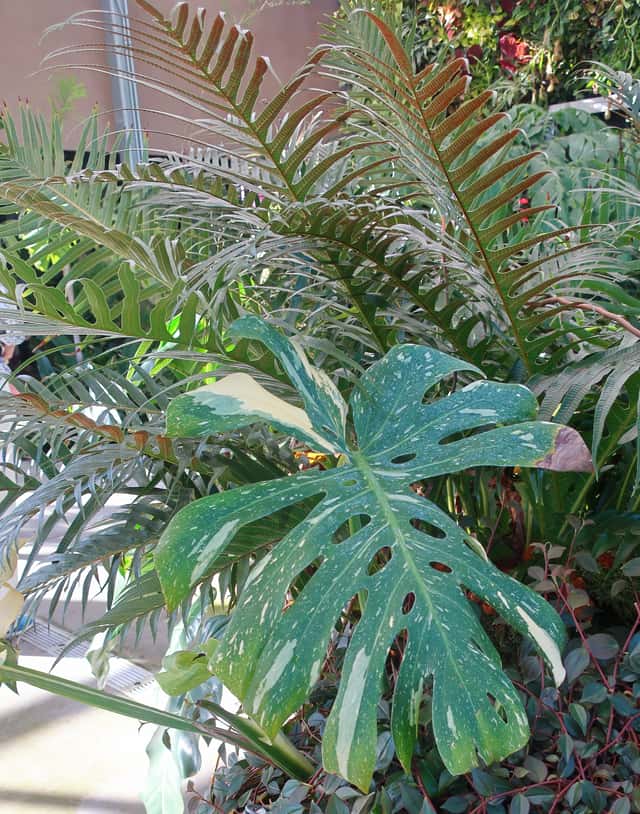
Monstera Thai Constellation (Monstera deliciosa 'Thai Constellation') is a hard-care plant from the Araceae family. Monstera deliciosa 'Thai Constellation' is a rare, lab-developed variegated cultivar of the Swiss cheese plant, prized for its dark green leaves splashed with creamy-white to yellow marbling that resembles a starry night sky. Unlike naturally occurring variegated Monsteras, the Thai Constellation wa...
Monstera Thai Constellation grows up to 2.2m, spread of 120cm, watering every 9 days, 18°C – 27°C, 60–80% humidity. It is suitable for indoor environments and not safe for pets.
Unlike easy-care plants, Monstera Thai Constellation demands constant attention to humidity and light. Not recommended for beginners. Without precautions, ingestion can cause irritation in pets. Keep out of reach of cats and dogs. Without adequate drainage, root rot can develop within 18 days.
How to Care for Monstera Thai Constellation?
TLDR: Monstera Thai Constellation needs Bright indirect, watering every 9 days, and temperatures between 18-27°C with 60-80% humidity.
How Often Should You Water Monstera Thai Constellation?
Water thoroughly when the top 5-7 cm of soil are dry, roughly every 7-10 days in the growing season and less often in winter. Use filtered, distilled, or rainwater when possible since this cultivar is sensitive to salts and minerals in tap water, and always let excess water drain away to avoid root rot.
How Much Light Does Monstera Thai Constellation Need?
Place it a few feet from an east-facing window or in filtered light near a south/west window. Bright indirect light is essential to keep the white sections vivid; too little light causes reversion toward solid green, while direct sun scorches the chlorophyll-poor white patches, which cannot dissipate heat as efficiently as green tissue.
What Is the Best Soil for Monstera Thai Constellation?
Pot in a chunky, aroid-style mix, such as potting soil combined with orchid bark, perlite, and charcoal or coco coir in roughly equal parts, to guarantee fast drainage and airflow around the roots. This cultivar is more sensitive to soggy soil and root rot than the plain-green species.
What Pot Should You Use for Monstera Thai Constellation?
A terracotta or other unglazed, breathable pot with generous drainage holes helps excess moisture escape quickly, reducing root rot risk in this water-sensitive cultivar; size up only one pot size at a time.
Care Schedule
Fertilize
Every 30 days
Misting
Every 3 days
Rotate
Every 7 days
Repot
Every 548 days
What Is Monstera Thai Constellation and Where Does It Come From?
Monstera deliciosa 'Thai Constellation' is a rare, lab-developed variegated cultivar of the Swiss cheese plant, prized for its dark green leaves splashed with creamy-white to yellow marbling that resembles a starry night sky. Unlike naturally occurring variegated Monsteras, the Thai Constellation was produced through tissue culture (reportedly involving controlled mutagenesis) at a Thai laboratory, which makes its variegation pattern genetically stable and far less prone to reverting to solid green than chimeric variegated forms. Because the white sections of its leaves contain little to no chlorophyll, the plant photosynthesizes less efficiently and grows noticeably slower than the standard green Monstera deliciosa, making it a more demanding, higher-maintenance collector's plant.
How to Propagate Monstera Thai Constellation?
Stem cutting with node
Choose a cutting with a good balance of white and green on the leaf, since an all-white cutting has little chlorophyll to fuel root growth and often fails to establish.
- 1 Select a healthy stem section with at least one node and one leaf, keeping some green tissue on the leaf for photosynthesis.
- 2 Cut just below the node with clean, sharp shears.
- 3 Place the cutting in water or moist sphagnum moss, keeping the node submerged or covered.
- 4 Provide bright indirect light and warmth of about 24-27C while roots develop.
- 5 Once roots reach 5-8 cm, pot the cutting into a chunky, well-draining aroid mix.
Materials needed:
Air layering
Air layering has a higher success rate than plain cuttings because the new plant develops roots before being separated from its energy source.
- 1 Identify a node on a mature stem while it is still attached to the parent plant.
- 2 Wrap the node in moist sphagnum moss and cover with plastic wrap to hold humidity.
- 3 Mist or re-moisten the moss regularly until roots are visible through the plastic.
- 4 Once a healthy root system has formed, cut the stem below the new roots and pot it separately.
Materials needed:
How Big Does Monstera Thai Constellation Grow?
TLDR: Monstera Thai Constellation can reach up to 2.2m tall with Slow growth rate.
Max height
2.2m
Spread
1.2m
Growth rate
Slow
Foliage
Evergreen
Warning: Toxic Plant
This plant can be toxic if ingested. Keep out of reach of:
Plant Uses
Ornamental
Great for decoration
Is your plant showing symptoms?
Click on the symptom to discover possible causes:
What Diseases Commonly Affect Monstera Thai Constellation?
TLDR: Monstera Thai Constellation is susceptible to 9 known diseases. Monitor regularly for early detection.
Root Rot
Root rot is a serious fungal disease that affects the root system of plants, causing them to decay and die. It is primarily caused by overwatering, poor drainage, or soil-borne fungi such as Pythium, Phytophthora, Rhizoctonia, and Fusarium. The disease thrives in waterlogged conditions where roots are deprived of oxygen, making them susceptible to fungal infection.
Spider Mites
Spider mites are tiny arachnids (less than 1/20 inch long) related to spiders and ticks that feed on plant sap. They thrive in hot, dry conditions and can cause significant damage to ornamental and vegetable plants. During severe infestations, crop losses can reach 14% or higher as these pests disrupt vital plant processes including photosynthesis, carbon dioxide absorption, and transpiration.
Mealybugs
Mealybugs are small, soft-bodied insects covered with a white, waxy, cottony material. They are common pests of houseplants and outdoor plants in mild climates. These sap-sucking insects feed on plant tissue, causing damage, stunted growth, and can lead to plant death if left untreated. They produce sticky honeydew which attracts sooty mold.
Thrips
Thrips are tiny cigar-shaped insects (1/25-inch long) that damage plants by sucking plant juices and scraping at fruits, flowers, and leaves. With over 6,000 species and rapid reproduction (lifecycle as short as 14 days), they can quickly infest plants and transmit viruses like tomato spotted wilt virus.
Meaning & Symbolism
Because each leaf's variegation pattern is unique and unrepeatable, the Thai Constellation is often seen as a symbol of individuality, rarity, and refined taste, and its starry white markings are associated with wonder and aspiration.
Compare with similar plants
| Attribute | Difficulty | Light | Watering | Pet Safe |
|---|---|---|---|---|
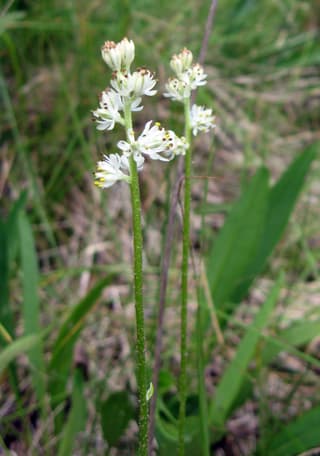
| Sticky false asphodel | Hard | Bright indirect | 1d | ✓ |
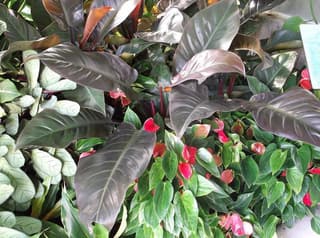
| Congo Philodendron | Medium | Partial shade | 10d | ⚠️ |
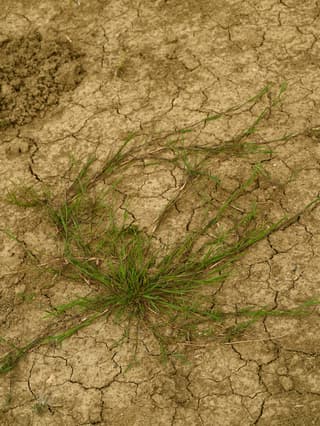
| Creeping bentgrass | Hard | Direct sun | 3d | ✓ |
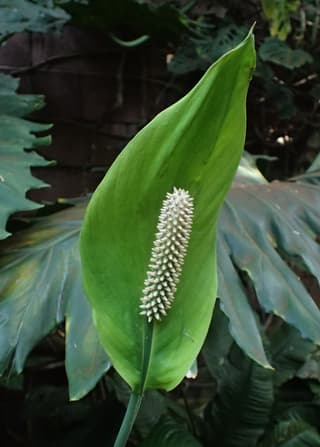
| Peace Lily | Easy | Low light | 7d | ⚠️ |