Solanaceae
Naranjilla (Solanum quitoense): How to Grow and Care for It
Solanum quitoense
Andean cool-climate plant: partial shade, 17-20 C, rich, evenly moist but well-drained soil and shelter from wind. It fruits 8-12 months after transplanting and crops well for 2-3 years.
Every 3 days
Partial shade
12° - 30°C
% - %
Categories
What is Naranjilla?
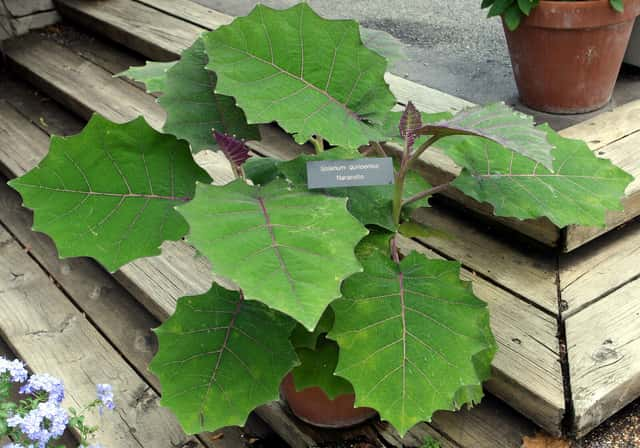
Naranjilla (Solanum quitoense) is a medium-care plant from the Solanaceae family. Naranjilla, or lulo (Solanum quitoense), is an Andean shrub from Ecuador and Colombia, grown at about 1200 to 2500 m. It reaches about 2.5 m and has huge leaves up to 60 cm long covered in purple hairs; some forms have spines on the stems and leaves. The flowers are white inside and purple-hairy out...
Naranjilla grows up to 2.5m, watering every 3 days, 12°C – 30°C. It is not suitable for indoor environments and safe for pets.
Unlike many popular species, Naranjilla is safe to keep around pets.
How to Care for Naranjilla?
TLDR: Naranjilla needs Partial shade, watering every 3 days, and temperatures between 12-30°C with 40-70% humidity.
How Often Should You Water Naranjilla?
Keep the soil evenly moist but never waterlogged, usually every 2-4 days depending on heat and rain. Drought during flowering and fruit set makes flowers and fruit drop.
How Much Light Does Naranjilla Need?
Prefers partial shade or overcast conditions, like the forest understory it comes from. Strong midday sun scorches the big leaves; shade cloth or nearby trees help.
What Is the Best Soil for Naranjilla?
Deep, loamy soil rich in organic matter, well drained and slightly acidic (pH 5.5-6.5). Dig in compost or well-rotted manure before planting.
What Pot Should You Use for Naranjilla?
Large, deep container (40 L or more) with good drainage, in partial shade and sheltered from wind.
Care Schedule
Fertilize
Every 30 days
What Is Naranjilla and Where Does It Come From?
Naranjilla, or lulo (Solanum quitoense), is an Andean shrub from Ecuador and Colombia, grown at about 1200 to 2500 m. It reaches about 2.5 m and has huge leaves up to 60 cm long covered in purple hairs; some forms have spines on the stems and leaves. The flowers are white inside and purple-hairy outside. The round orange fruit is covered in fuzz that rubs off; inside is green, juicy, tart pulp with a flavor between pineapple and lime, mostly used for juice. It is a plant for cool climates and partial shade and tolerates neither frost nor strong heat.
How to Propagate Naranjilla?
Seed
Seedlings vary in fruit size and flavor; save seed from your best plants.
- 1 Take seeds from a ripe fruit, wash and dry them in the shade
- 2 Sow 1 cm deep in a mix of 2 parts soil, 1 part organic matter and 1 part sand
- 3 Keep the seedbed moist, shaded and out of the wind
- 4 Thin seedlings at 2-3 cm and pot them up at 8-10 cm
- 5 Plant out at 25-30 cm tall with 5-6 leaves
Materials needed:
Grafting
Grafting is used where root-knot nematodes are a serious problem.
- 1 Grow a nematode-resistant Solanum rootstock such as Solanum torvum
- 2 Make a cleft cut in the young rootstock
- 3 Insert a wedge-cut naranjilla scion and wrap it with grafting tape
- 4 Keep shaded and humid until the graft takes
Materials needed:
How Big Does Naranjilla Grow?
TLDR: Naranjilla can reach up to 2.5m tall with Fast growth rate.
Max height
2.5m
Growth rate
Fast
Foliage
Evergreen
Plant Uses
Edible
Can be consumed
Ornamental
Great for decoration
Culinary Uses
- Naranjilla (lulo) juice
- Ice cream, jams, sauces and desserts
- Fresh fruit
Is your plant showing symptoms?
Click on the symptom to discover possible causes:
What Diseases Commonly Affect Naranjilla?
TLDR: Naranjilla is susceptible to 7 known diseases. Monitor regularly for early detection.
Root-Knot Nematodes
Root-knot nematodes (Meloidogyne species) are microscopic roundworms that parasitize plant roots, causing characteristic galls or knots. These soil-borne pests are among the most economically damaging plant pathogens worldwide, affecting a wide range of ornamental and edible plants. The nematodes inject enzymes into root cells, causing abnormal swelling and disrupting water and nutrient uptake.
Fusarium Wilt
Fusarium wilt is a serious fungal disease caused by the soil-borne fungus Fusarium oxysporum. The fungus invades roots and blocks the water-conducting vessels (xylem) of the plant, causing progressive wilting and eventual death. Host-specific forms of the pathogen exist that attack different plant species.
Phytophthora Root Rot
The Phytophthora genus consists of soil-borne oomycetes (water molds) that act as plant pathogens, primarily affecting trees and woody plants. It typically spreads through the root system, leading to systemic decline and eventual plant collapse.
Anthracnose
Anthracnose is a fungal disease caused by fungi in the genus Colletotrichum that affects many plants, including vegetables, fruits, and trees. The disease thrives in cool, wet conditions, causing dark, sunken lesions on leaves, stems, flowers, and fruits.
Fun Facts
Its species name, quitoense, means 'from Quito'.
The juice is green even though the skin is orange.
The fuzz on the fruit rubs off with a cloth before you cut it open.
Frequently asked questions
What climate does naranjilla need?
How long until it fruits?
Can I grow it in a pot?
What are the most common problems?
Compare with similar plants
| Attribute | Difficulty | Light | Watering | Pet Safe |
|---|---|---|---|---|
| Dark Fieldcap | Medium | Low light | 2d | ⚠️ |
| Azalea | Medium | Partial shade | 3d | ⚠️ |
| Muriel's Bamboo | Medium | Partial shade | 3d | ✓ |
| Bougainvillea | Medium | Direct sun | 7d | ⚠️ |