Euphorbiaceae
Parasol leaf tree: Edible Plant
Macaranga tanarius
Macaranga tanarius requires plenty of direct sunlight, regular watering while allowing the top few inches of soil to dry between waterings, and medium-to-high humidity. It is sensitive to waterlogging, so it requires a well-drained substrate. It is a fast-growing species, ideal for tropical and subtropical gardens, but poorly suited as an indoor plant due to its high direct light requirements.
Every 12 days
Direct sun
15° - 30°C
40% - 70%
Categories
What is Parasol leaf tree?
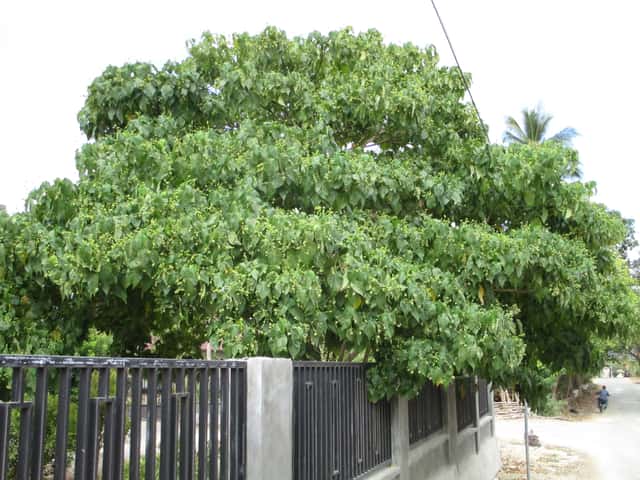
Parasol leaf tree (Macaranga tanarius) is a easy-care plant from the Euphorbiaceae family. Macaranga tanarius is a fast-growing pioneer tree belonging to the Euphorbiaceae family, native to Southeast Asia, southern China, Australia, and the Pacific Islands. It reaches between 4 and 15 meters in height in its natural habitat and is distinguished by its large, peltate, rounded leaves with a...
Parasol leaf tree grows up to 15.0m, watering every 12 days, 15°C – 30°C, 40–70% humidity. It is not suitable for indoor environments and safe for pets.
Unlike many tropical plants, Parasol leaf tree tolerates watering mistakes. Best for beginners. Unlike many popular species, Parasol leaf tree is safe to keep around pets.
How to Care for Parasol leaf tree?
TLDR: Parasol leaf tree needs Direct sun, watering every 12 days, and temperatures between 15-30°C with 40-70% humidity.
How Often Should You Water Parasol leaf tree?
Water approximately every 10-14 days, allowing the top few inches of soil to dry out between waterings. Avoid waterlogging: excess water promotes root rot.
How Much Light Does Parasol leaf tree Need?
Place it in full sun or very intense light; indoors it must be very close to a south-facing window. It does not tolerate shade or low light well.
What Is the Best Soil for Parasol leaf tree?
Use a well-drained substrate, slightly acidic to neutral (pH 5.5-7), such as a mixture of sandy-loam or clay-loam soil enriched with organic matter.
What Pot Should You Use for Parasol leaf tree?
Choose a large pot with good drainage, preferably terracotta, as it promotes the evaporation of excess moisture and helps prevent root rot.
Care Schedule
Fertilize
Every 30 days
Misting
Every 4 days
Rotate
Every 14 days
Repot
Every 365 days
What Is Parasol leaf tree and Where Does It Come From?
Macaranga tanarius is a fast-growing pioneer tree belonging to the Euphorbiaceae family, native to Southeast Asia, southern China, Australia, and the Pacific Islands. It reaches between 4 and 15 meters in height in its natural habitat and is distinguished by its large, peltate, rounded leaves with a velvety texture, where the petiole is inserted near the center of the underside rather than the edge. It is a typical colonizing species of secondary forests, clearings, and disturbed land, hence its common name 'parasol tree'. It produces greenish-yellow flowers clustered in racemes that give way to three-celled prickly capsules containing black seeds.
How to Propagate Parasol leaf tree?
Seed propagation
The germination rate is around 50% and is higher when seeds are sown fresh; avoid storing them for long periods before sowing.
- 1 Collect ripe seeds along with the surrounding pulp
- 2 Clean the pulp and sow the seeds fresh, as they lose viability quickly if stored
- 3 Place the seeds in a well-drained substrate and keep it moist
- 4 Place the seedbed in a warm location with good light until germination
Materials needed:
How Big Does Parasol leaf tree Grow?
TLDR: Parasol leaf tree can reach up to 15.0m tall with Fast growth rate.
Max height
15.0m
Growth rate
Fast
Foliage
Evergreen
Plant Uses
Ornamental
Great for decoration
Medicinal
Medicinal properties
Edible
Can be consumed
Medicinal Uses
- Bark decoction traditionally used against dysentery and hemoptysis
- Root used as an emetic and in decoction against fever
- Macerated leaves applied to wounds
- Latex traditionally used to relieve toothaches
Culinary Uses
- Fruits added to boiled palm juice to improve sugar quality
- Bark and leaves used in the Philippines in the production of the fermented sugarcane drink called basi
Is your plant showing symptoms?
Click on the symptom to discover possible causes:
What Diseases Commonly Affect Parasol leaf tree?
TLDR: Parasol leaf tree is susceptible to 6 known diseases. Monitor regularly for early detection.
Anthracnose
Anthracnose is a fungal disease caused by fungi in the genus Colletotrichum that affects many plants, including vegetables, fruits, and trees. The disease thrives in cool, wet conditions, causing dark, sunken lesions on leaves, stems, flowers, and fruits.
Fusarium Wilt
Fusarium wilt is a serious fungal disease caused by the soil-borne fungus Fusarium oxysporum. The fungus invades roots and blocks the water-conducting vessels (xylem) of the plant, causing progressive wilting and eventual death. Host-specific forms of the pathogen exist that attack different plant species.
Aphids
Aphids are small, soft-bodied, pear-shaped insects (1/16 to 1/8 inch long) that feed by sucking nutrient-rich sap from plants. They reproduce rapidly and can quickly weaken plants, causing distorted growth and transmitting plant viruses. Aphids come in various colors including green, black, red, yellow, brown, and gray. They secrete honeydew, a sticky substance that attracts ants and encourages sooty mold growth.
Spider Mites
Spider mites are tiny arachnids (less than 1/20 inch long) related to spiders and ticks that feed on plant sap. They thrive in hot, dry conditions and can cause significant damage to ornamental and vegetable plants. During severe infestations, crop losses can reach 14% or higher as these pests disrupt vital plant processes including photosynthesis, carbon dioxide absorption, and transpiration.
Meaning & Symbolism
In Southeast Asia, it symbolizes regeneration and resilience, as it is one of the first species to colonize disturbed or deforested land, providing shade for young plants in the regenerating forest.
Compare with similar plants
| Attribute | Difficulty | Light | Watering | Pet Safe |
|---|---|---|---|---|
| Field Maple | Easy | Bright indirect | 14d | ✓ |
| Silver Birch | Easy | Direct sun | 14d | ✓ |
| Common Blanketflower | Easy | Direct sun | 10d | ✓ |
| Cushion Bush | Easy | Direct sun | 14d | ✓ |





