Oleaceae
Persian Lilac (Syringa × persica)
Syringa persica
An easy garden shrub for temperate climates: full sun, well-drained neutral to alkaline soil, and water only in long dry spells once established. Hardy to about -15 °C and needs a cold winter to bloom well. Prune right after flowering and keep the centre open to reduce powdery mildew.
Every 10 days
Direct sun
-15° - °C
% - %
Categories
What is Persian lilac?
Persian lilac (Syringa persica) is a easy-care plant from the Oleaceae family. Persian lilac (Syringa × persica) is a deciduous shrub in the olive family (Oleaceae), more compact than common lilac. It is an old hybrid, probably between Syringa × laciniata and Syringa afghanica, from China and Afghanistan. It forms a rounded mound wider than tall, 1.2 to 2.5 m high and 1.5 to 3...
Persian lilac grows up to 2.5m, spread of 300cm, watering every 10 days. It is not suitable for indoor environments and safe for pets.
Unlike many tropical plants, Persian lilac tolerates watering mistakes. Best for beginners. Unlike many popular species, Persian lilac is safe to keep around pets.
How to Care for Persian lilac?
TLDR: Persian lilac needs Direct sun, watering every 10 days, and temperatures between -15-30°C with 40-70% humidity.
How Often Should You Water Persian lilac?
In the first year, water deeply once a week. Once established, water every 10 days or so only in dry weather; it tolerates heat and drought but not waterlogged soil.
How Much Light Does Persian lilac Need?
Full sun, at least 6 hours a day, for good flowering. It accepts part shade but blooms less.
What Is the Best Soil for Persian lilac?
Fertile, well-drained garden soil; chalk, clay, loam or sand all work, with neutral to alkaline pH (about 6 to 8). Avoid acid, soggy soil.
What Pot Should You Use for Persian lilac?
Best planted in the ground. In a container, use a large (50 cm or more), heavy pot with a drainage hole, and remember the shrub needs winter cold.
What Is Persian lilac and Where Does It Come From?
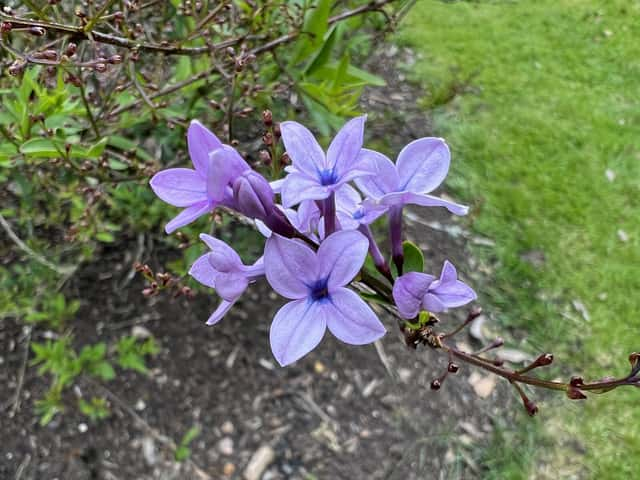
Persian lilac (Syringa × persica) is a deciduous shrub in the olive family (Oleaceae), more compact than common lilac. It is an old hybrid, probably between Syringa × laciniata and Syringa afghanica, from China and Afghanistan. It forms a rounded mound wider than tall, 1.2 to 2.5 m high and 1.5 to 3 m or more across, with slender arching branches and narrow dark green leaves. In late spring last year's shoots are covered in 5 to 8 cm clusters of very fragrant pale lilac flowers; a white form exists. It tolerates heat and drought better than many lilacs and holds the Royal Horticultural Society's Award of Garden Merit. Crossed with common lilac it gave rise to Syringa × chinensis. The name "Persian lilac" is also used for chinaberry (Melia azedarach), an unrelated plant.
How to Propagate Persian lilac?
Softwood cuttings
Use clean tools and avoid shoots carrying flowers.
- 1 In early summer, cut 10-15 cm tips of new, still soft shoots.
- 2 Strip the lower leaves and dip the base in rooting hormone.
- 3 Insert in light, moist mix and cover to keep humidity high.
- 4 Keep in bright light out of direct sun until rooted, then pot on.
Materials needed:
How Big Does Persian lilac Grow?
TLDR: Persian lilac can reach up to 2.5m tall with Medium growth rate.
Max height
2.5m
Spread
3.0m
Growth rate
Medium
Foliage
Deciduous
Plant Uses
Ornamental
Great for decoration
Is your plant showing symptoms?
Click on the symptom to discover possible causes:
What Diseases Commonly Affect Persian lilac?
TLDR: Persian lilac is susceptible to 11 known diseases. Monitor regularly for early detection.
Powdery Mildew
Powdery mildew is a common fungal disease caused by various fungi species including Erysiphe, Podosphaera, Oïdium, and Leveillula. It affects over 10,000 plant species worldwide. The disease thrives in warm, dry climates with high humidity and appears as a distinctive white powdery coating on plant surfaces.
Bacterial Blight
Bacterial blight is a serious plant disease caused by pathogenic bacteria that enters plants through wounds or natural openings. It spreads rapidly in warm, wet conditions and can cause significant damage to leaves, stems, and flowers. The bacteria are transmitted by water splash, contaminated tools, and insects.
leaf miners
Larval stages of leaf-mining insects are feeding on the leaf tissue of plants, building little tunnels under the leaf surface.
Bacterial Canker
Serious bacterial disease affecting stone fruits and tomatoes caused by Pseudomonas syringae or Clavibacter michiganensis. Creates sunken lesions that ooze sap.
Fun Facts
It is an old hybrid, probably of two species from China and Afghanistan.
Crossed with common lilac it produced Syringa × chinensis, the Rouen lilac.
Frequently asked questions
When should I prune Persian lilac?
Why is my Persian lilac not flowering?
How do I prevent powdery mildew?
How is it different from common lilac?
Compare with similar plants
| Attribute | Difficulty | Light | Watering | Pet Safe |
|---|---|---|---|---|
| Field Maple | Easy | Bright indirect | 14d | ✓ |
| Iberian Houseleek | Easy | Direct sun | 14d | ✓ |
| Silver Birch | Easy | Direct sun | 14d | ✓ |
| Common Blanketflower | Easy | Direct sun | 10d | ✓ |





