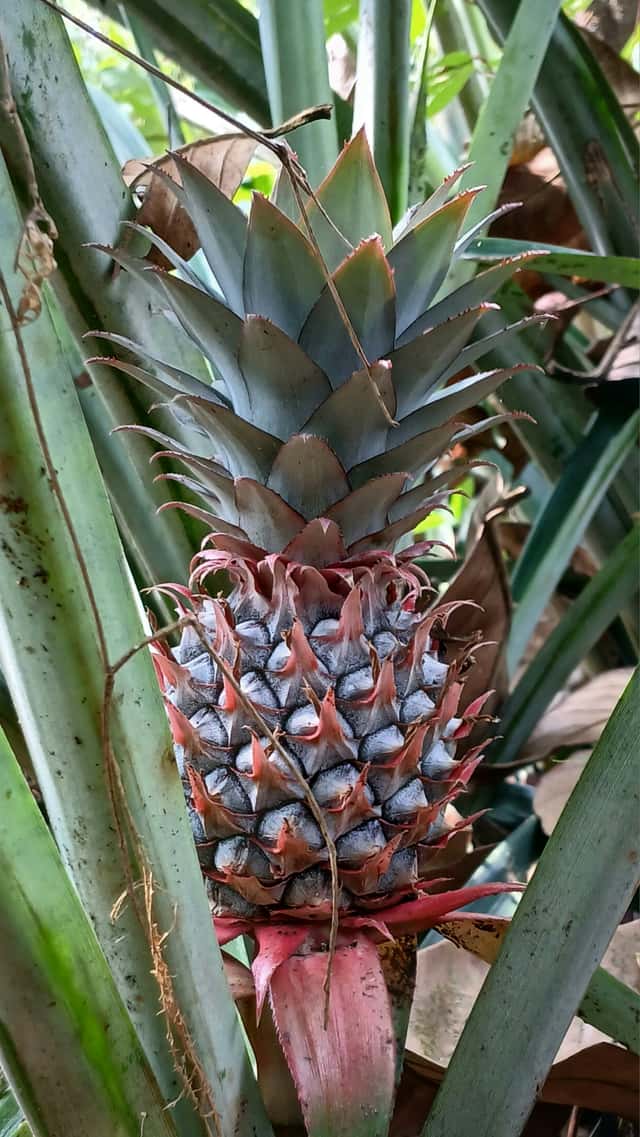
Bromeliaceae
Pineapple: Edible Plant
Ananas comosus
The pineapple requires plenty of direct sunlight, well-drained and slightly acidic soil, and a warm, humid environment to thrive and produce fruit.
Every 10 days
Direct sun
18° - 35°C
50% - 80%
Categories
What is Pineapple?
Pineapple (Ananas comosus) is a medium-care plant from the Bromeliaceae family. Ananas comosus, popularly known as the pineapple, is a perennial tropical plant in the bromeliad family. It is characterized by a rosette of stiff, spiny, sword-shaped leaves, from which a central stalk emerges to produce the inflorescence and, subsequently, the composite fruit. It is a CAM plant, m...
Pineapple grows up to 1.8m, spread of 150cm, watering every 10 days, 18°C – 35°C, 50–80% humidity. It is suitable for indoor environments and safe for pets.
Unlike many popular species, Pineapple is safe to keep around pets. Without adequate drainage, root rot can develop within 20 days.
How to Care for Pineapple?
TLDR: Pineapple needs Direct sun, watering every 10 days, and temperatures between 18-35°C with 50-80% humidity.
How Often Should You Water Pineapple?
Water the soil and also the center of the leaf rosette, but ensure that water does not remain stagnant for too long to prevent fungal growth.
How Much Light Does Pineapple Need?
For the plant to produce fruit, it needs at least 6 to 8 hours of full sun daily.
What Is the Best Soil for Pineapple?
Use a bromeliad soil mix or add sand and peat to regular soil to ensure acidity and drainage.
What Pot Should You Use for Pineapple?
Clay or ceramic pots with ample drainage holes to prevent root rot.
Care Schedule
Fertilize
Every 14 days
Misting
Every 7 days
Rotate
Every 90 days
Repot
Every 365 days
What Is Pineapple and Where Does It Come From?
Ananas comosus, popularly known as the pineapple, is a perennial tropical plant in the bromeliad family. It is characterized by a rosette of stiff, spiny, sword-shaped leaves, from which a central stalk emerges to produce the inflorescence and, subsequently, the composite fruit. It is a CAM plant, meaning it releases oxygen at night, making it excellent for indoor environments.
How to Propagate Pineapple?
Crown Propagation
- Remove the lower leaves of the crown to expose root nodes before planting.
- Avoid overwatering initially to prevent the base from rotting.
- 1 Crown Removal
Twist or cut the crown from a ripe pineapple, removing excess pulp from the base.
- 2 Drying
Let the crown dry for 2 to 3 days in a shaded spot to heal the cut.
- 3 Planting
Plant the base of the crown in light, sandy soil, keeping moisture constant without waterlogging.
Materials needed:
Offset Division (Suckers)
- Suckers produce fruit much faster than crowns.
- Keep the sucker in a bright spot, but away from strong direct sun for the first few days.
- 1 Identification
Locate the suckers growing at the base of the mother plant or below the fruit.
- 2 Separation
Carefully detach the sucker when it reaches about 6-8 inches (15-20 cm) in size.
- 3 Rooting
Plant directly into a new pot with soil rich in organic matter.
Materials needed:
How Big Does Pineapple Grow?
TLDR: Pineapple can reach up to 1.8m tall with Slow growth rate.
Max height
1.8m
Spread
1.5m
Growth rate
Slow
Foliage
Evergreen
Plant Uses
Edible
Can be consumed
Ornamental
Great for decoration
Medicinal Uses
- Aid in protein digestion (Bromelain)
- Anti-inflammatory action
- Relief of sinusitis symptoms
- Muscle recovery aid
Culinary Uses
- Fresh consumption
- Juices and cocktails
- Desserts and sweets
- Meat tenderizer
- Jams
Is your plant showing symptoms?
Click on the symptom to discover possible causes:
What Diseases Commonly Affect Pineapple?
TLDR: Pineapple is susceptible to 10 known diseases. Monitor regularly for early detection.
Phytophthora Root Rot
Disease caused by fungus-like organisms (oomycetes) that live in soil and can survive for years. It affects roots, stem, and crown of plants, being especially severe in waterlogged or poorly drained soils. It is the second most common cause of root rot in trees and shrubs.
Mealybugs
Mealybugs are small, soft-bodied insects covered with a white, waxy, cottony material. They are common pests of houseplants and outdoor plants in mild climates. These sap-sucking insects feed on plant tissue, causing damage, stunted growth, and can lead to plant death if left untreated. They produce sticky honeydew which attracts sooty mold.
Fusarium Wilt
Fusarium wilt is a serious fungal disease caused by the soil-borne fungus Fusarium oxysporum. The fungus invades roots and blocks the water-conducting vessels (xylem) of the plant, causing progressive wilting and eventual death. Host-specific forms of the pathogen exist that attack different plant species.
Root-Knot Nematodes
Root-knot nematodes (Meloidogyne species) are microscopic roundworms that parasitize plant roots, causing characteristic galls or knots. These soil-borne pests are among the most economically damaging plant pathogens worldwide, affecting a wide range of ornamental and edible plants. The nematodes inject enzymes into root cells, causing abnormal swelling and disrupting water and nutrient uptake.
Meaning & Symbolism
Represents hospitality, generosity, and warmth in various tropical cultures.
Compare with similar plants
| Attribute | Difficulty | Light | Watering | Pet Safe |
|---|---|---|---|---|
| Dark Fieldcap | Medium | Low light | 2d | ⚠️ |
| Azalea | Medium | Partial shade | 3d | ⚠️ |
| Muriel's Bamboo | Medium | Partial shade | 3d | ✓ |
| Bougainvillea | Medium | Direct sun | 7d | ⚠️ |




